
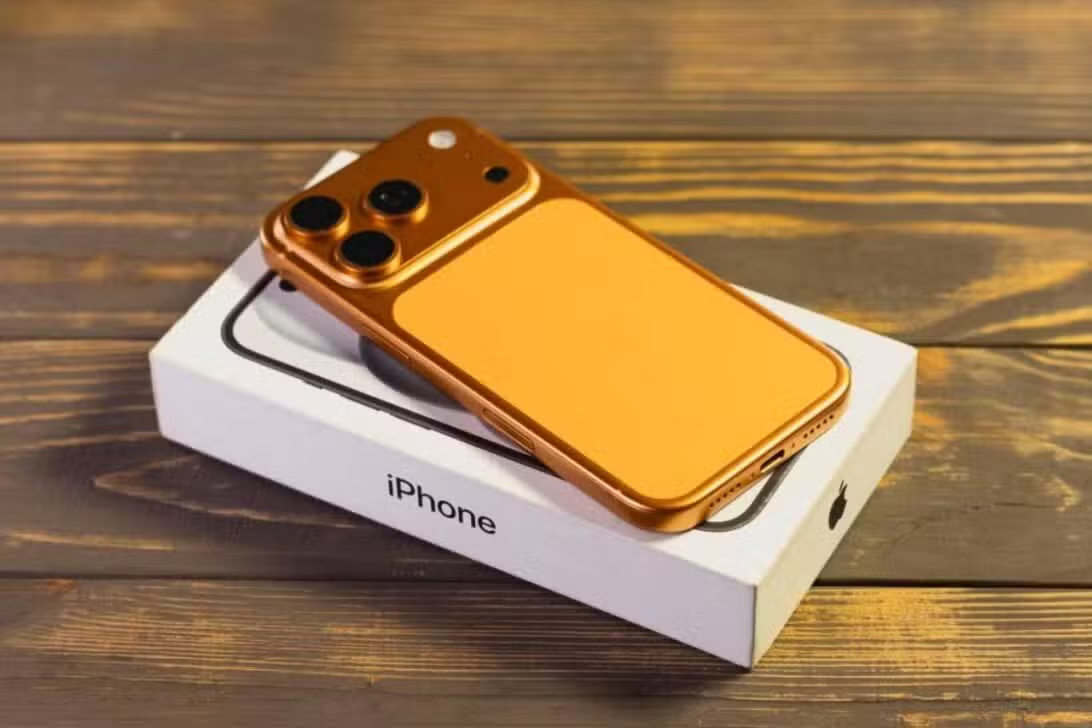
A detailed analysis of the photographic capabilities between the Samsung Galaxy S26 Ultra and the iPhone 17 The focus of the discussion lies not only on technical specifications, but, above all, on the decisive influence of image processing algorithms.
Initially, the Galaxy S26 Ultra, with its wider aperture lens and higher megapixel count, was expected to have a notable advantage in a variety of scenarios. Contudo, hands-on side-by-side comparison experience revealed that the noticeable differences between the models are minimal, challenging the assumption that more hardware automatically means better image quality.
This scenario reiterates that in contemporary smartphone photography, the “magic” is not just in the lenses and sensors. What really defines the final result is the way each manufacturer’s software interprets and optimizes the captured light, transforming raw data into images that captivate users’ eyes.
Improved hardware: promises vs. reality
The Samsung Galaxy S26 Ultra arrived on the market with an impressive photographic arsenal. Sua 200 MP main lens, although already present on the previous model, now sports an aperture of f/1.4, a significant improvement over the f/1.7 of its predecessor. Teoricamente, this change allows more than 40% of light to enter the sensor, a substantial increase that should positively impact the quality of the photos.
Additionally, the S26 Ultra’s 50MP telephoto lens has also been optimized to capture around 40% more light. Essas improvements in theory promise a number of tangible benefits: better performance in low-light conditions, reduced noise in images, more natural background blur, and improved overall clarity. However, practice has shown that the photos generated are “practically identical” to those of last year’s model, indicating a plateau in the improvements noticeable to the common user.
The central role of computational photography
The discrepancy between the theoretical potential of the hardware and the practical results highlights the predominance of computational photography. Hoje, the hardware serves as the foundation, but it is the algorithms that dictate how the final image will be constructed, adjusting colors, sharpness, contrast and even the exposure of multiple frames to create a single optimized photo. Esse intensive processing is especially evident on smartphones designed for social networking, where the image needs to be instantly attractive.
Manufacturers like Samsung use aggressive post-processing that aims to increase sharpness and saturation, characteristics often valued on platforms like Instagram and TikTok. While this produces vibrant, share-ready photos, it can also move away from a more “natural” representation of the scene, sparking debate over which approach is superior. Esse is the crucial point that equalizes performances, even with hardware differences.
The reliance on complex algorithms means that the “personality” of a smartphone camera is shaped much more by the software than by the physical components. This is why, even with brighter lenses, the Galaxy S26
User experience and innovative features
Despite the surprises in the direct comparison with the iPhone 17 Pro, the Galaxy S26 Ultra presents features that improve the user experience. A welcome new feature is the option, finally accessible in the Câmera’s native app, to select 24 MP photos as default in the main panel, after unlocking in the Assistente’s Câmera’s Samsung’s app. Essa flexibility offers users more control over the resolution and, consequently, over the file size and level of detail desired for their photographs, something valued by those looking for more versatility.
Another impressive feature introduced in the S26 Ultra is the 3D virtual face mask. Esta innovative tool allows you to change the direction of the virtual light that falls on the user’s face in real time, directly in Retrato mode. Essa functionality opens up new creative possibilities for self-portraits and profile photos, allowing you to simulate different lighting conditions without the need for external equipment or complex editing. The technology behind the 3D mask highlights Samsung’s continued innovation in using artificial intelligence to personalize and enhance the photography experience.
Fierce competition in the smartphone market
The race for the title of “best smartphone camera” is fiercer than ever, and the global market for high-performance phones is a constant battleground. Marcas Asian women, in particular, have made notable advances. The perception that the Galaxy S26 Ultra is not among the top three smartphones for photography on the market reflects the growing dominance of manufacturers such as the Vivo,
These Chinese companies have, over the past two years, managed to carve out a leadership position in mobile photography, often through partnerships with renowned lens brands such as Leica and Zeiss, and by developing highly sophisticated image processing algorithms. Its rise redefines expectations and poses a continuous challenge for giants like Samsung and Apple, who need to constantly innovate to maintain their relevance in this segment.
The specialization of these brands in aspects such as night photography, noise control and color fidelity sometimes surpasses what Western competitors offer. Este cenário competitivo estimula a inovação em todo o setor, beneficiando os consumidores com uma gama cada vez maior de opções de alta qualidade e com focos distintos, seja na captura de detalhes extremos, na capacidade de fotos em ambientes escuros ou na representação natural das cores.
Samsung, aware of the competition, continues to offer additional tools for advanced users, such as the Assistente of Câmera and the Expert RAW, which provide manual control over parameters such as ISO, shutter speed and white balance. Esses features aim to serve experienced photographers who want to explore the full potential of the Galaxy S26 Ultra camera, transforming the smartphone into a more versatile and professional tool, capable of going beyond point-and-click.
The battle of the giants: Samsung x Apple
The head-to-head between the Galaxy S26 Ultra and the iPhone 17 Pro, which represent the pinnacle of mobile technology from Samsung and When taking a walk capturing the same scenes, in the same modes and with similar resolutions on both devices, the discovery was clear: despite all of the Samsung’s hardware improvements, including higher megapixel counts and a wider lens aperture, the models produced “nearly identical” photos. Esse result is surprising and defies the logic that superior technical specifications necessarily translate into a noticeable visual advantage.
Beyond numbers: usability and customization
While raw numbers and hardware specs are important, usability and customizability play a crucial role in the photography experience. The Galaxy S26 Ultra, for example, offers additional tools like the Assistente of Estes apps offer more granular control over camera settings, something that goes beyond what’s possible with standard software alone, allowing for fine adjustments that can make a difference to a more artistically or technically accurate result.
For those looking to go beyond automatic mode and want greater control over composition and capture, these additional features transform the smartphone into a more robust tool. Eles allow the user to adjust parameters such as white balance, manual focus and exposure settings, offering a depth of customization that can be a key differentiator for photographers looking to maximize their device’s potential, regardless of direct hardware comparisons.
Future perspectives for mobile photography
The current scenario indicates that the future of smartphone photography will be increasingly driven by artificial intelligence and software optimization. The race for megapixels and lens apertures may have reached a saturation point, where incremental hardware gains are minimized by the way algorithms process images. The real innovation will lie in the ability to create software that not only enhances photos, but also understands the context of the scene, the photographer’s intentions and individual preferences, offering an increasingly personalized and intelligent experience, without relying solely on technical numbers to impress users.