

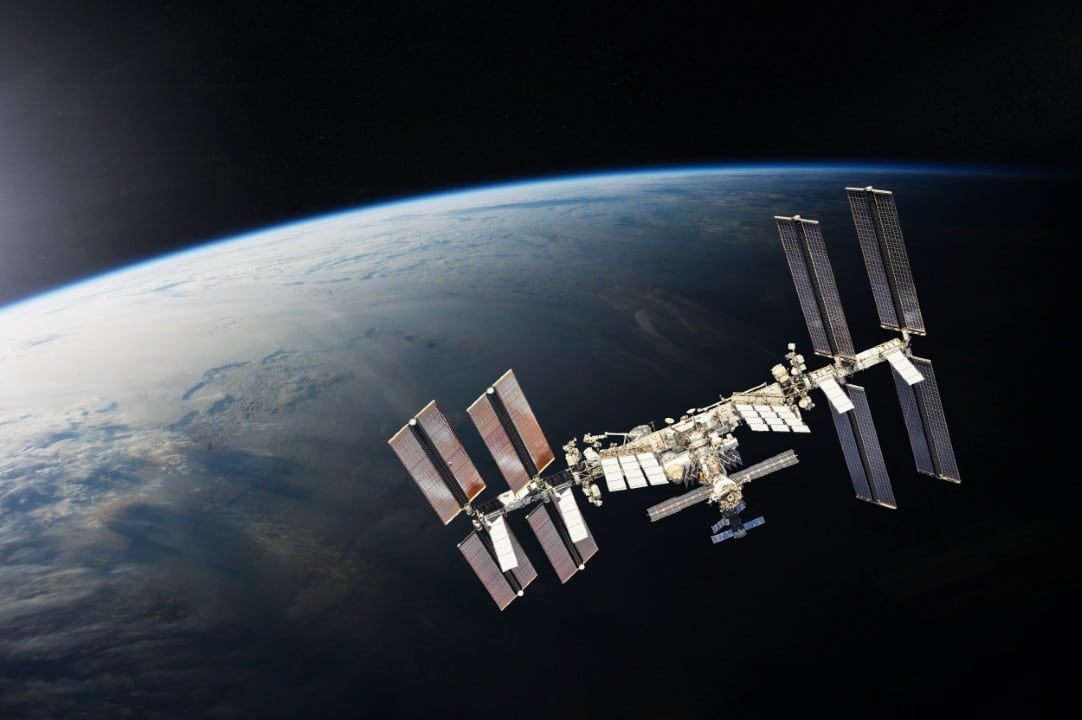
Estação Espacial Internacional (ISS) recently released a series of nighttime images of Índia, captured directly from Earth orbit. The photographs show the Indian subcontinent immersed in an urban light show, as the spacecraft crossed the skies over the Mar Arábico and the imposing region of the Himalaia.
These mesmerizing views were shared on the official ISS account, sparking widespread admiration for its ability to transform the country’s population density and infrastructure into a luminous mosaic. The clusters of lights form complex patterns that resemble intricate webs of energy that stretch across the landscape, highlighting the country’s vibrant nightlife.
The lighting network not only delineates major cities and their road connections, but also reveals thousands of smaller villages and communities that dot the vast territory. Essa unique perspective from space offers a visual understanding of the population distribution and energy development that illuminates the nation.
The beauty of Índia seen from space
The images shared by Estação Espacial Internacional highlight a scenario where the geographic contour of Índia is clearly marked by the brightness of the lights. Essa impressive visibility of the borders and coastline is one of the aspects that most captured the attention of observers and space exploration enthusiasts.
Viewing the illuminated cities and towns provides a rare view of infrastructure and urban growth. Cada point of light represents a community, and the density of these lights in certain regions highlights the concentration of life and human activity in specific urban centers and along major transportation routes.
Technology behind the captures
Astronauts aboard Estação Espacial Internacional use specialized digital cameras to photograph Terra at night. Essas tools are equipped with long exposure settings, which are crucial for capturing the faint light coming from artificial sources on the ground.
The long exposure technique allows cameras to absorb more light over an extended period, resulting in brighter, more detailed images of urban and coastal areas. It is this methodology that makes it possible to record the intricate networks of lights that would otherwise be imperceptible.
In addition to urban lights, these techniques also make it possible to document important geographic features, such as the contours of coastlines and the presence of clouds, which can appear as dark shapes in contrast to illuminated areas. The accuracy of these photos is vital to research and understanding our planet.
Reactions and fascination on networks
The release of the images sparked a wave of enthusiasm among space aficionados and Indian social media users. Muitos expressed their fascination with the clarity and beauty of the way lights delineate the geographic contour of the Indian subcontinent, making it one of the most talked about topics online.
One user described the scene: “Índia is shining from space, a reminder of how human energy and culture shine even brighter than city lights.” Este commentary reflects the emotional impact and the images’ ability to transcend mere technical observation, evoking a sense of cultural wonder.
Another enthusiast noted: “The way the lights outline the entire contour of the subcontinent is incredible. It’s one of the most beautiful views from the ISS.” The cartographic precision of the lights, even at hundreds of kilometers of altitude, is a testimony to the density and organization of human communities.
Additionally, a third commented on the visual complexity: “The contrast between the shadows of the mountains and the lights of the city is impressive. It’s hard to believe that it’s a continuous view. Quem can you identify your hometown in this image?” Este type of interaction demonstrates the personal engagement that the images generate, inviting the public to seek their own points of reference.
Station mission and orbit
Estação Espacial Internacional, known as ISS, is an orbiting research laboratory that has served as a vital center for technological advancements and diverse scientific studies. It is currently humanity’s only permanent residence outside the planet Terra, housing astronauts of different nationalities who carry out continuous experiments in microgravity. The ISS orbits at an altitude that varies between 370 and 460 kilometers above the Earth’s surface. Desse vantage point, it completes an orbit in approximately 90 minutes, allowing its occupants to witness the sunrise and sunset multiple times a day and regularly capture spectacular images of various regions of the world.
A window to the planet
The ISS’s ability to regularly capture and share high-resolution photographs of Terra is one of its most valuable legacies. Images, like those of the illuminated Índia, offer unique perspectives that help scientists, researchers and the general public better understand our planet.
These observations allow the monitoring of climate phenomena, urban growth, environmental changes and even the documentation of natural disasters. Astronauts’ work as orbital photographers is a crucial complement to remote sensing missions carried out by automated satellites.
International collaboration in space
The ISS is a multinational cooperation project, the result of a partnership between five space agencies from 15 different countries. Lançada in 1998, the station is a symbol of scientific and technological union.
The value of terrestrial observations
The images taken by the ISS are not just a visual treat; they have invaluable scientific and educational value. By documenting Terra from space, astronauts contribute to studies on urbanization, energy consumption and light impacts on the various terrestrial ecologies. Essas information is fundamental for research into global environmental changes, the expansion of cities and sustainable development. Constant observation offers data that complement climate and demographic models, providing a factual basis for decision-making in public policies and conservation projects. Além Furthermore, photos serve as a powerful educational tool, inspiring new generations to science and space exploration.
Space engineering details
The Estação Espacial Internacional is a marvel of modern engineering, comparable in size to an American football field. Sua complexity is remarkable, with multiple interconnected modules serving different purposes, from scientific laboratories to crew living areas.
The weight of the ISS is equivalent to that of a fully loaded Boeing 747, demonstrating the massive scale of the structure floating in orbit. Este gigantic laboratory is assembled piece by piece in space, requiring numerous launch missions and the collaboration of several teams and advanced technologies.
The future of orbital exploration
Estação Espacial Internacional continues to be a crucial platform for research, paving the way for more ambitious future space exploration missions. Experiments carried out on board provide essential data on how the human body reacts to microgravity and the prolonged space environment, vital information for future trips to destinations such as Lua and Marte.
In addition to biological and physical research, the ISS serves as a testing ground for new technologies that will be employed in spacecraft and habitats outside of Terra. Seu legacy of collaboration and discovery is a pillar for humanity’s continued advancement into the cosmos, keeping the flame of exploration and scientific curiosity alive.