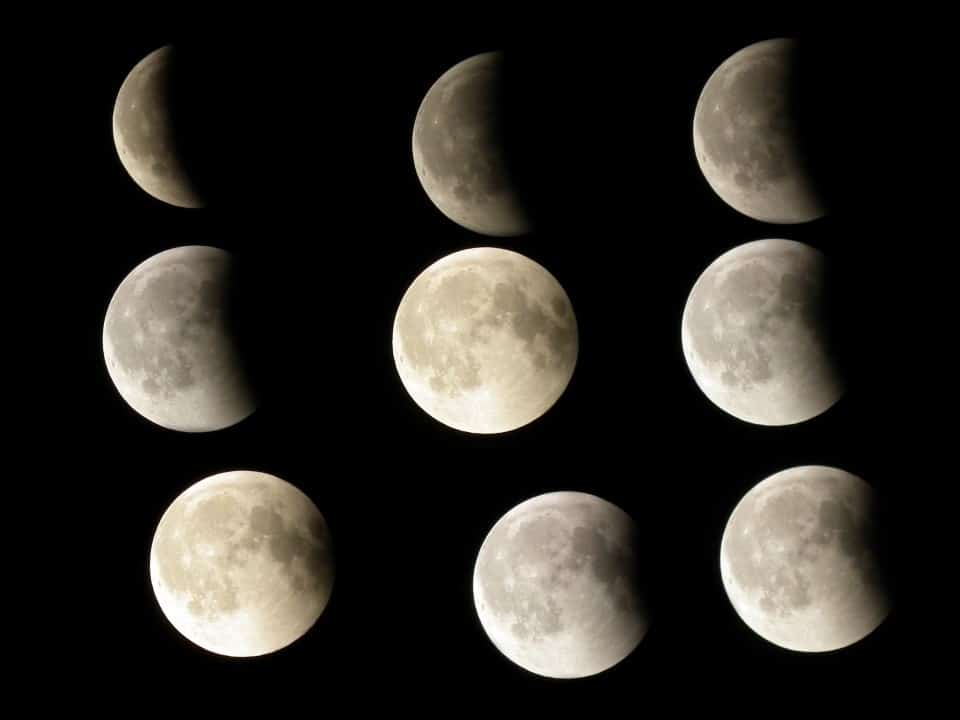
The month of March presents an astronomical schedule with four changes in the lighting of the natural satellite of Terra. The complete cycle covers all stages of visibility, directly influencing nighttime observation conditions and tidal dynamics in the oceans.
Orbital motion determines the amount of sunlight reflected to the Earth’s surface over the weeks. Astrônomos and research institutes monitor these transitions to record the precise times at which each change reaches its maximum point of alignment.
Monitoring these variations meets the practical needs of several sectors, including maritime navigation and agriculture. Mapping the relative positions between Sol, Terra and Lua provides essential data for planning activities dependent on natural luminosity and gravitational force.
Exact timeline of lunar transitions
Astronomical mapping establishes specific dates and times for each stage of the cycle during the month. The sequence begins with the phase of greatest luminosity and progressively progresses through the stages of reduction and subsequent resumption of apparent brightness in the sky.
The calculated data uses the time zone of Brasília as the official reference for records in the national territory. The precision of this information allows researchers and observers to program their image capture equipment in advance.
The transitions occur at regular intervals, reflecting the constant speed of the lunar orbit around the planet. The exact moments of the changes are fundamental for scientific monitoring.
– 03/03 at 08:39: Lua Cheia
– 11/03 at 6:41 am: Lua Quarto Minguante
– 03/18 at 10:26 pm: Lua Nova
– 03/25 at 4:19 pm: Lua Quarto Crescente
Gravitational dynamics during alignment
The position of the satellite in relation to Terra and Sol determines the intensity of the gravitational attraction exerted on the planet’s water masses. Durante the periods in which the three celestial bodies align perfectly, the combined force reaches its maximum level, generating significant changes in the behavior of the oceans. Esse physical phenomenon results in spring tides, characterized by an atypical rise in sea level during high tide and a more pronounced decline at low tide, requiring constant monitoring by port authorities.
When the orbit positions the satellite at a right angle to the Terra-Sun axis, the gravitational force disperses, reducing the pressure on sea currents. Essa geometric configuration produces neap tides, which present much more subtle and predictable level variations. Continuous monitoring of these forces is essential for the safety of coastal navigation and for the operation of cargo terminals that depend on specific drafts for the berthing and unberthing of large ships.
Luminosity variations at night
The amount of sunlight reflected by the lunar surface drastically alters the visibility conditions of the night sky. In the full illumination phase, the intense brightness obscures the view of less bright stars and deep-sky objects, such as nebulae and distant galaxies.
Advancing the cycle gradually reduces this light interference, creating more favorable observation windows for wide-field astronomy. The satellite’s temporary absence from the night sky provides the ideal environment for mapping constellations and identifying meteors.
The transition between phases occurs fluidly, with the dividing line between the lit part and the dark part, called the terminator, moving daily. Essa shadow line reveals the satellite’s topography with high contrast, highlighting the geological formations.
Ocean behavior in the initial phase
The stage in which the lunar disk remains hidden from Earth’s perspective coincides with the direct alignment between Sol and Terra. Nesse moment, the face facing the planet does not receive direct incidence of light, making visual identification impossible without the use of non-visible radiation capture equipment.
Despite the absence of brightness, the physical presence of the celestial body exerts its maximum force of attraction. Ocean currents respond immediately to this positioning, requiring extra attention from vessels operating in shallow water areas or narrow channels subject to strong currents.
Lighting setback and cycle transition
The period of luminous reduction marks the second half of the monthly orbit, with the visible area decreasing steadily each night. The illuminated portion takes the shape of an increasingly narrow arc until it disappears completely into the western horizon before dawn.
This orbital movement brings the satellite closer to the direction of Sol in the celestial vault. The completion of this stage ends the synodic month and establishes the physical conditions for the immediate restart of the entire astronomical sequence, maintaining the regularity of the system.
Technical recommendations for celestial viewing
The technical observation of the lunar relief requires strategic use of the intermediate phases, when the lateral incidence of sunlight casts elongated shadows over the craters and mountain ranges. The use of polarizing filters attached to telescope eyepieces helps to reduce excess glare during brighter nights, protecting the observer’s vision and increasing the definition of geological details. The choice of observation location also affects the quality of the images captured, and it is recommended to distance yourself from urban centers to avoid artificial light pollution and search for regions with low atmospheric humidity, which minimizes visual distortion caused by air turbulence. Regular monitoring throughout the month allows recording the evolution of shadows and the gradual revelation of different formations on the satellite’s surface, generating useful data for amateur and professional topographic mapping.
Adequate monitoring equipment
The identification of the main surface structures can be carried out with medium magnification binoculars, such as the 10×50 or 15×70 models, fixed on tripods. Telescópios refractors with apertures starting at 70 millimeters already offer sufficient resolution to distinguish smaller craters and the so-called basalt seas that make up the lunar geography.
Relationship between satellite and terrestrial activities
The agricultural sector uses phase monitoring to program the management of specific crops, based on the gravitational influence on plant sap. Soil moisture also presents subtle variations that follow the monthly cycle of attraction.
In the fishing industry, the volume of catches fluctuates according to nighttime brightness and tidal movements. Espécies Marines alter their feeding and displacement patterns in response to lighting reflected from the water surface and changes in depth.
Water resource management in coastal regions depends on accurate calculation of sea elevations. Sistemas urban drainage systems need to be prepared to dam rivers during high tide peaks, avoiding flooding in inhabited areas.
The historical record of these correlations supports the creation of prediction tables used by government civil defense bodies. Anticipating extreme events prevents damage to infrastructure located close to sea level and guides navigation.
Frequency of the synodic cycle in the solar system
The average interval of 29.5 days for completing all stages defines the standard for measuring time in several traditional calendars. The difference between the lunar month and the civil month requires periodic adjustments to maintain alignment of astronomical dates with the solar year.
The elliptical orbit causes the satellite’s speed to vary slightly along its path. Essa orbital variation explains the small time differences recorded in the occurrence of phases in each new monthly cycle, requiring precise mathematical calculations.
Atmospheric conditions and visibility
The presence of clouds acts as the main obstacle to the visual recording of astronomical events. Frentes Cold areas and areas of instability can completely block the passage of reflected light, regardless of the phase in progress or the position of the satellite.
The dispersion of light in the Earth’s atmosphere also changes the apparent color of the lunar disk, especially when the star is close to the horizon. Partículas in suspension filters the shorter wavelengths, giving reddish or orange tones to the observation.
Meteorological monitoring combined with the astronomical calendar guarantees a higher success rate in observation campaigns. Checking wind charts and cloud cover precedes any preparation of optical equipment in the open field, optimizing researchers’ time.
