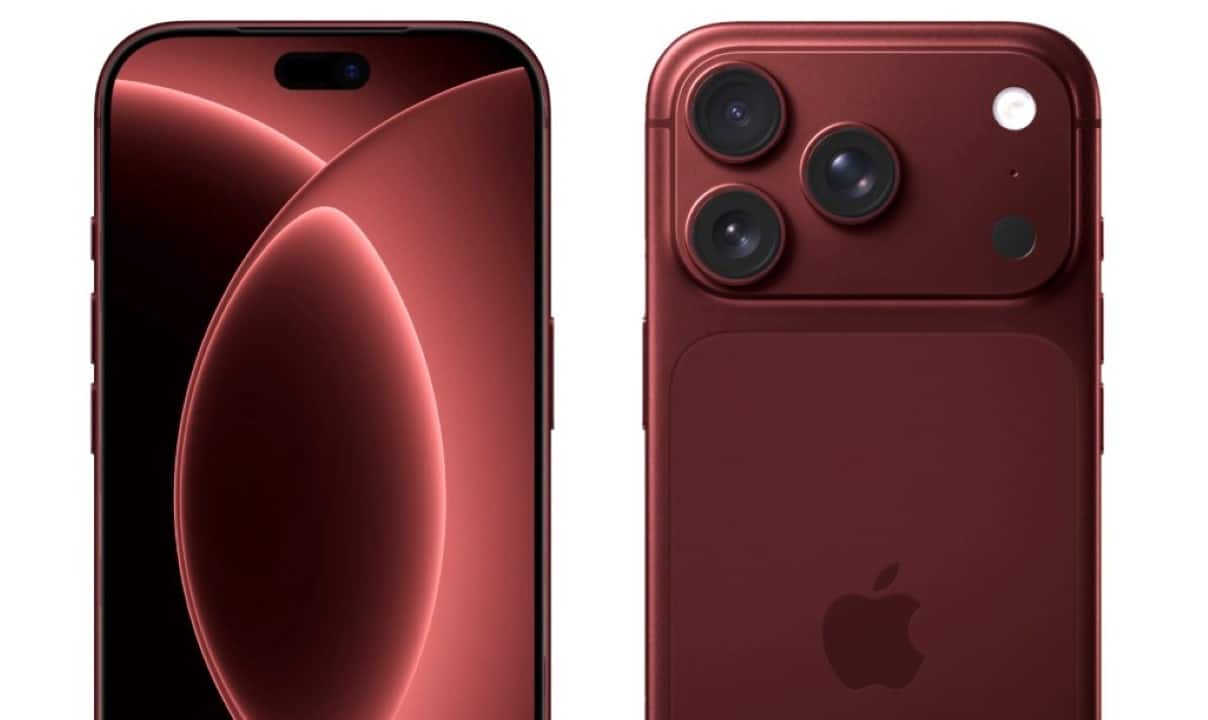
The North American technology giant has begun the final phase of testing for its next generation of premium smartphones, with a global launch projected for September. The new device promises a drastic overhaul of its physical structure, highlighted by the adoption of a completely transparent rear panel and the inclusion of a battery with a capacity of more than 5000 mAh. Esta change in design is not just for aesthetic purposes, but reflects an engineering need to accommodate a new heat dissipation system and artificial intelligence modules that require greater physical space. The decision to expose the internal components marks a significant departure from the company’s traditional visual language, requiring the logic boards and connectors to be redesigned to present a clean, symmetrical appearance to consumers, transforming the device’s interior into a visual standout.
The hardware development team is currently conducting rigorous durability tests on the new materials applied to the equipment’s chassis.
Mass production of the titanium frames and special tempered glass is scheduled to begin in the coming months at partner automakers’ facilities.
Design changes and the new visual approach to components
The implementation of a transparent back requires the manufacturer to completely rethink the internal arrangement of the parts, transforming the interior of the device into a true technological showcase. Diferente Unlike other brands that have taken similar approaches in the past with stickers or plastic simulations, the current design focuses on showcasing the actual hardware, such as the wireless charging coil, textured flat cables, and electromagnetic shields. Engineers applied blackout treatments and matte metallic finishes to the components to ensure the final aesthetic is sophisticated and perfectly aligned with the product’s premium positioning in the global mobile technology market.
To guarantee the structural integrity of the transparent glass, the material goes through a double ion exchange process, exponentially increasing resistance against daily impacts and scratches. Além In addition, the internal part of the glass panel receives a reverse oleophobic coating and a light refraction control layer, preventing internal reflections from impairing the visualization of engineering parts. Assembly requires an even stricter clean room environment, as any dust particles trapped during the device’s sealing would be permanently visible to the end user, compromising the rigorous quality standard required by the assembly line.
Reduction of frontal sensors and optimization of usable space
The device’s front panel will maintain dimensions of 6.3 inches for the standard version and 6.9 inches for the extended size model, but with significantly greater screen usage. The upper cutout, which houses the facial recognition sensors and the camera, will be reduced by approximately 35% in its total size.
This drastic reduction is made possible by relocating part of the infrared dot projection system below the organic light-emitting diode display. The technology allows the screen to function normally on the sensors, turning off specific pixels only at the exact moment of the owner’s biometric authentication.
The front camera will also undergo a substantial update to its architecture, adopting a 24-megapixel sensor with a six-element lens system. Esta technical change aims to improve light capture in dark environments and increase the sharpness of images captured during videoconferences.
Energy capacity and efficiency in daily consumption
Usage autonomy will receive the biggest update recorded in recent years, with the battery surpassing the 5000 mAh mark in the entry-level model and reaching up to 5200 mAh in the large screen version.
To accommodate a power cell of such proportions without increasing the overall thickness of the device, the company made the decision to completely remove the physical carrier card tray. The device will rely exclusively on virtual chip technology in all sales regions.
The smartphone’s motherboard has also been entirely redesigned, using a high-density stacked format that reduces the area occupied by integrated circuits. The physical space saved in this restructuring is entirely redirected to the battery compartment.
Combined with the physical increase in capacity, a new energy management algorithm will distribute processing loads intelligently, promising to extend continuous usage time even under intense mobile network demands.
Camera system with variable aperture and advanced capture
The main photo module will introduce a variable aperture mechanism, allowing the lens to physically adjust the amount of light reaching the image sensor. Essa technology provides true optical control over depth of field, resulting in naturally blurred portraits and nighttime images with reduced levels of digital noise.
The lenses will receive a new nanoscale anti-reflective coating, specifically designed to eliminate light artifacts and unwanted reflections caused by direct light sources. Subsequent image processing will be done directly in the camera hardware before passing to the main processing chip.
Advanced processing and expanded memory integration
The smartphone’s processing core will be built on a 2-nanometer lithography architecture, accompanied by an unprecedented jump to 12 GB of random access memory. Esta robust configuration is not only intended for traditional multitasking performance, but is a fundamental technical requirement for local processing of large language models and artificial intelligence algorithms. By performing these complex tasks directly on the hardware, the device reduces response latency and eliminates the need to send sensitive data to cloud servers, ensuring the privacy of user information. Para can withstand the heat generated by this extreme computing power, the cooling system was restructured with the inclusion of a copper vapor chamber and graphene blankets that cover the entire length of the logic board, dissipating the temperature evenly through the titanium frame and preventing frame drops when using heavy graphics applications or recording videos in very high resolution.
Satellite connectivity and data transmission
The device’s communication infrastructure integrates new modems compatible with advanced fifth generation networks and expands satellite connection capabilities. The system will not only allow the sending of emergency messages, but also the transmission of voice data and internet packages in remote areas completely devoid of conventional cellular coverage.
Market strategy and global production schedule
Logistics planning for global distribution requires component suppliers to begin delivering parts months in advance, ensuring sufficient stocks for the launch period. The complexity in manufacturing the clear rear glass will limit initial production to selected factories with a high level of automated precision.
The commercial strategy focuses on consolidating the device in the very high-end segment, justifying hardware innovations for an audience that seeks maximum technological performance. The assembly lines are already operating under a testing regime to calibrate the machines responsible for the hermetic sealing of the device.
