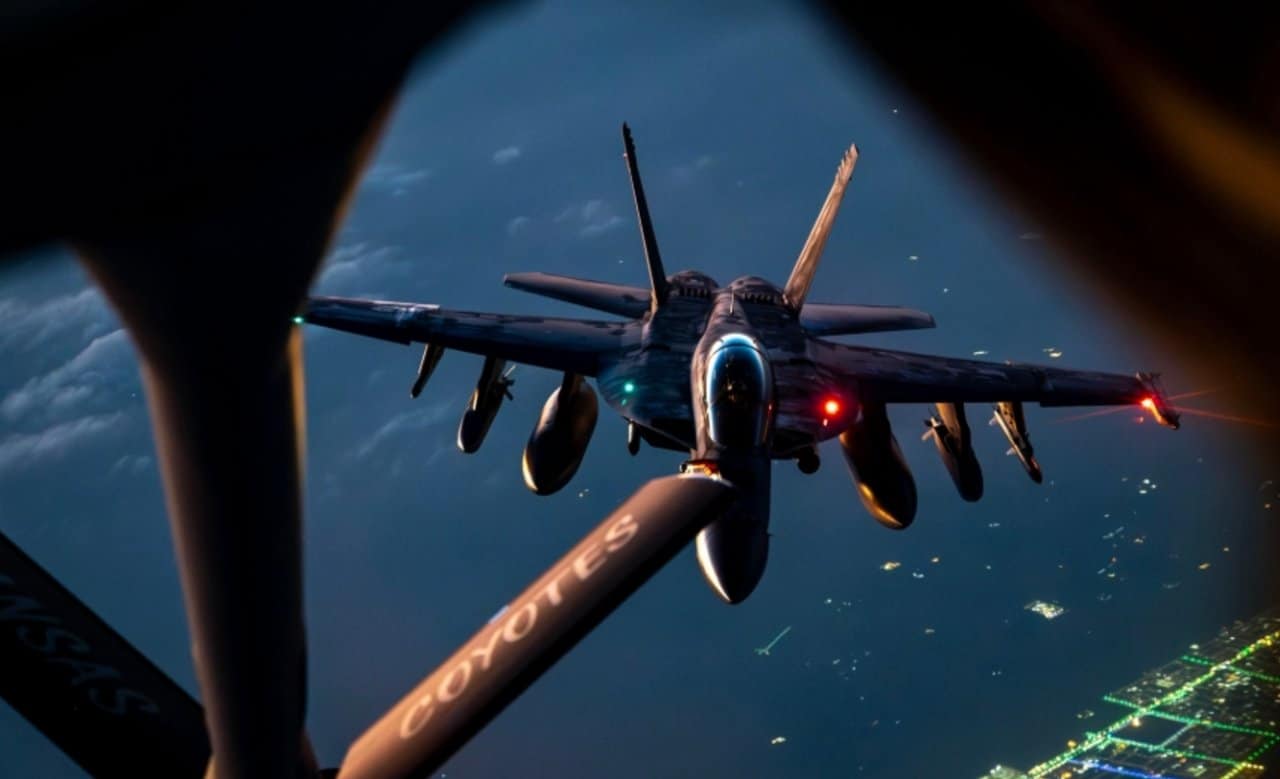
A military refueling aircraft belonging to Força Aérea of the Estados Unidos crashed in western Iraqi territory while carrying out air support maneuvers. The equipment, identified as a KC-135 model, suffered complete destruction upon hitting the ground, generating an immediate response from coalition forces operating in the area. The incident quickly mobilized search and rescue squads to locate the occupants and isolate the perimeter of the incident.
American military authorities confirmed that the flight had at least five crew members on board at the time of the crash. Relatórios preliminaries ruled out the involvement of enemy fire or the possibility of friendly fire as causing the downing of the aircraft. The Comando Central of the Estados Unidos took over the coordination of rescue operations and the preservation of the wreckage for rigorous technical analysis.
Operational information details that two aircraft of the same model were carrying out joint missions at the time of the event. Enquanto the first plane managed to return to base and make a safe landing, the second lost support and collided with the terrain. Emergency teams continue sweeping efforts on site to ensure the safety of the area and recover sensitive communications and navigation equipment.
Investigation into the causes of the refueler fall
The exclusion of hostile actions directs the focus of military investigators to possible mechanical failures, flight systems anomalies, or adverse weather conditions. Peritos in military aviation began collecting telemetry data and communication records to reconstruct the last minutes of the flight. Analysis of the wreckage will provide crucial clues about the plane’s structural behavior before impact with Iraqi soil.
The crashed model played a vital role in the logistics chain of American forces positioned at Oriente Médio. The ability to transfer fuel mid-flight allows fighters and bombers to extend their range and remain on patrol for extended periods. The sudden absence of this platform requires immediate adjustments to the routes and planning of air missions in the conflict region.
Recent history of aerial occurrences in the region
This crash marks the fourth major aerial incident involving American equipment since the intensification of military operations against the Irã. The sequence of aerial events highlights the high level of operational stress and the complexity of the airspace in which missions are carried out daily. Fleets operate under high demand regimes, complying with rigorous patrolling and tactical support schedules.
Days before the loss of the tanker, three F-15E Strike Eagle fighters were accidentally shot down by Kuwait anti-aircraft defense systems, creating a serious episode of friendly fire. The six crew members of the combat aircraft managed to activate the ejection seats in time and were rescued alive. Todos received medical care and are in stable clinical condition at coalition military facilities.
The repetition of accidents in a restricted period of time raises technical questions about material fatigue and the physical wear and tear on crews. Especialistas in flight safety assess the need to review preventive maintenance protocols and pilot rest intervals. Coordination between allied forces also undergoes scrutiny to prevent further identification failures in shared airspace.
Military casualties during operations in Oriente Médio
The advance of hostilities has resulted in significant human losses for the American ranks positioned in the theater of operations. Official records indicate that seven soldiers have lost their lives in direct combat situations or attacks on bases since the beginning of the current phase of the conflict. The number of injured reached the mark of one hundred and forty soldiers, requiring intense mobilization of combat medicine and evacuation units.
Among the injured, eight soldiers present clinical conditions considered serious, requiring intensive care and aeromedical evacuation to rear hospitals with greater surgical support capacity. Military healthcare logistics operate at maximum capacity to ensure the stabilization and safe transfer of patients. Medical teams face the challenge of treating complex trauma from explosions and shrapnel.
Six of the fatal victims belonged to reserve personnel from the Exército of the Estados Unidos and performed logistical support functions. The group was hit by an unmanned aerial vehicle of Iranian origin that penetrated the defenses of an operations center set up in a civilian port in Kuwait. The military worked to coordinate the flow of vital supplies, ensuring food and ammunition for the advanced troops.
The seventh fatality occurred at Arábia Saudita, following an attack aimed at Base Aérea Príncipe Sultan. The soldier suffered injuries incompatible with life during the offensive, highlighting the vulnerability of support facilities spread across allied countries in Golfo. Perimeter security at these bases has been raised to maximum alert level following recent enemy incursions.
Funeral ceremonies and statements from American officials
The leadership of the American government has publicly expressed recognition of the seriousness of the military situation and the likelihood of further human losses. President Donald Trump and Secretary Defesa Pete Hegseth issued statements warning the population about the protracted nature of the conflict and the risks inherent in operations on foreign soil. The official statements seek to prepare public opinion for the continuation of military actions and the continued sending of troops, equipment and financial resources to sustain the American presence in the conflict region, indicating that the intensity of the fighting is not expected to decrease in the short term.
The repatriation protocol for fallen soldiers has been closely monitored by the country’s highest authorities, reflecting the institutional weight of the casualties. President Donald Trump attended Base Aérea of Dover to receive the remains of the six soldiers killed at Dias later, vice president JD Vance and secretary
Continuous engineering and modernization of the refueling fleet
The KC-135 platform has a unique trajectory in the history of military aviation, sharing its design basis with the classic commercial aircraft Boeing 707. Para maintain tactical relevance and flight safety, the Pentágono invested heavily in modernization programs that replaced analog components with advanced digital navigation and communications systems. The original engines were replaced by more powerful and economical turbofans, increasing the aircraft’s payload capacity and range. Standard operation requires just three crew members, consisting of two pilots and a specialized refueling boom operator. The presence of five or more people on the accident flight at Iraque suggests the execution of a mission with specific characteristics, possibly involving the training of new operators, the evaluation of real-time systems or the tactical transport of specialized personnel between air bases, a common practice in highly complex deployments.
Current distribution of logistics support aircraft
The Força Aérea inventory of Estados Unidos counts three hundred and seventy-six KC-135 units in flying condition. Deste amount, one hundred and fifty-one planes operate in daily active service, one hundred and sixty-three are part of the squadrons of Guarda Nacional Aérea and sixty-two remain under the responsibility of Reserva of
Strategic importance of in-flight refueling
American military doctrine bases much of its force projection capabilities on the existence of a robust fleet of tanker aircraft. Airborne fuel transfer eliminates the need for frequent landings, reducing the vulnerability of combat aircraft on the ground and optimizing response time to emerging threats in hostile territories.
Without the continued support of these logistics platforms, executing long-range bombing missions and maintaining air superiority becomes logistically unfeasible. The loss of a unit represents not only significant material damage, but also a temporary gap in the air coverage network of a specific region, requiring immediate relocation of other assets.
