

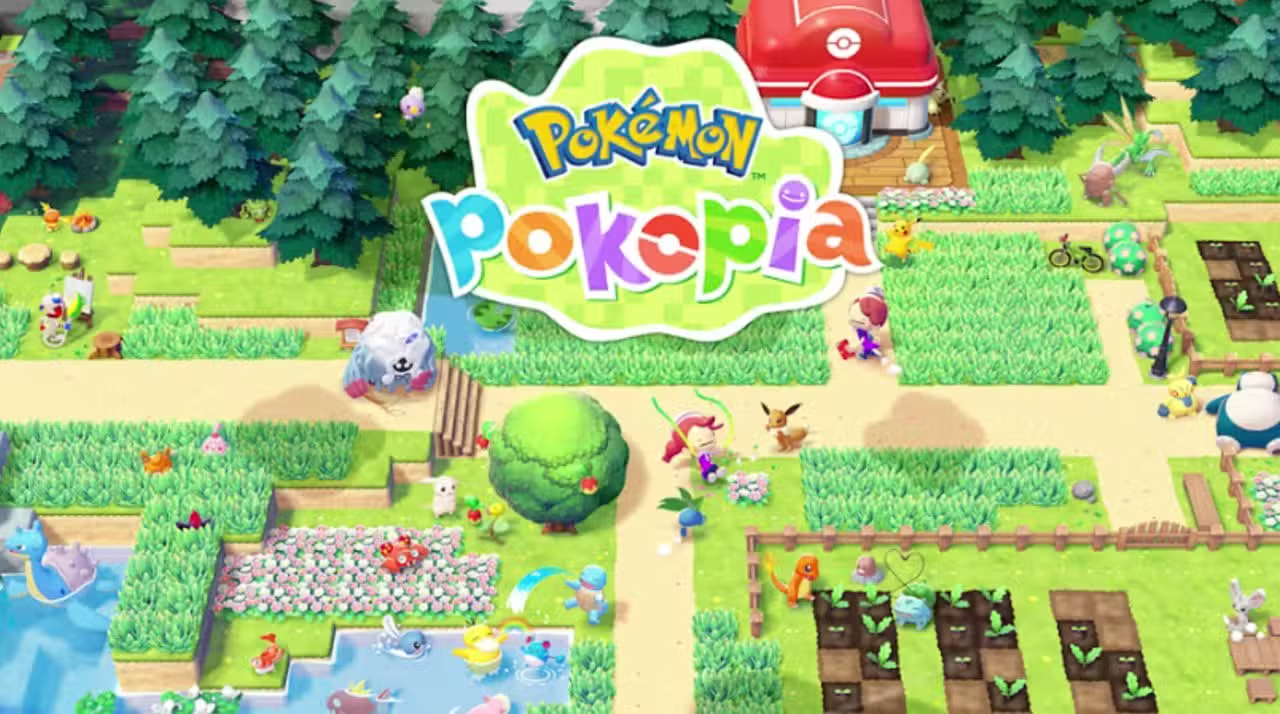
The electronic games market recorded a high volume of sales with the arrival of Pokémon Pokopia, an exclusive title developed for the Nintendo Switch 2 hardware. The software had more than two thousand and two hundred copies purchased by consumers in an interval of just four days after its global availability, which occurred at the beginning of March. The Pokémon Company, together with Nintendo, published the official commercial reports, pointing out that approximately one million of these units were distributed exclusively in retail and on Japão’s digital platforms.
The project represents a direct collaboration between Game Freak, the traditional studio responsible for the main franchise, and Koei Tecmo, a developer known for previous partnerships with Nintendo. The product moves away from classic turn-based RPG mechanics and creature capture to focus on a life simulation and resource management system. Public acceptance exceeded the initial projections of the companies involved, consolidating the software as one of the products with the highest sales during the period of introduction of the new console on the international market.
The distribution of the game faced logistical limitations regarding the stock of physical media in several regions of América, Norte and Europa. Apesar Due to the restriction of cartridges on the shelves of retail stores, demand was quickly absorbed by the console’s virtual store, the eShop, which guaranteed digital delivery of the product. The volume of transactions in a short space of time highlights consumers’ continued interest in interactive experiences focused on virtual routines and community building.
The project presents specific characteristics that differentiate the experience from other products of the brand:
– Foco in life simulation and natural resource management in open environments.
– Ausência of traditional combat mechanics, capture in gyms or competitive leagues.
– Integração of advanced base construction and interior decoration systems.
– Utilização of time cycles synchronized with the equipment’s internal clock.
Commercial performance of the new spin-off title
The sales record places the new production in a prominent position in the historical ranking of games derived from the brand. Market updates indicate that the software already occupies twelfth place in a list made up of twenty-six parallel products that have managed to surpass the mark of one million copies sold since the creation of the franchise.
The speed of transactions caught the attention of analysts in the technology and entertainment sector. In less than a week, the product managed to surpass the total sales volume of classic titles released on previous generations of desktop consoles, such as Pokémon Colosseum and Pokémon Stadium 2, which took months to reach similar distribution levels.
The division between physical and digital sales shows a change in consumer behavior compared to past launches. Ease of access to the digital format boosted numbers in the first few days, compensating for failures in the global supply chain that affected the delivery of plastic boxes and cartridges to large supermarket chains and specialized stores.
Maintaining this pace of sales indicates a mathematical probability of advancement in the general leaderboard over the next fiscal quarters. Distributors prepare additional marketing campaigns to sustain product visibility during holiday periods and school vacations.
Franchise sales history
Leadership in the segment of derivative games historically belongs to Pokémon Mystery Dungeon Vermelho and Azul, released for Game Boy Advance and Nintendo DS, which accumulate a total of five million, eight hundred and fifty thousand units sold globally. Esse number has set the standard for success for the brand’s side projects for over a decade.
Following the historical ranking is Pokémon Estádio, developed for Nintendo 64, which registered five million, four hundred and sixty thousand copies. Outros featured products include Pokémon Pinball, with five million, three hundred and ten thousand units, demonstrating the intellectual property’s ability to adapt to different arcade and puzzle genres.
The titles Pokémon Mystery Dungeon Tempo and Escuridão are also among the most successful, with four million and eight hundred thousand copies distributed. Comparison with these classics provides a clear perspective on the size of the current consumer market and the brand’s strength in attracting both nostalgic gamers and new generations of users.
Simulation dynamics and virtual routine
The title allows users to take on the role of an Ditto who takes on human form to interact with the environment in an unprecedented way. The main premise involves the reconstruction of a desolate world, requiring direct collaboration with several species of virtual creatures that inhabit the region. Players need to perform daily maintenance activities, such as collecting basic materials in the wild, mining rocks, and crafting work tools at specific workbenches. Cultivating agricultural fields and building custom habitats forms the basis of the software’s progression, requiring spatial planning and resource management. The internal system incorporates real day and night cycles, as well as dynamic climate variations that directly affect the behavior of fauna and the growth of local flora. Gameplay prioritizes a slow, contemplative pace, eliminating the pressure for quick results, punishing timers or direct competitions against other users. Elementos additional features, such as photography of specific moments of the routine and detailed customization of the avatar’s appearance and clothing, complement the daily experience. The programming structure focuses on creating a welcoming community, where fulfilling the requests of virtual inhabitants generates aesthetic and functional rewards for the expansion of the village.
Partnership in software development
The collaboration between Game Freak and Koei Tecmo brought together distinct specialties in the programming industry. Game Freak provided the three-dimensional models, creature behavior guidelines, and intellectual property oversight, ensuring that interactions were faithful to the established universe. On the other hand, Koei Tecmo applied its experience in simulation graphics engines and scenario construction systems, optimizing the user interface for inventory management and furniture allocation in internal and external environments.
The technical execution of the project took advantage of the hardware specifications of the new Nintendo console. Improved processing has allowed for the rendering of more complex textures in natural environments and the elimination of loading screens when transitioning between indoor areas of houses and the open map. The stability of the frame rate per second, even in places with a large concentration of characters and decorative items, was one of the technical points praised during the quality testing phase.
Expansion of the simulation genre
The market for games focused on virtual routines and agriculture has expanded considerably in the last decade, attracting a consumer profile that seeks entertainment without stress or punishing mechanics. The decision to insert the brand in this specific segment aims to capture a demographic that consumes farm management and city decoration products.
Adapting the universe of collectible creatures to this peaceful format eliminates the barrier to entry for people who are unfamiliar with elemental weakness tables or combat strategies. The focus on cooperation and visual aesthetics expands the product’s reach beyond the traditional action video game audience.
Social interaction features
The system integrates connectivity tools that allow visits to villages built by other users via the world wide web. Players can exchange exclusive items, register friends’ architectural designs and use data sharing features that operate cross-functionally between different versions of the console, facilitating interaction between owners of equipment from different generations.
Reception from the consumer public
The product launch date was strategically aligned with the intellectual property anniversary celebration calendar. Essa synchronization ensured broad specialized media coverage and increased organic engagement on discussion forums and video platforms, driving initial interest in the simulation software.
The paradigm shift in gameplay, replacing direct confrontations with cooperation and interior design tasks, generated debates about the future of derivative productions. The positive commercial response validates the companies’ strategy of diversifying the catalog of offers, ensuring the brand’s relevance in multiple genres of digital entertainment.