

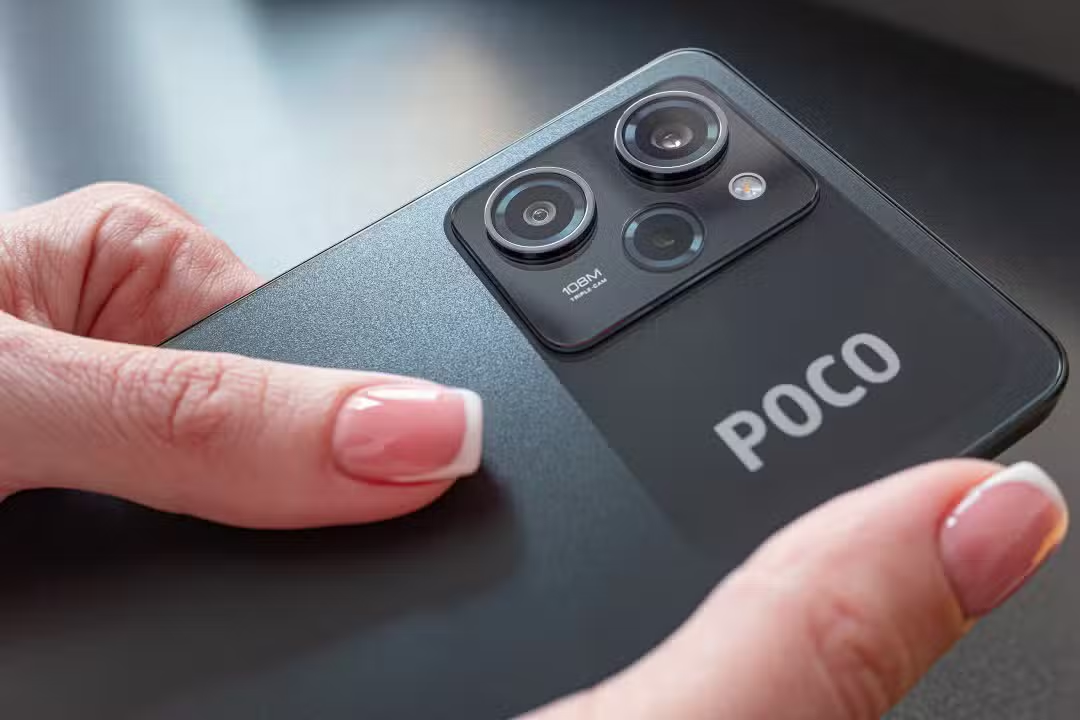
Sensitive information regarding the new mobile device from Asian manufacturer POCO was recently exposed on technology forums, detailing the complete technical sheet of the X8 Pro Max model. The leak exposes the strategies of the company, which acts as an independent subsidiary of Xiaomi, for the high-performance device market. The data indicates a significant change in the internal architecture of the hardware to accommodate components with greater energy capacity without compromising the thickness of the equipment.
The technical documentation that circulated on supplier networks indicates that the official launch of the device is scheduled for March 17th. Initial distribution is expected to occur in selected Asian markets, with gradual expansion to other regions throughout the semester. The manufacturing schedule suggests that mass production has already begun at the company’s facilities to meet projected demand for the pre-sale period.
The main focus of the engineering design of this model is on extended usage autonomy and advanced thermal management. Especialistas from the telecommunications sector assess that the integration of new materials in the construction of the chassis allowed the manufacturer to insert substantially larger battery modules. The leaked specifications confirm that the device will compete directly with the main premium segment devices currently available in electronic retailers.
Advanced processing and memory capacity
The processing core of the new smartphone is powered by the MediaTek Dimensity 9500 chipset, a component manufactured using state-of-the-art lithography. Este processor was developed to perform computationally demanding tasks, including complex graphics rendering and simultaneous operations of multiple applications. The chip’s architecture divides tasks between efficiency cores and performance cores, optimizing power consumption during daily use.
To maintain thermal stability during intense operations, the manufacturer implemented a cooling system based on a large surface vapor chamber. Este mechanism acts to dissipate the heat generated by the processor and memory modules, transferring the high temperature to the ends of the aluminum chassis. The thermal engineering applied aims to avoid the automatic reduction of the processor frequency, a phenomenon known as thermal throttling, ensuring constant performance.
The device’s memory set integrates 16 GB of RAM using the LPDDR5x Ultra standard, which offers higher data transfer rates than previous generation models. Esta capability allows the operating system to keep dozens of processes open in the background without needing to reload when switching between them. The temporary read and write speed also speeds up opening heavy software and transitioning between camera lenses.
In terms of internal storage, the equipment offers 512 GB based on UFS 4.1 technology. Este flash memory standard reduces the time required to install bulky applications and speeds the transfer of high-resolution video files to computers or external drives. The system’s integrated storage controller also extends the life of memory cells through wear-leveling algorithms.
Energy autonomy and charging systems
The most prominent component in the technical leak is the battery module with a total capacity of 8500 mAh, a volume rarely found in smartphones for conventional civilian use. To achieve this energy density without excessively increasing the physical dimensions of the device, the brand’s engineering adopted a battery structure based on silicon-carbon anodes. Esta chemical technology allows storing more milliampere-hours in a reduced physical space when compared to traditional lithium-ion batteries with graphite anodes. The extended capacity is designed to support long remote working hours, continuous browsing via mobile networks and uninterrupted screen use sessions at maximum brightness, reducing dependence on external power sources during travel or commuting.
The device’s power replenishment system supports 100W wired charging via the bottom USB-C port, using proprietary power delivery protocols to manage voltage and current. The internal charging circuit splits the charge into two parallel cells to speed up the process and minimize device heating while plugged in. Adicionalmente, the equipment supports wireless charging by magnetic induction with a maximum power of 27W, compatible with certified charging bases. Power management software includes protection features that stop current flow when reaching maximum capacity and adjust charging speed based on the user’s sleeping patterns, preserving the long-term chemical integrity of cells.
Visual panel specifications and light output
The device’s visual interface is made up of a 6.83-inch OLED panel with a resolution rated at 1.5K, offering high pixel density for displaying sharp texts and detailed images. The screen has a variable refresh rate that reaches up to 120 Hz, dynamically adjusting according to the content displayed to save energy. Esta fluidity is noticeable when scrolling pages on the internet and navigating the operating system menus.
The maximum display brightness can peak at 3500 nits in specific areas of the screen when playing high dynamic range (HDR) content. Esta lighting capacity guarantees legibility of information even under direct sunlight in outdoor environments. The ambient brightness sensor works in conjunction with software algorithms to calibrate contrast and color saturation in real time.
To mitigate eye fatigue in low-light environments, the panel incorporates PWM dimming technology operating at a frequency of 3840 Hz. Este mechanism controls screen brightness through pulses of light imperceptible to the human eye, eliminating the flickering effect common in conventional OLED screens. The low blue light emission certification also makes up the package of resources aimed at the user’s visual health.
Photographic set and optical sensors
The rear image capture module is led by a 50-megapixel main sensor equipped with Light Hunter 600 technology. The optical image stabilization (OIS) system physically acts on the lens assembly to compensate for involuntary hand shake during video recording or long exposure captures.
The camera system is complemented by an 8-megapixel ultra-wide-angle lens, intended for photographs of wide landscapes and groups of people in confined spaces. On the front, the device houses a 20-megapixel sensor positioned in a small cutout on the screen, configured for high-definition video calls and facial biometric authentication. The image signal processor (ISP) integrated into the main chip applies color and sharpening correction algorithms instantly upon shutter release.
Network Connectivity and Endurance Certifications
The device’s wireless communication infrastructure is based on the Wi-Fi 7 standard, which enables very high-speed connections and reduced latency in compatible home and corporate networks, operating in multiple frequency bands simultaneously to avoid signal congestion. The Bluetooth 5.4 protocol ensures stable pairing with wireless headphones, smart watches and car audio systems while consuming minimal battery power. The device also has NFC technology to make contactless payments at commercial terminals and validate public transport tickets. An infrared ray emitter is positioned on the top edge of the chassis, allowing the smartphone to function as a universal remote control for televisions, air conditioning units and other household appliances. In terms of physical durability, the equipment obtained IP68 and IP69K certifications, attesting to its rigorous resistance against the intrusion of fine dust particles and complete submersion in fresh water for prolonged periods. The IP69K certification, in particular, indicates that the external structure of the device is capable of withstanding high-pressure and high-temperature water jets, a technical characteristic inherited from industrial equipment that considerably extends the product’s useful life in hostile working environments or adverse weather conditions. The protective front glass uses tempered aluminosilicate compounds to resist accidental impacts and scratches caused by friction with metal objects in pockets or backpacks.
Audio features and operating system
Sound reproduction is handled by a dual stereo speaker system with native support for Dolby Atmos spatial audio technology. Acoustic calibration of the physical components allows for an increase of up to 300% in maximum volume compared to the previous generation, without noticeable distortion in the bass and treble frequencies. Microfones directional pads with active noise cancellation isolate the user’s voice during phone calls in busy urban environments.
The software environment is operated by the Android 16 system, modified by the proprietary HyperOS 3 interface, installed directly on the assembly line. The interface has been rewritten to optimize the allocation of processor resources, resulting in smoother transition animations and less RAM memory consumption by the system. The manufacturer is committed to providing regular security updates and vulnerability fix packages to maintain the integrity of stored data.
Strategic positioning in the technology sector
The introduction of this model on the global market represents a move by the manufacturer to consolidate its presence in the segment of devices that combine robust hardware with extreme capacity batteries. The combination of a cutting-edge processor with industrial resistance certifications serves a specific niche of consumers who demand operational reliability in scenarios where access to electrical energy is limited. The pricing strategy and large-scale availability will dictate the product’s reception by market analysts in the coming months.