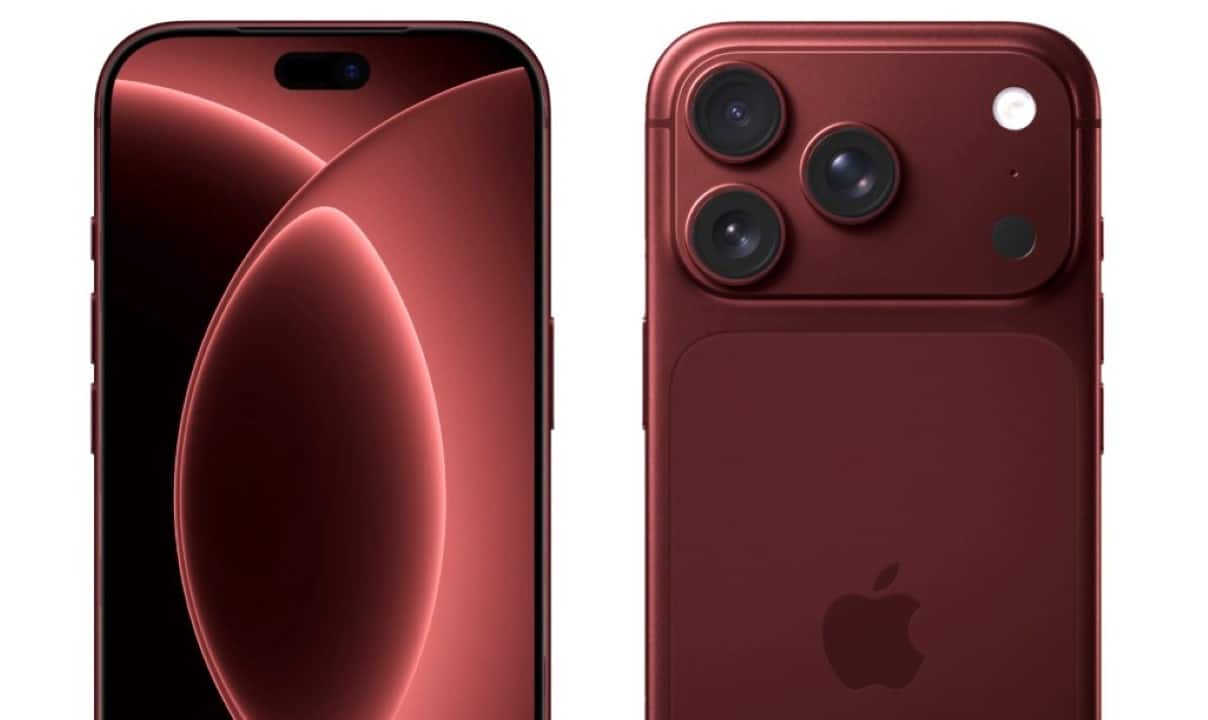
The Cupertino-based technology giant is working on developing its next generation of premium mobile devices, focusing on structural and hardware changes. Recent Informações point out that the most advanced models in the future line of cell phones will bring significant design changes, including a rear finish with transparent elements and a substantial increase in energy capacity. The official launch of this series is scheduled to take place in September, following the manufacturer’s traditional calendar for high-performance hardware announcements.
The engineering project specifically involves the top-of-the-line versions, which historically concentrate the brand’s greatest innovations before reaching the base models. The company focuses its efforts on redesigning the internal architecture of the devices, allowing the accommodation of larger components without compromising the ergonomics and final weight of the product. Essa restructuring aims to meet the growing demand for extended usage autonomy and advanced processing of complex tasks directly on the mobile device.
The aesthetic changes promise to visually differentiate the new generation from the lines launched in previous years. The use of materials that allow partial visualization of internal components represents a paradigm shift in the brand’s industrial design, which for years has relied on frosted glass or solid titanium backs. The Asian supply chain has already begun preparations for the manufacture of initial components, adapting assembly lines to meet the rigorous quality standards required.
Expanding screen dimensions and visual adjustments
The new front panels will increase their physical dimensions, changing the footprint of the devices. The smaller model in the professional line will now feature a 6.3-inch screen, offering more usable space without drastically increasing the chassis. Enquanto this, the maximum size version will reach the 6.9-inch mark, consolidating itself as one of the largest displays ever produced by the company for the mobile phone category.
This increase in viewing area is accompanied by a millimeter reduction in the edges around the display. The manufacturer uses new manufacturing techniques for OLED panels to ensure that the total size of the device does not increase directly proportional to that of the screen, maintaining daily usability and comfort when handling with just one hand.
The transition to larger screens reflects an established trend in the global market for high-cost mobile devices. Consumidores increasingly use their devices as the main platforms for reading extensive documents, editing financial spreadsheets and consuming high-resolution videos. The 6.9-inch panel brings the device closer to the small tablet category, offering a highly productive mobile workspace.
To protect these larger screens, materials engineering has developed a new generation of ultra-resistant glass. The chemical composition of the front panel receives additional heat treatments to withstand mechanical impacts and prevent scratches, considering that a larger glass surface is statistically more susceptible to accidental damage during transport in pockets or bags.
Energy autonomy and new battery capacities
The internal restructuring of the devices will allow the inclusion of significantly larger and more efficient batteries. The entry-level model in the professional line will be equipped with a 5,000 mAh component, representing a significant leap in charge retention capacity compared to previous generations of the same size.
For the enlarged screen version, the energy capacity will be even greater, reaching 5,200 mAh in units configured exclusively with virtual chip technology. Permanently removing the physical tray for carrier chips frees up crucial millimeter space inside the chassis, which is immediately filled by additional battery cells.
This extended capacity aims to support the consumption generated by larger screens, with high refresh rates, and processors operating at high frequencies. The extended autonomy meets one of the main requirements of corporate users, ensuring uninterrupted operation of the device during intense periods of use of mobile networks and satellite navigation applications.
Evolution of the facial biometrics system
The company’s facial recognition technology will undergo its biggest hardware transformation since the system’s original launch. Engineers are working on implementing biometric sensors positioned directly under the display, eliminating the need for large and visible cutouts at the top of the glass screen.
This technical change allows infrared sensors to operate through the OLED panel’s pixel mesh. Apenas the front camera lens will remain visible through a small circular hole, maximizing the display area for multimedia content and changing the way the operating system displays notifications in the top bar.
Advanced processing and RAM memory
The processing core of the new devices will be a state-of-the-art chip, manufactured using an extremely reduced lithography process. Este component will bring substantial improvements in energy efficiency and raw computing power, with an architecture specifically designed to run language models and artificial intelligence tasks locally. The integration of a more robust Unidade and Processamento Neural will allow complex features such as generative image editing and simultaneous audio translation to work natively, without any dependency on connecting to cloud servers.
To support the high volume of data required by these computational operations, the manufacturer will increase the devices’ RAM memory to 12 GB. Este technical upgrade is essential to keep multiple heavy applications open in the background and ensure the fluidity of the operating system when using advanced tools. The increased amount of random access memory also directly benefits the capture and processing of very high-resolution videos, avoiding stuttering or dropped frames during continuous recording in professional formats.
Updates to the front photographic set
The image capture system will receive updates focused on extreme sharpness and superior performance in low-light environments. The front camera will be upgraded to a new 24 megapixel sensor, replacing the lower resolution components used in previous iterations of the product. Esta new lens will feature a hardware-enhanced autofocus system and a larger diaphragm aperture, allowing in a significantly greater amount of natural light. The improvement in front-facing photography equipment directly responds to market demand for professional-quality video calls and high-end content creation for digital platforms. The image signal processor integrated into the motherboard will work in sync with the 24 MP lens to apply precise color corrections, digital noise reduction and three-dimensional depth mapping in real time, raising the technical standard of photographs captured by the average user.
Network connectivity and data transmission
In terms of wireless communication, smartphones will integrate native support for the Wi-Fi 7 network standard and new generation 5G telephony modems. Essas radio technologies ensure ultra-fast data transfer rates and near-zero latency, optimizing media consumption in high-fidelity streaming and maintaining connection stability even on densely congested public networks.
Chassis structure and construction materials
The development of the design with a transparent finish requires profound modifications in the choice of chassis structural materials. The metal alloy used on the side edges will undergo new industrial machining processes to guarantee the device’s torsional rigidity, protecting the internal components against accidental twisting.
The internal assembly will need to be aesthetically organized, following new and rigorous industrial standards for visual presentation:
– Symmetrical and millimetrical Alinhamento of printed circuits and connection cables.
– Ocultação strategic metallic connectors sensitive to continuous visual exposure.
– Aplicação of darkened and uniform coatings on radio frequency modules and heat sinks.
