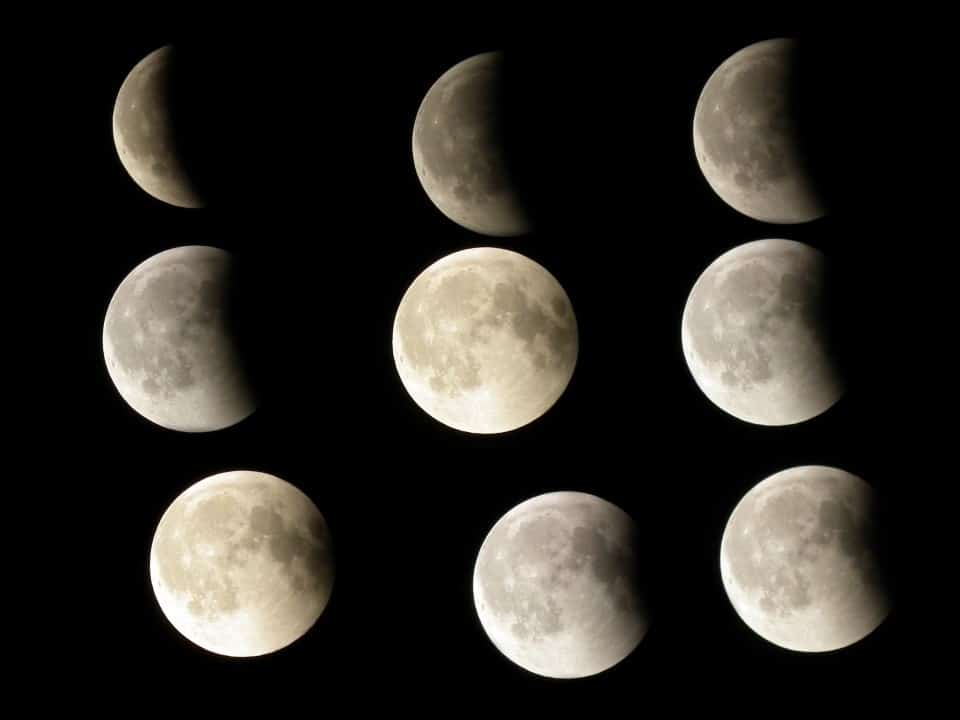
The third month of the year reserves a continuous sequence of transformations in the night sky, offering observers a unique opportunity to follow the complete cycle of our natural satellite. Orbital movement dictates a specific rhythm for the coming weeks, directly influencing light conditions during the early morning hours and the behavior of tides in the oceans. Especialistas in astronomy and celestial observation enthusiasts prepare their equipment to record each change in the visible face of the star, a phenomenon that results from the geometric alignment between the Sol, the Terra and the lunar body.
The practice of monitoring these luminous changes has been with humanity since ancient civilizations. Navegadores and farmers have historically used this information to guide crop planting and plan safe shipping routes.
Currently, the exact mapping of these moments allows rigorous planning for professional and leisure activities. The March astronomical itinerary already has all the temporal markings defined by the Brasília time zone.
Accurate mapping of celestial changes
The synodic cycle begins its exhibition in a remarkable way in the first days of the month. The geometric configuration of the solar system provides full illumination of the lunar face facing our planet.
To facilitate monitoring, astronomy institutes detail the exact moments of each transition. The dates establish a precise schedule for those who depend on natural light or oceanic variations.
– Dia 03/03 at 08:39 marks the occurrence of Lua Cheia.
– Dia 03/11 at 06:41 registers entry into phase Quarto Minguante.
– Dia 03/18 at 10:26 pm defines the exact moment of Lua Nova.
– Dia 03/25 at 4:19 pm consolidates the transition to Quarto Crescente.
Orbital dynamics and the synodic cycle
The period necessary for the satellite to complete all its visible appearances lasts approximately 29.5 Earth days. Essa continuous journey reflects the relative position of the star in its orbit around Terra, while both travel around Sol. The change in the amount of reflected sunlight reaching our eyes creates the illusion that the celestial body is changing shape, when, in fact, only different portions of its surface are being illuminated according to the viewing angle on Earth.
Each stage of this orbital path plays a specific role in maintaining the gravitational balance of our planet. The transition between total darkness and maximum light affects the behavior of several nocturnal species and regulates the reproductive cycles of marine organisms. The mathematical precision of this cosmic ballet allows scientists to predict lighting conditions decades in advance, ensuring the safety of space missions and the accuracy of agricultural calendars in different regions of the globe.
Temporary concealment and gravitational force
The moment of greatest alignment between the three celestial bodies results in the temporary invisibility of the satellite. The illuminated side faces entirely towards Sol, leaving the dark side facing terrestrial observers.
This specific configuration generates a sum of the attraction forces of the Sol and the satellite on the Terra. The immediate physical result of this combination is the occurrence of so-called spring tides, characterized by extreme ocean elevations.
Entire coastal ecosystems depend on these drastic changes in sea level to renew nutrients. Pescadores professionals also adjust their work routines to take advantage of the atypical movement of schools during this specific period.
Luminous expansion in the night sky
The continuous orbital displacement removes the star from the occultation zone, gradually revealing an illuminated edge on the western horizon shortly after sunset. The fraction of light grows steadily each night, forming a silvery arc that expands towards the center of the visible disk, altering the nighttime landscape.
When it reaches the exact right angle to the Terra-Sun axis, the celestial body displays exactly half of its illuminated surface to observers. Essa perpendicular position divides the gravitational forces that act on the planet, resulting in the so-called neap tides, which present ocean fluctuations that are much smoother, more predictable and safer for coastal navigation.
Disc fullness and solar reflection
The exact opposition between Sol and the natural satellite, with Terra positioned in the center of this imaginary axis, provides the peak of nighttime luminosity. The sun’s rays directly reach the entire face of the planet facing our planet, eliminating shadows in the central craters and reflecting a massive amount of light towards the Earth’s surface. Esse phenomenon not only facilitates nighttime movement in areas devoid of artificial lighting, but also resumes the occurrence of spring tides with the same intensity recorded at the beginning of the cycle. The intense light obscures the view of less bright stars and deep-sky objects, temporarily changing the focus of astronomical research to the detailed study of the lunar topography itself, which is fully exposed to telescopes.
Visual retraction and preparation for a new cycle
The continuity of the translational movement begins the process of gradual shading of the visible surface. The illuminated area shrinks at the same rate as it grew previously, reversing the side of the disk that reflects sunlight.
Returning to the right angle position brings back the neap tides, calming the ocean waters. The thin line of light remaining in the early morning signals the approach of a new total alignment, completing the monthly sequence of transformations.
Recommendations for celestial monitoring
The use of binoculars or basic telescopes significantly expands the perception of the rugged reliefs and vast basalt plains, especially during the intermediate phases, when the shadows highlight the depth of the craters. Strict monitoring of exact dates and times ensures that enthusiasts and professionals find the best atmospheric and light contrast conditions to record the topography of the star, maximizing the use of clear-sky nights.
Scientific relevance of continuous monitoring
The systematic recording of changes in the natural satellite’s luminosity transcends the simple aesthetic contemplation of the night sky. Instituições astronomical research teams use this data to calibrate high-precision optical instruments and monitor small variations in the lunar orbit caused by interactions with other bodies in the solar system. Accurately measuring the time it takes for sunlight to reflect off the planet’s surface and reach ground-based telescopes provides valuable information about the dynamics of outer space and the stability of our own planet’s rotation axis.
In addition to astrophysics, marine biologists and ecologists depend on the predictability of this calendar to schedule field expeditions and sample collections in coastal regions. Diversas species of corals, sea turtles and fish synchronize their reproductive events with the intensity of nighttime light and the volume of tides. Compreender the mathematical accuracy of this cosmic clock allows environmental conservation agencies to establish more efficient closed periods, protecting marine biodiversity during moments of greatest ecological vulnerability dictated by celestial mechanics.
