

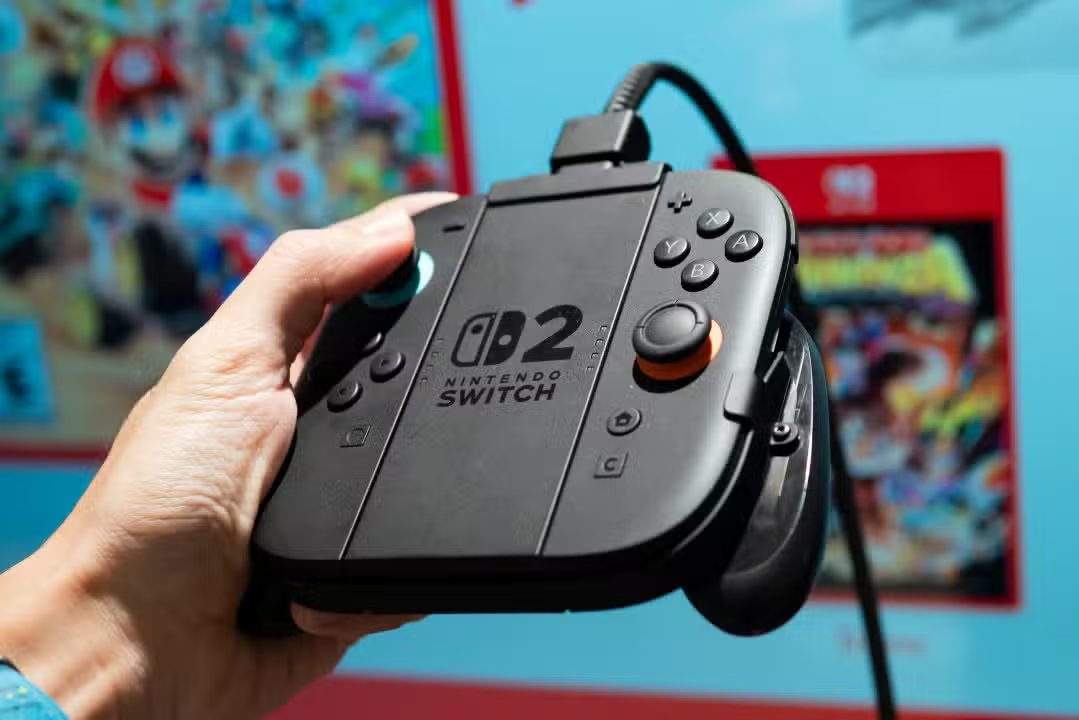
The global electronic entertainment industry faces a severe logistical and commercial hurdle due to the continued cost of NAND memory components. The technology supply chain is undergoing a forced restructuring, where the allocation of primary resources directly affects the distribution strategy of digital and physical games across the world.
High demand for processing and storage chips destined for artificial intelligence data centers has altered the balance of the semiconductor market. Foundries are prioritizing high-value corporate contracts, leaving the consumer electronics sector, including video game manufacturing, with a tight supply and inflated prices for key components.
Consequently, the limited internal storage in recent hardware and the prohibitive value of expansion cards are drastically changing consumers’ purchasing behavior. The inability to keep multiple applications installed simultaneously creates an invisible barrier to acquiring new software.
Direct impact on prices and consumer behavior
Recent market data indicates a significant shift in the software attach rate for the new generation of entertainment hardware. Embora devices reached a rapid sales milestone of 1.737 million units shortly after launch, the average number of games purchased per user plummeted to 2.18. Este volume represents a sharp drop compared to the 3.88 average recorded by the previous generation model during the same life cycle period.
This reduction in software sales is intrinsically linked to the 256 GB limit of internal storage on devices. With the file sizes of modern games growing exponentially due to high-resolution textures and uncompressed audio, factory space becomes insufficient in a matter of days for an active user.
To understand the consumer’s dilemma, industry analysts point to three aggravating factors in the current electronics retail scenario:
– The cost of flash memory rose approximately 8% in recent negotiations, making the production of high-capacity physical cartridges more expensive and passing the burden onto the shelves.
–
– The shortage of expansion cards in the Express microSD format forces gamers to aggressively manage space, uninstalling old titles to try new releases.
Competition with the artificial intelligence sector
The supply chain crisis is largely dictated by the prioritization of manufacturing components for artificial intelligence servers. Companies that manufacture semiconductors are pivoting their assembly lines to meet massive orders from technology corporations developing language models and cloud data processing.
As a direct result of this reallocation of industrial capacity, memory supply contracts for the consumer electronics sector saw increases of up to 90% in the first half of the year. Este supply bottlenecks create an unsustainable bottleneck for gaming companies, which operate on thinner profit margins when selling hardware.
Desafios para o varejo e produtoras de software
Companies specializing in data storage project an increase of up to 30% in the final price of memory cards aimed at the end consumer. Este increase is already being gradually implemented in distributors and directly affects the financial planning of users looking to expand the capacity of their devices.
In Asian retail and major global e-commerce platforms, high-capacity storage units are often out of stock. The lack of components prevents stocks from being replenished at the speed required by public demand, generating virtual waiting lines and inflation in the secondary market.
For software producers, the scenario requires an immediate strategic review. Sem space on consumer consoles, the sale of digital games is severely hampered. Títulos massive games requiring tens of gigabytes are most affected, as the gamer is hesitant to purchase a product that will require deleting several other games from their local library.
Some developers are choosing to prioritize physical releases on high-capacity cartridges, despite the higher manufacturing cost. Esta maneuver attempts to circumvent the digital storage limitation imposed on the player by ensuring that the software can be run directly from physical media with minimal installation required.
Reactions from the financial market and investors
The financial market observes this dynamic with extreme caution, as the drop in software sales directly affects the profitability of the main companies in the entertainment sector. Firmas of investment warn of the risk of a harmful cycle: if games from partner studios do not achieve commercial success due to a lack of storage space on users’ devices, these distributors could drastically reduce the adaptation of new titles to the platform. Este fears have already materialized on the stock market, where shares of hardware manufacturers have accumulated significant drops since the introduction of the new devices, reflecting shareholders’ distrust in the long-term software monetization model under current hardware restrictions.
Mitigation Strategies in the Tech Industry
To overcome the supply crisis, hardware manufacturers are studying alternative solutions, such as adapting 16 GB and 32 GB cartridges specifically for independent games or titles with optimized file sizes. Esta measure aims to keep the physical market active without depending exclusively on very high capacity memories that are in short supply and have prohibitive prices in Asian factories.
Inflationary pressure continues to affect other essential components of electronic devices. 12 GB RAM memory modules, essential for graphics processing in today’s games, have recently seen a 41% increase in acquisition costs. Este scenario squeezes manufacturers’ profit margins and indicates that the logistical and financial instability of the semiconductor sector will remain a central obstacle to the expansion of the installed user base.
Reflections on the Brazilian digital entertainment market
In Brasil, the impact of the global components crisis is amplified by the exchange rate and the tax burden on imported electronics. With the current minimum wage set at R$1,621, the acquisition of high-speed expansion cards becomes an investment that is often incompatible with the financial reality of a large part of local consumers. Esta barreira econômica restringe ainda mais o crescimento das bibliotecas digitais no país, forçando os jogadores brasileiros a adotarem um perfil de consumo extremamente seletivo, priorizando jogos de longa duração em detrimento de compras impulsivas nas lojas virtuais.