

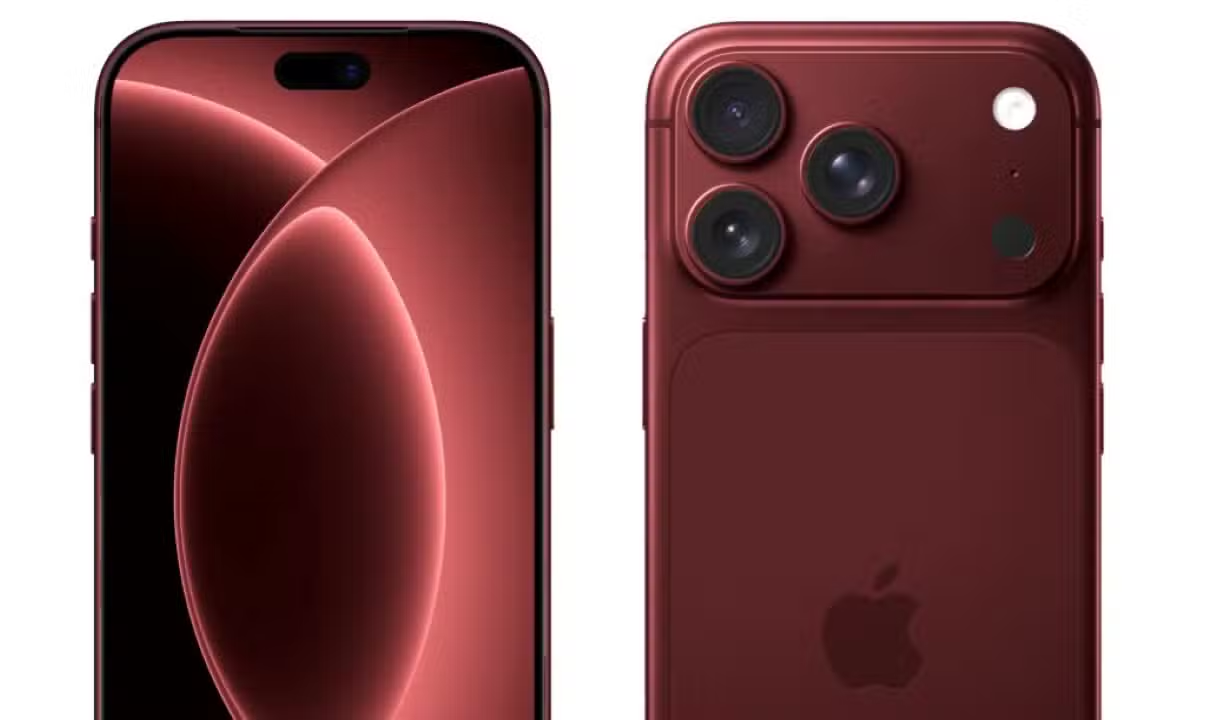
Apple finalizes the hardware and engineering details for the new generation of its high-end smartphones, scheduled for launch on the global market in September. The development of the devices involves a complete internal restructuring of components to accommodate new biometric technologies and larger power modules. The assembly lines already receive initial guidelines on the materials that will form the chassis and glass panels. The mobile device industry follows structural changes, as the company’s choices often dictate manufacturing trends for other brands in the technology sector. The current focus lies on optimizing internal space, allowing the inclusion of more advanced camera modules without compromising the thickness of the equipment. Engenheiros work with millimeter tolerances to ensure adequate thermal dissipation of the new processors.
External structure and dimensions of the screens
Display sizes will remain unchanged from previous generations. The Pro version will maintain the 6.3-inch screen, while the Pro Max edition will continue with the 6.9-inch panel, ensuring visual standardization of the premium line.
The rear camera module will undergo subtle dimensional adjustments to house updated image sensors and more complex lens mechanisms. The overall structure of the device seeks more fluid visual integration, eliminating unnecessary edges and promoting superior ergonomics for daily use.
Aesthetic changes and the new translucent back cover
The transparent surface on the back appears as the main visual differentiator for the high-cost models in this line. Esta change in the glass finish allows a subtle visualization of the smartphone’s internal elements, creating an aesthetic focused on the industrial and technological aspect of the device.
The color options proposed for this generation feature darker, more sophisticated tones, moving away from the vibrant palettes seen in basic models. Dark red emerges as the favorite option in design acceptance tests, offering an elegant contrast to the metallic components visible through the glass.
The manufacturing process of this back panel requires specific chemical treatments to ensure that transparency does not compromise resistance against impacts and scratches. The application of invisible layers of protection prevents fingerprints from damaging the view of the device’s interior, also requiring an aesthetic redesign of the boards and connectors themselves.
Reduced front notch and hidden sensors
The upper cutout of the screen, responsible for housing the facial recognition systems and the front camera, will present a reduction of up to 35% in its total width. Esta reduction becomes viable by relocating part of the biometric sensors.
Infrared facial scanning components will now operate under the display panel. The transition of these sensors below the display represents a significant advance in OLED screen engineering, requiring precise calibrations so that light passes through the pixels without distortion.
The front camera will continue to be positioned in a small hole visible in the upper area. Esta technical decision guarantees the quality of image capture without interference from the screen’s pixel mesh, maintaining the sharpness necessary for video calls and photographs.
The central objective of these modifications is to maximize the useful viewing area for the user, without sacrificing the speed or accuracy of biometric security. Testes hardware initials indicate full compatibility and efficiency in facial reading, even with the physical barrier of the light panel.
Energy capacity and charging efficiency
The battery capacity will exceed the 5,000 mAh mark in the Pro model, establishing a new autonomy standard for the brand’s premium device category. The physical enlargement of the power cell responds to the demand for increased continuous usage time in high-processing tasks. Versions of the smartphone equipped with a physical operator chip slot will have batteries with a capacity close to this value, while models sold exclusively with eSIM technology can reach up to 5,200 mAh of total capacity.
Removing the physical chip reader frees up valuable internal space, which the designers have allocated entirely to expanding the battery module. Esta capacity variation, depending on the sales market, demonstrates the flexibility of the device’s internal design. Development teams focus efforts on energy efficiency, combining the larger battery with advanced power management algorithms. The technical expectation points to the possibility of intense use for entire days without the need for intermediate recharges.
Processing architecture and memory expansion
The central processor will adopt wafer-level multichip module architecture, an advanced semiconductor manufacturing technique that integrates the central processing unit, graphics processor, neural engine for artificial intelligence and random access memory into a single silicon package. The consolidation of these components reduces latency in internal data communication and reduces the space occupied on the device’s motherboard. Available RAM can reach 12 GB, a leap necessary to support the growing demands of multitasking and local processing of artificial intelligence algorithms. The unified configuration optimizes electrical energy consumption, dissipating heat more evenly throughout the device’s metal structure. Raw data processing speed shows measurable gains, especially when rendering complex graphics and editing high-resolution videos directly on your cell phone. Programadores and software creators will have at their disposal a hardware platform capable of running machine learning applications without relying on cloud processing, ensuring peak performance is sustained for longer periods and avoiding speed reductions caused by overheating during extreme use.
Satellite communication for data and voice
The devices will receive expanded support for 5G connectivity via satellite, overcoming the current limitation of only sending emergency messages. The integration of a new generation modem improves signal stability in remote areas, allowing voice calls and internet data transfer in locations lacking traditional cell phone coverage.
Variable aperture photographic system
The Pro Max version will introduce a variable mechanical aperture in its main lens, allowing precise, physical control over light input and depth of field in photographs. The telephoto camera will also receive updates, with a faster aperture that substantially improves image capture in low-light environments.
The entire line of devices, with the exception of entry-level variants, will be equipped with a new 24 megapixel front camera, replacing the lower resolution sensors of past generations. Estas hardware implementations elevate raw photographic quality by reducing sole reliance on software processing for image correction.