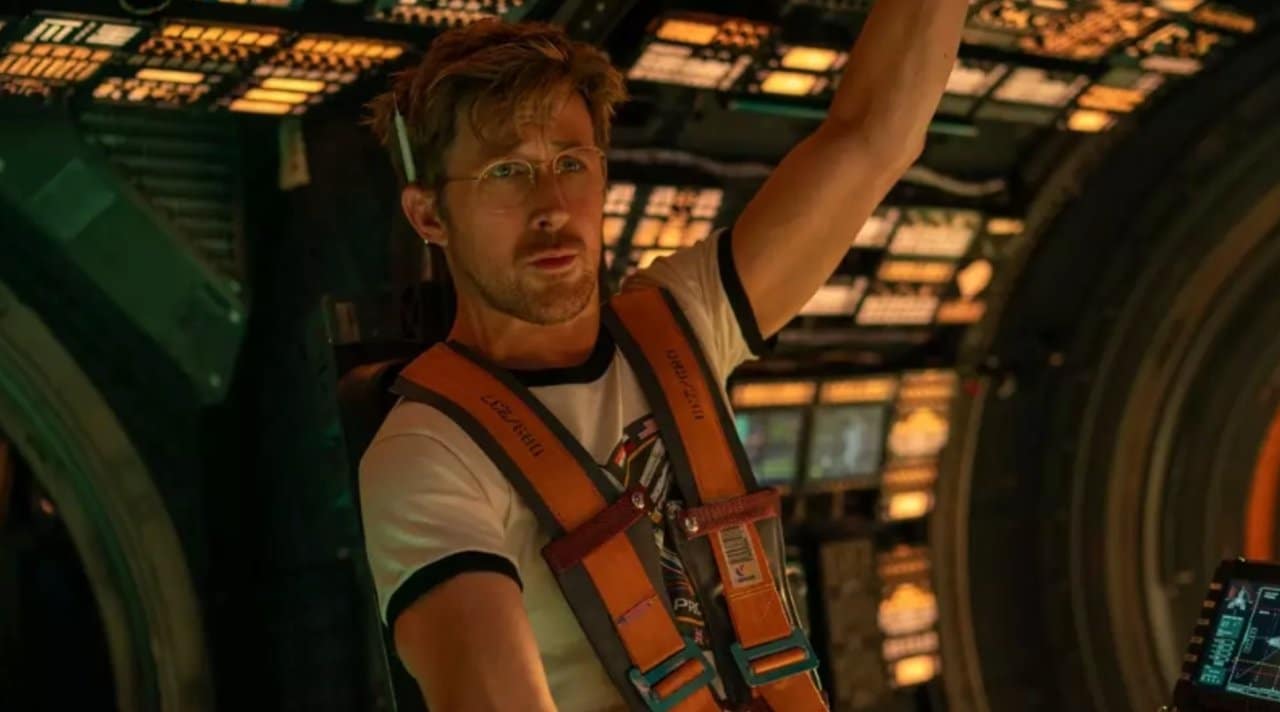
On March 19th, the film industry receives the adaptation of the book of the same name written by Andy Weir. The work chronicles a critical space mission to reverse an astronomical event that threatens survival on planet Terra. The project mobilizes global research teams to understand an anomaly detected in the solar system.
Actor Ryan Gosling takes on the main role of the plot, playing a science teacher called up for an intergalactic expedition. The narrative focuses on the protagonist’s journey aboard a spaceship designed to reach a distant star. The mission requires the application of real-world physical and mathematical concepts to solve navigation and survival problems.
The feature film was directed by the duo Chris Miller and Phil Lord, with a script adapted by Drew Goddard. The technical team prioritized the use of practical scenarios and minimized digital interventions to create an immersive environment. The production explores the relationship between academic rigor and the urgency of a global crisis.
Solar threat and terrestrial mobilization
The plot establishes its initial conflict based on the discovery of a power line that drains the luminosity of Sol. The phenomenon, named Linha de Petrova, projects a drastic drop in Earth temperatures in a short period. The international scientific community projects the extinction of fauna and flora if the process is not interrupted.
The alternative found by the researchers involves the study of a stellar system immune to the phenomenon of energy drainage. Projeto Hail Mary is structured as a one-way trip to collect data on that specific star. Ship construction and crew training take place under extreme pressure of limited time and resources.
Literary transposition and technical team
The original work of Andy Weir has more than four hundred pages dedicated to detailed descriptions of chemical and physical processes. Screenwriter Drew Goddard needed to condense the material into a two-hour and thirty-six minute format. The adaptation process maintained the precision of the calculations presented in the book.
Directors Chris Miller and Phil Lord implemented a visual dynamic that makes it easier for the general public to understand complex theories. The montage intersperses moments of tension in space with flashbacks to the preparation period in Terra. Essa narrative structure allows for the gradual development of the protagonist and the didactic explanation of the challenges faced.
The film’s photography, directed by Greig Fraser, uses lighting schemes that accentuate the isolation in deep space. Image capture prioritized lenses that slightly distort the edges of the frame to simulate vision inside spacesuits. The technical result aims to bring the viewer’s experience closer to the reality of an astronaut.
Protagonist’s performance in the mission
The interpretation of Ryan Gosling as Ryland Grace requires the demonstration of emotional instability resulting from prolonged isolation. The character wakes up from an induced coma with no recent memories and needs to deduce his identity through evidence on the ship. The script uses technical monologues as a tool for the protagonist to maintain his sanity.
The science teacher’s development occurs in a non-linear way, revealing his motivations through recovered memories. The performance moves between the pragmatism necessary to operate the ship’s systems and despair in the face of mechanical failures. The absence of other human actors in most of the space scenes concentrates the dramatic burden on the protagonist.
Preparing for the role involved studying real space agency protocols and handling life support equipment. Moving around in simulated zero-gravity environments required specific physical training during the months leading up to filming. The character’s physicality changes depending on the degradation of the ship’s resources.
Specialist critics point out the actor’s ability to make scientific jargon palatable through didactic intonations. The character uses logic as a defense mechanism against panic, structuring each problem as a laboratory experiment. The methodical approach contrasts with the unpredictability of the space environment.
Extraterrestrial contact dynamics
The structure of the narrative undergoes a significant change when the human ship intercepts a vehicle of unknown origin in the vicinity of the target star. The encounter introduces the species Eridiana, represented by the alien character named Rocky. The creature’s biology, based on minerals and adapted to high temperatures and pressures, makes direct physical contact between crew members impossible. Initial communication is established through sound frequencies and basic mathematical models, evolving into a complex vocabulary translated by software on the human ship.
Collaboration between the two species becomes mandatory due to critical failures in the systems of both vessels. The roadmap details the process of reverse engineering and adapting disparate technologies to create mutually survivable solutions. The exchange of information about the biology and culture of each planet occurs in parallel with mechanical repairs. The alliance forced by circumstances evolves into a strategic partnership based on trust and the shared scientific method.
Theoretical foundations applied to narrative
Scientific precision acts as the main engine for conflict resolution throughout cinematic projection. The script discards solutions based on fantastic elements or inexplicable technologies, opting to demonstrate trajectory calculations, thermodynamic reactions and principles of cell biology. The microscopic threat that consumes the energy of stars is analyzed in the laboratory through empirical methods of observation and hypothesis testing. The universal language of physics allows humans and Eridians to understand the magnitude of the problem and develop a biological agent capable of neutralizing the space plague. The exposition of these concepts occurs integrated with survival actions, requiring the viewer to follow the characters’ logical reasoning to understand the outcome of the action scenes. Valuing the empirical method reinforces the premise that accumulated knowledge and the ability to adapt are the most efficient tools for preserving civilizations in the face of mass extinction events.
Visual realism and image capture
The construction of the ship’s interiors used functional control panels and restricted dimensions to generate the feeling of confinement. The production design team avoided futuristic holographic interfaces, opting for tactile buttons and displays that harken back to robust, reliable technologies. The industrial aesthetic reinforces the utilitarian nature of the mission and moves the work away from stylized representations common to the genre.
Launch and global distribution
The distribution of the feature film involves screenings in IMAX format theaters to maximize the perception of the scale of the celestial bodies. The release schedule establishes the simultaneous debut in several international markets on March 19th. Publicity campaigns focus on the fidelity of the literary adaptation and the realism of the situations presented.
The project represents a significant investment by the studios in producing original hard science fiction scripts. Audience reception in the test sessions indicated high attention retention during mathematical problem-solving sequences. The work positions itself on the market as an alternative focused on logic and space exploration based on current theories.
