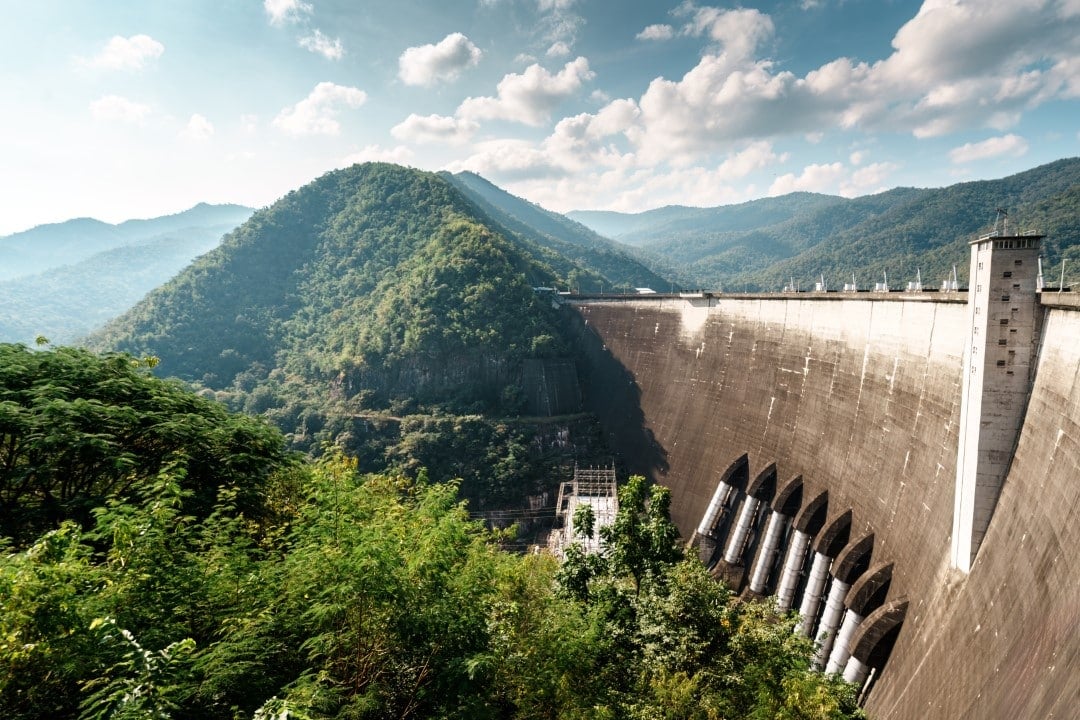
Dam construction around the world has shifted Terra’s axis of rotation by about a meter over the past two centuries. Cientistas identified that the storage of water in reservoirs changed the distribution of mass on the planet. Esse phenomenon, known as true pole shift, occurred in two main phases of intense dam construction. The research analyzed data from thousands of hydraulic structures and confirmed measurable impacts on the positioning of the poles.
The effect results from the concentration of large volumes of water in specific locations. Essa change in mass causes the Earth’s crust to fit over the viscous mantle. Como consequence, the axis of rotation repositions itself in relation to the surface. Além the displacement of the poles, dams contributed to mitigating sea level rise on a global scale.
Displacements occurred in distinct phases
Between 1835 and 1954, construction concentrated on América, Norte and Europa moved the north pole about 25 centimeters toward 103°E. Essa trajectory passed through regions of Rússia, Mongólia and China. The period saw a significant increase in the number of dams in these areas.
The second phase, from 1954 to 2011, involved works mainly on Ásia and África Oriental. Nesse interval, the north pole moved an additional 57 centimeters towards 117°W. The direction pointed west from América to Sul and Pacífico Sul. The accumulated total reached approximately one meter.
Volume of water retained alters global balance
Around 6,862 large dams were considered in the analysis, built over almost two centuries. The total stored volume is equivalent to filling the Grand Canyon twice. Essa amount of water represents a substantial mass redistributed on the Earth’s surface.
Storage prevented some of the sea level rise seen in the 20th century. Estimativas indicate that the dams retained between 21 and 23 millimeters of water that would otherwise have contributed to ocean rise. During the period analyzed, the global level rose between 12 and 17 centimeters. Hydraulic structures were responsible for retaining around a quarter of this elevation.
Scientific mechanism of pole shift
The Earth’s crust floats on top of the mantle, and changes in mass distribution cause gradual landslides. The phenomenon called true polar wander explains the repositioning of the rotation axis. Pesquisadores used global databases to map dam positions, volumes and impacts.
The calculations showed that the changes occurred gradually and measurably. The study highlighted two clear waves of construction that coincided with the observed displacements. Esses movements affect the relative orientation between the planet’s crust and core.
Additional impacts on sea level and rotation
Dams have lowered average sea levels by around 21 to 23 millimeters globally. Essa Water retention has prevented a greater acceleration in ocean rise over the past century. The effect adds to other natural and anthropogenic factors that influence climate and oceans.
Although the axis shift is small on a planetary scale, it demonstrates humans’ ability to alter fundamental geophysical systems. The research reinforces the importance of monitoring major interventions in the environment.
Global dam construction continues to influence
The period analyzed ended in 2011, but new dams have appeared since then in several regions. The cumulative impact can extend with ongoing projects. Cientistas emphasize the need to evaluate long-term effects on terrestrial dynamics.
The study was published in a specialized geophysics journal. Ele was based on consolidated data from international sources on dams. The conclusions highlight how large-scale human actions modify planetary processes.
