

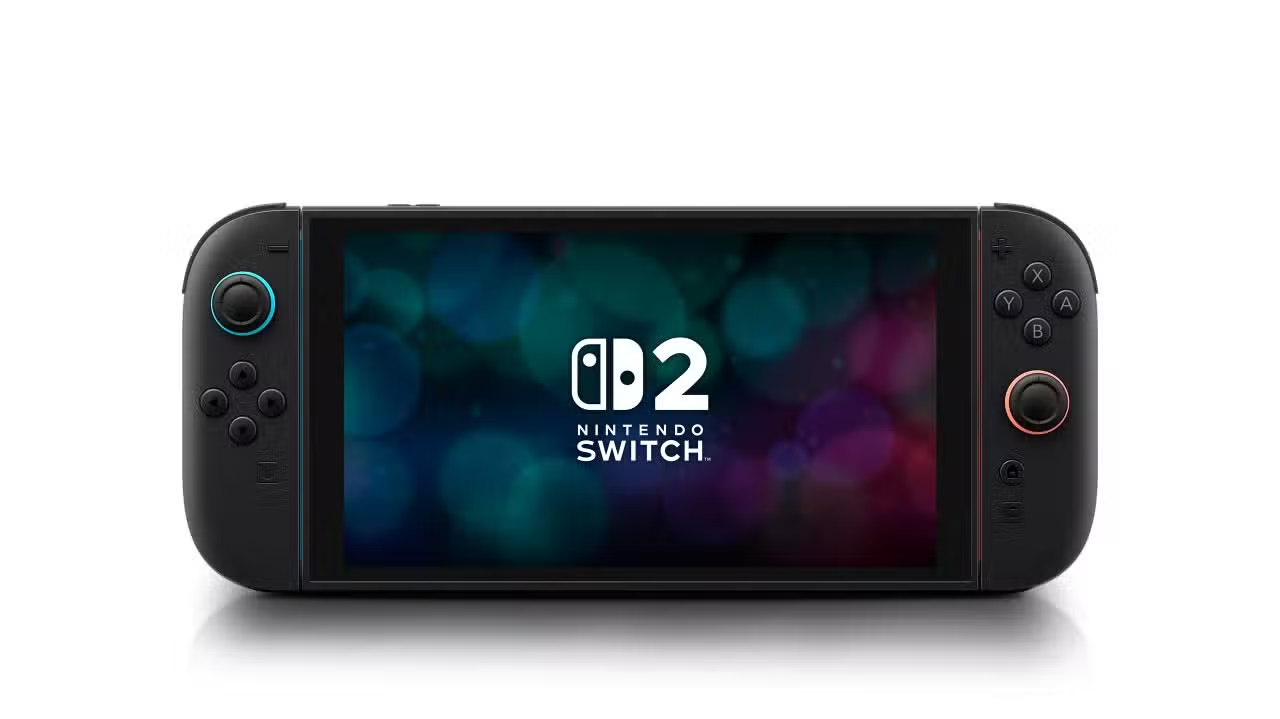
The Japanese electronics manufacturer has officially confirmed the launch of its next generation of digital entertainment hardware, marking a significant transition in its product lineup. The new equipment hits the global market in June, with the aim of maintaining the versatility that defined the previous generation, allowing it to be used both as a portable device and connected to a television. Esta update aims to meet the growing technical demands of the software industry, incorporating more robust processing components and an enlarged screen to improve media viewing. The company’s strategy involves a smooth transition for its current user base, ensuring that the new system offers substantial improvements in graphics performance without abandoning portability. The development of the device took into account market feedback over recent years, resulting in structural and internal modifications focused on energy efficiency and heat dissipation. Mass production has already started in partner factories at Ásia to guarantee a volume of stock capable of meeting the initial demand projected for the launch period, avoiding the shortage problems seen in past generations.
During the technical presentation of the device, engineers detailed the main specifications that differentiate the new model from its predecessor. Core hardware features include:
– 7.9-inch Tela with improved display technology and reduced bezels for greater immersion.
– Suporte for video output in 4K resolution via the fixed connection base connected to power.
– Taxa update optimized to support high visual fluidity in titles selected by the developers.
Price structure and availability in national retail
The suggested price for international retail was set at $449, reflecting increased manufacturing costs and the integration of cutting-edge technologies into the mobile ecosystem.
This price adjustment positions the equipment in a higher category compared to the base model of the previous generation, justified by the inclusion of expanded internal storage and more durable construction materials.
On the national scene, the local operation confirmed that the device will be available simultaneously with the global calendar. The official price of the standard console in Brasil will be R$4,449.90, a value that reflects import duties and distribution costs, representing almost three times the current minimum wage of R$1,621.
Additionally, a special themed edition called Mario Kart World will be sold for R$4,799.90, aimed at the public looking for collectors’ items. The company has established partnerships with the country’s main retail chains to ensure widespread sales.
Advanced hardware architecture and graphics processing
The processing core of the new system is the result of a direct collaboration with Nvidia, resulting in a customized chip that adapts the architecture of desktop video cards to the portable environment. The main innovation of this partnership is the implementation of artificial intelligence technologies, specifically supersampling algorithms, which allow the console to render graphics at lower resolutions and upscale them to 4K when connected to the television. Este method reduces the direct workload on the graphics processor, preserving battery life during mobile use and preventing chassis overheating, a critical factor for long-term hardware durability.
The integration of this component solves one of the main technical bottlenecks faced by developers on the previous platform, providing the necessary bandwidth for high-definition textures and complex lighting effects. The cooling system has also been redesigned with quieter fans and copper heatsinks, ensuring that performance does not suffer abrupt drops during prolonged sessions of intensive use. Analistas of the market point out that the profit margin on the initial hardware may be smaller, with the manufacturer betting on the sale of software to offset the research and development costs of this new architecture.
Ecosystem migration and software backward compatibility
The transition to the new platform was structured to protect consumers’ prior investment in software and peripherals. The manufacturer confirmed that the system is fully backwards compatible with the previous generation game library, both in physical format via cartridges and in digital format.
Users will be able to transfer their online accounts directly to the new hardware, synchronizing cloud save data and maintaining access to purchases made in recent years. The migration process was simplified through a local transfer application that operates via direct wireless connection.
In addition to software, compatibility extends to accessories already on the market. Controles professionals and the detachable side modules of the previous generation can be paired with the new console, reducing the need to immediately purchase additional equipment.
Initial catalog and development of new franchises
The software schedule for launch day includes internally developed projects to demonstrate the technical capabilities of the new hardware. The main highlight of the front line is Metroid Prime 4: Beyond, a first-person sci-fi title that utilizes the new lighting features and acts as the device’s main technological showcase.
For audiences focused on platform and cooperative multiplayer games, the company has scheduled the arrival of Donkey Kong Country VII: Returns. Estúdios partners also received development kits early, ensuring the console will receive high-budget multi-platform game ports from the first few months of its life.
Network capacity and global logistics planning
To support the volume of traffic generated by the new hardware, the digital store’s server infrastructure underwent a complete redesign. Bandwidth capacity has been increased to enable faster simultaneous downloads to accommodate the growing size of HD game files.
In the physical aspect, the supply chain began assembling the devices months in advance to form a robust buffer stock. The choice of the month of June for the arrival of the product follows logistical planning that allows global distribution to be tested before the period of high demand at the end of the year.
Ergonomic design and new manufacturing materials
The external design of the equipment has undergone changes focused on ergonomics and long-term durability. The chassis now uses reinforced polycarbonate composites, changing the device’s center of gravity to reduce hand fatigue during handheld use, while still safely accommodating the new, expansive 7.9-inch screen.
Operating system and user interface optimization
The native operating system has been rewritten to consume less RAM in the background, ensuring that the majority of resources are dedicated to running core entertainment software. The user interface features more responsive navigation, with simplified menus and almost imperceptible loading times when switching between applications and the online store. A new multi-suspend function allows the user to keep different games paused in the system’s memory, switching between them in a matter of seconds without having to close the previous software. Esta functionality operates in conjunction with the high-speed solid-state storage integrated into the device’s motherboard, raising the standard of daily usability and positioning the console competitively in the current technological landscape of the global electronics market.