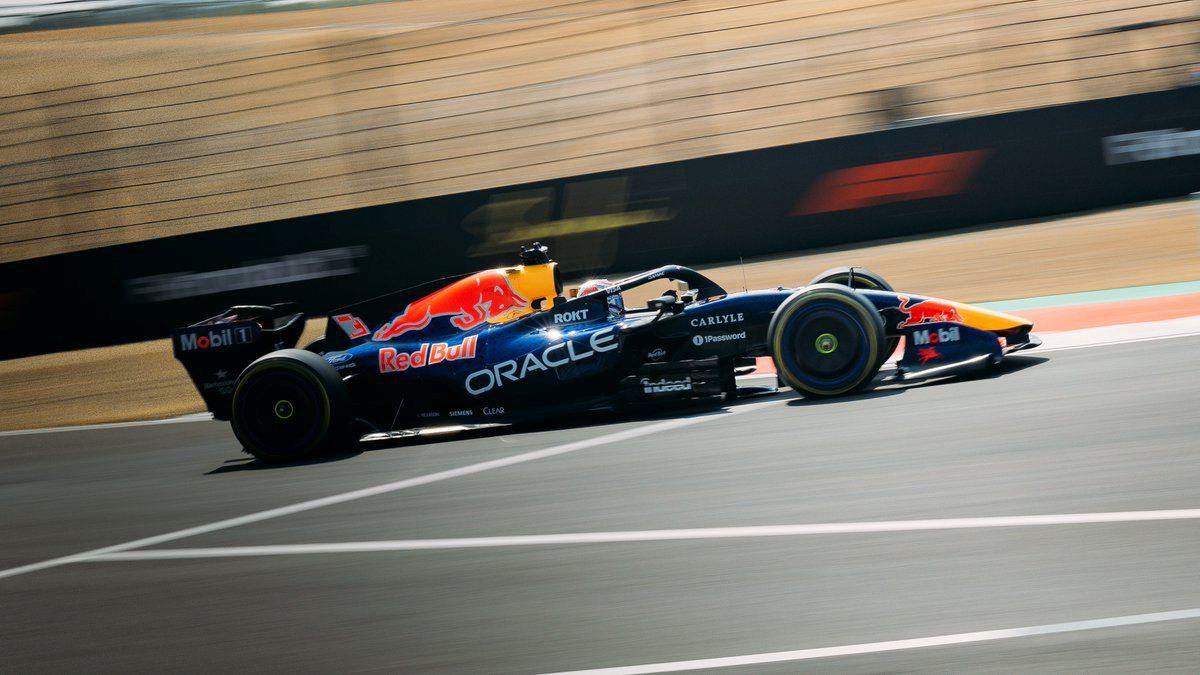
Four-time world champion Max Verstappen expressed strong dissatisfaction with the technical guidelines established for the future of the main motorsport category. The Dutch driver openly criticized the changes proposed by Federação Internacional from Automobilismo, pointing out that the new rules distort the essence of the competition and alter the fundamental DNA of single-seater racing.
During recent interviews, the Red Bull Racing competitor countered comments from part of the public that supports technological changes. Ele categorically stated that many fans do not understand the technical complexity, the dynamic functioning of the cars and the true nature of high-level racing, judging the rules only by the potential for superficial entertainment.
The athlete’s dissatisfaction reflects a broader debate in the paddock about the balance between television spectacle and pure sport. The statements generated immediate repercussions among engineers, team leaders and experts who follow the evolution of cars, creating a clear division between defenders of sustainable innovation and speed purists.
Reactions to the new overtaking format
The central point of criticism of Verstappen involves the introduction of an overtaking system that he directly compared to the video game Mario Kart. The new regulations provide for a manual overtaking mode, where the driver following the car in front will receive an extra boost of electrical energy temporarily to facilitate the maneuver. Para the Dutchman, this artificial mechanic takes away the merit of individual skill, turns disputes into something scripted and undermines the unpredictability that has always marked motorsport.
In addition to facilitating overtaking in a way considered excessive by the current champion, the system drastically changes position defense tactics on the track. Drivers will need to manage energy defensively, creating a scenario where battery management becomes more important than the chosen route in high-speed corners. Essa change of focus is seen by experts as a dangerous departure from the roots of motorsport, where courage and precision in braking should be the determining factors for success in a direct duel for positions.
Changes to engines and active aerodynamics
The power units will undergo a thorough redesign, dividing energy generation equally between the internal combustion engine and the electrical components. Essa fifty percent ratio for each side requires significantly larger batteries and much more robust energy recovery systems.
To compensate for the increased weight of the batteries and natural air resistance, the category will implement an unprecedented system of active aerodynamics. The front and rear wings will have moving parts that will automatically adjust on straights to reduce drag and increase top speed considerably.
Managing this technology will require riders to completely adapt their traditional riding styles. The need to regenerate electrical energy in specific braking zones will change the apex points, gears used and cornering speeds on practically all circuits on the calendar.
Verstappen argues that the excessive weight of modern cars is already a chronic technical problem and that the addition of more electrical systems will only worsen the lack of agility of single-seaters, especially on street circuits and low-speed tracks.
Current performance of the Austrian team
While debates over future regulations gain momentum behind the scenes, Red Bull Racing faces immediate and urgent challenges in the current season. The team has lost the absolute dominance that marked previous years and is now dealing with the dangerous approach of rival manufacturers in the points table.
McLaren and the Ferrari introduced aerodynamic upgrade packages that drastically reduced the lap time difference. The Austrian team’s car has demonstrated chronic mechanical balance problems, making it difficult to extract maximum performance during Saturday qualifying sessions.
Verstappen himself reported difficulties with the equipment’s drivability, mentioning that the car became unpredictable in certain track temperature conditions. The stiffness of the suspension, necessary to keep the aerodynamic platform stable, has caused excessive tire wear on more abrasive asphalt, resulting in a loss of pace during long races.
Intense preparations for Grande Prêmio of Japão
The next stage of the calendar will take the teams to the traditional Suzuka circuit, at Japão. The Asian track is widely known for its high-speed corners and rapid changes of direction, requiring a perfectly balanced chassis and impeccable aerodynamic efficiency to record good times.
For Red Bull, the race represents a crucial opportunity to regain confidence and test new mechanical setup solutions. The first sector of Suzuka, famous for its uninterrupted sequence of ‘S’-shaped curves, severely punishes any deficiency in steering response, making free practice sessions essential for equipment calibration.
Calendar expansion and team wear
Another factor of constant friction between top drivers and the organization of the championship is the continuous expansion of the calendar, which has reached a record number of twenty-four races in a single season. The grueling schedule requires constant travel across multiple time zones, imposing severe physical and mental strain not only on the competitors, but mainly on the mechanics, engineers and support staff who work behind the scenes assembling the garages. Verstappen has been one of the most vocal voices against this inflation of events, going so far as to publicly suggest that the unsustainable workload could bring forward his retirement from the sport much earlier than anticipated. The global logistics of the category force teams to operate at the absolute limit of their logistical capabilities, with double and triple rounds that leave little room for human recovery or adequate development of car parts between races. Esse exhaustion scenario raises valid questions about the quality of the spectacle offered to the public, since accumulated fatigue can result in serious operational errors in pit stops and a drop in the technical level of disputes on the track.
Impact of guidelines on single-seater design
The restrictions imposed by the new set of rules will also severely limit designers’ creative freedom at the drawing boards. With necessarily narrower and shorter dimensions, the cars will require innovative cooling and internal packaging solutions to accommodate the new power units without compromising the airflow vital for generating downforce.
Main points of attention for the upcoming seasons
The transition to the new format will require rigorous adaptations and massive investments from all parties involved in the sport. Especialistas from the sector point out that the success of teams will depend entirely on the efficiency in integrating complex mechanical and electronic systems in a reduced space.
Engineering departments currently focus on critical areas of development to ensure immediate competitiveness:
– Integração perfect connection between the combustion engine and the high-capacity electrical system.
– Otimização of active aerodynamics software to avoid failures at high speeds.
– Redução of the total weight of the chassis using state-of-the-art composite materials.
– Treinamento intensive in simulators to adapt pilots to new braking demands.
