

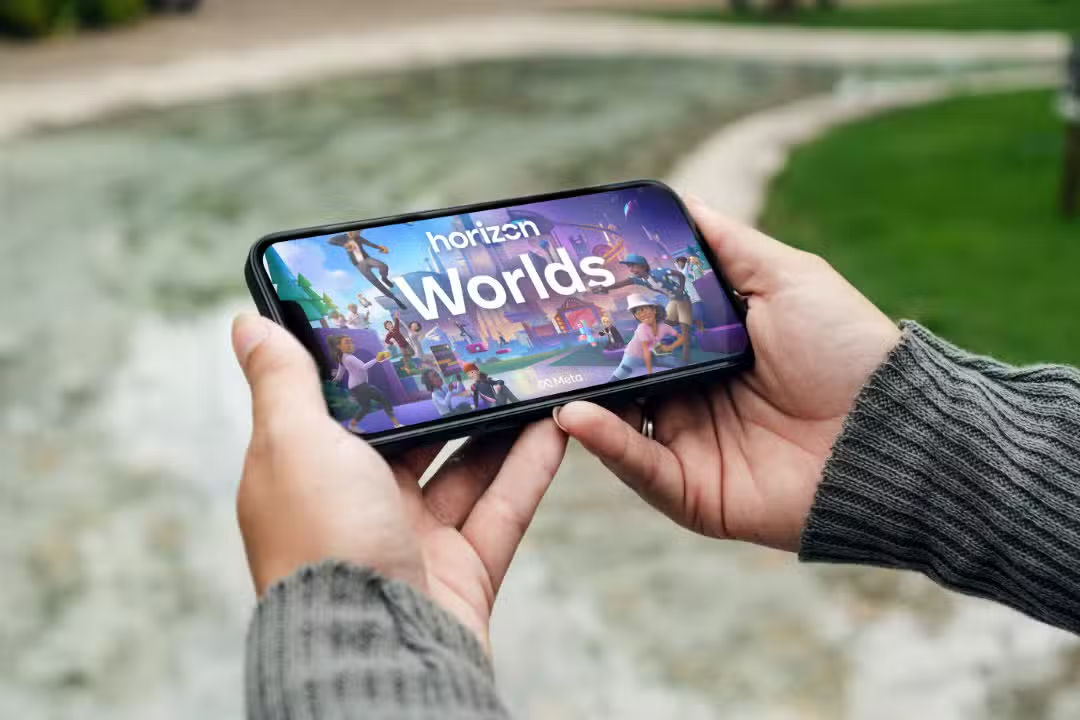
This week, Meta announced the definitive closure of the virtual reality version of the Horizon Worlds social platform on Quest headsets. The company will remove the app from the devices’ official store by the end of March and completely discontinue VR access on June 15th. Depois from this date, users will only be able to access the experience through an independent application for cell phones and tablets. The decision clearly separates the platforms to allow focused growth in each segment and represents yet another adjustment to the strategy that previously placed the metaverse as a central priority. The move comes weeks after staff cuts in the Reality Labs division and reflects the search for operational efficiency in a project that never reached the expected scale. The company reinforces that the mobile version will continue to be available and will gain more features while the VR part is closed for good. Essa change follows the platform’s original launch in 2021 as a fundamental piece in the future vision announced at the time.
The platform officially emerged at the end of 2021 and worked exclusively on Quest headsets until it gained a version for mobile devices in September 2023.
Meta launched this mobile option precisely to attract users who do not have virtual reality glasses and to create a more accessible entry point similar to other virtual environments already consolidated on the market.
- Removal of store Quest until March 31
- Total discontinuation of VR access takes place on June 15th
- After June, the experience is limited to the independent mobile app
Meta is shutting down virtual reality social platform Horizon Worlds in yet another change of direction away from the metaverse.
Reasons behind the closure decision
The company explained that it separates the two platforms to allow each to evolve independently and with greater focus on their respective audiences. Essa separation was detailed in official communications that highlight the need to optimize resources and improve overall product performance. The VR version never managed to attract more than a few hundred thousand active users per month which made it difficult to justify continued investment.
Executives from the division responsible for the project pointed out that the migration to mobile allows it to reach a much larger audience and accelerate the development of new features.
Impacts for users of Quest headsets
Owners of Quest headsets will lose access to Horizon Worlds after June 15th. Até on this date they will still be able to use the platform normally but from then on the application will be removed from the devices. Alguns specific benefits such as Meta credits and digital items purchased within worlds will also be affected by the discontinuation.
Meta reported that active users received direct communication about the changes and that the transition to the mobile app represents the continuity of the social experience in another format. Muitos creators who developed exclusive content for VR will need to adapt their creations for the mobile environment if they want to maintain a presence on the platform.
The company remains committed to the virtual reality developer ecosystem but directs these efforts to other titles and applications independent of the Quest headsets.
Transition to the mobile version of the application
The mobile version of Horizon Worlds was launched in September 2023 precisely to serve as a gateway for users without virtual reality glasses. Desde then Meta observed significant growth in this modality and decided to concentrate efforts in this segment to expand its reach. The application works in a similar way to other popular virtual environments and allows interaction between avatars in three-dimensional worlds accessible by smartphones.
The current strategy prioritizes mobile to capture a larger audience and reduce dependence on specialized hardware that still has limited penetration in the consumer market. Desenvolvedores have already created more than two thousand exclusive worlds for mobile in recent months and the engagement numbers in this version exceeded initial expectations. Meta plans to continue investing in creation tools for the mobile app and promises regular updates to improve the user experience.
The separation between platforms allows the team responsible for mobile to move forward with greater agility without the limitations imposed by integration with Quest headsets.
Losses accumulated in the virtual reality division
The Reality Labs unit has recorded operating losses of billions of dollars in each quarter since the platform’s launch. In the balance sheet for the previous fourth quarter, the division reported a loss of 6.02 billion dollars, which contributed to the accumulated total that exceeds tens of billions since 2021. Esses numbers reflect the high hardware and software development costs necessary to keep the project alive.
The company made significant staff cuts in the division at the beginning of the year, including affecting internal studios dedicated to Horizon Worlds content. Apesar of the financial adjustments, Meta maintains investments in other areas of virtual reality but with a more focused focus on independent games and applications. The current change helps to reallocate resources to initiatives that have better return indicators.
CEO’s initial view of the metaverse
When the company changed its name in October 2021, CEO Mark Zuckerberg described the metaverse as the next great frontier of the internet. At the time he projected that in the next decade the platform could reach a billion users and generate hundreds of billions of dollars in digital commerce while supporting jobs for millions of creators and developers. Essa vision guided massive investments in hardware and software in the following years.
Horizon Worlds was launched as the main social product to achieve these goals and initially functioned as a central space for virtual reality interactions. The platform allowed avatars to meet, play and create shared worlds in an immersive three-dimensional environment. Over time, the company expanded access to web and mobile but maintained the main focus on Quest headsets during the first few years.
The initial strategy called for deep integration between hardware and software to create a complete experience that would differentiate Meta from traditional competitors. Plans included large virtual events and partnerships with creators to popularize the everyday use of virtual worlds.
Recent changes in the company’s strategy
Meta has started to prioritize the advancement of artificial intelligence in recent months, reducing the emphasis previously given to virtual reality. Essa reorientation occurred after internal evaluation of the results obtained with the metaverse project and led to a clear separation between VR and mobile platforms. The vice president of content at Reality Labs reinforced in recent communications that the division redoubles its efforts in the virtual reality developer ecosystem while focusing Horizon Worlds almost exclusively on mobile.
This approach allows each product to evolve according to its own characteristics and better meet the demands of the current market. The company continues to release updates for the Quest headsets but focuses primary development on apps and games independent of the shuttered social platform.
Meta ends Horizon Worlds on Quest VR devices in June, marking departure from the metaverse.