

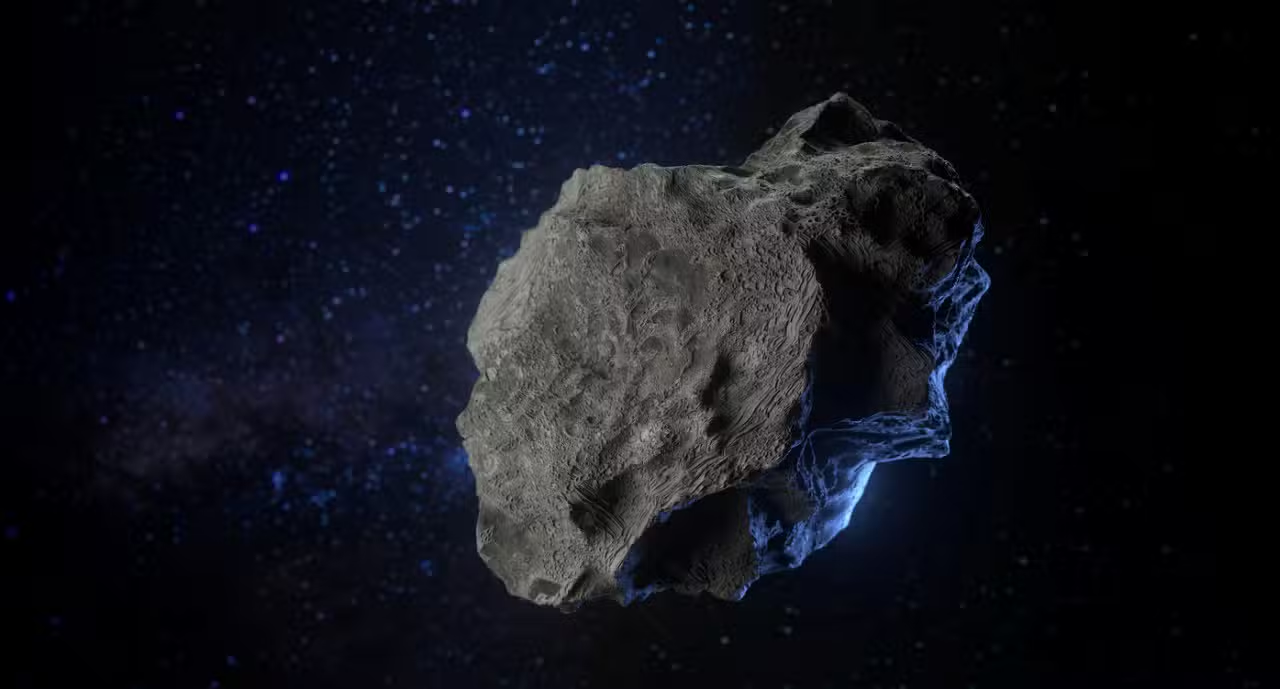
International teams of researchers applied non-destructive methods to examine the interior of meteorite NWA 7034, recognized worldwide as Black Beauty. The space rock, originating from Marte, was subjected to combined X-ray and neutron tomography techniques, revealing internal structures rich in hydrogen. Three-dimensional mapping identified specific clasts that hold evidence of hydrothermal interactions that occurred billions of years ago in the Martian crust.
The data obtained reinforces the thesis that the red planet hosted humid and potentially habitable conditions in its remote past. The sample contains mineral fragments dating back up to 4.48 billion years, making it one of the oldest records ever studied in terrestrial laboratories.
The detailed analysis quantified the water presence and detailed the distribution of elements within the rock matrix. The results point to the following fundamental findings about the composition of the sample:
– Clastos of iron hydroxide rich in hydrogen occupy 0.4% of the total volume analyzed.
– Esses small fragments are responsible for concentrating around 11% of all water in the sample.
– The overall water content in the material reaches the 6,000 parts per million mark.
Desert Discovery and Space Rock Characteristics
The space fragment fell into the Saara desert and was officially recovered and cataloged in 2011. With an approximate weight of 320 grams, the material differs from other extraterrestrial samples due to its peculiar physical and chemical structure.
It is a regolith breccia, a rock formed by the agglomeration of multiple fragments of different ages and origins, cemented together after a violent impact on the Martian surface. The Esse event ejected the material into space, where it traveled for millions of years before reaching the Terra.
The intensely dark coloring and the characteristic shine on some of its faces earned it the nickname by which it is widely known. Análises rigorous isotopic tests confirmed the Martian origin, attesting to the presence of minerals that made up the planet’s surface crust.
Application of neutron tomography and X-rays in research
Technological advances have allowed scientists to investigate the interior of the rock without the need for physical cuts or chemical dissolution processes, which traditionally destroy irrecoverable parts of the samples. Neutron tomography has demonstrated high effectiveness in detecting light elements, such as hydrogen, even when hidden within extremely dense materials. By combining this technique with conventional X-ray tomography, the team was able to generate very high-resolution images, preserving the structural integrity of the fragment for future scientific investigations.
Before the implementation of these dual-scanning technologies, identifying millimeter-sized inclusions in meteorites required fragmenting the material, limiting understanding of the rock’s internal spatial context. Atualmente, the neutron beams penetrate the rock matrix and interact directly with the hydrogen atoms bound to the minerals, revealing water concentrations that would go unnoticed by traditional methods of superficial observation or destructive chemical analyses.
Three-dimensional mapping of light elements and hydrogen
The overlay of data generated by neutrons and X-rays resulted in an accurate three-dimensional map of the meteorite’s interior. Essa digital modeling showed that the water is not distributed evenly throughout the rock.
The researchers observed that hydrogen tends to accumulate in specific zones, preferentially associating with oxidized iron minerals. Essa internal heterogeneity provides direct clues about the geological processes acting on the crust of Marte.
The regions adjacent to the hydrogenated clasts have significantly lower levels of retained moisture. The sharp contrast between different parts of the breccia reflects the complexity of the early Martian surface environment.
The mapping also indicated that watery fluids circulated through microscopic fractures before the rock was ejected into space. Crystallization of these fluids resulted in the hydrogen-rich structures now detected.
Water concentration and the formation of iron hydroxide
The clasts identified in the scan are mainly composed of iron hydroxide, specifically oxyhydroxides formed from direct chemical reactions between basalt rock and liquid water. Embora represent a tiny volumetric fraction, the water storage capacity of these structures is disproportionately high in relation to the rest of the matrix.
The presence of these chemical compounds attests to the occurrence of localized hydrothermal alteration processes. Water heated by volcanism or asteroid impacts percolated through the crust, altering the original mineralogy and trapping hydrogen in a stable crystalline structure that survived the interplanetary journey.
Evidence from period Noachiano and climate evolution
Unlike most cataloged Martian meteorites, which are geologically younger, this particular sample acts as a time capsule from the period Noachiano, a geological era from Marte characterized by intense volcanic activity, meteor bombardment and, crucially, the abundant presence of liquid water on the surface. The dating of the zircons present in the breccia, pointing to 4.48 billion years old, aligns the formation of the rock with the phase in which the planet had a denser atmosphere and an active magnetic field. The concentration of water detected in the clasts reinforces climate models that suggest prolonged phases of humidity, capable of sustaining extensive hydrothermal systems. Esses Warm underground environments are considered by astrobiologists to be the most promising places for the emergence and maintenance of microbial life forms in the remote past of the solar system, before the drastic transition that transformed Marte into the arid and icy desert observed today.
Comparison with other samples from the red planet
Comparative analysis demonstrates that other classes of Martian meteorites, such as shergottites, nakhlites and chassignites, have substantially lower water contents, rarely exceeding the 1,000 parts per million mark. Essa mineralogical discrepancy cements sample NWA 7034 as a unique representative of early regolith, offering an unparalleled record of ancient crustal hydration.
Relevance to future sample return missions
The successful application of non-destructive techniques establishes a new standard protocol for handling rare extraterrestrial materials. Space agencies planning sample return missions, which aim to bring rocks collected directly from the Martian surface to Terra, will use similar methodologies to maximize the extraction of scientific data without compromising the physical integrity of the collected material. The ability to perform repeated reexaminations with emerging technologies ensures that samples continue to provide valuable information for decades.
While current robotic missions, such as the rovers exploring the Jezero crater, identify hydrated minerals and deltaic deposits in situ, terrestrial meteorites serve as crucial physical analogues. The correlation between orbital data, analyzes carried out by robots on the surface and high-precision laboratory examinations of rocks like this one expands the global understanding of the distribution of water resources in Marte, guiding strategic planning for future space exploration.