

The Grande Colisor from Hádrons operated by the Organização Europeia to the Pesquisa Nuclear recorded the existence of a hitherto theoretical subatomic structure. The identification of the baryon composed of two enchanted quarks and a light quark represents a milestone in the understanding of particle physics. The finding occurred from the detailed analysis of proton collisions at very high speeds on the French-Swiss border.
The international scientific community has been looking for practical evidence of this formation for decades through mathematical simulations. The experiment provides a solid foundation for testing Cromodinâmica Quântica with precision never before achieved in terrestrial laboratories. The theory in question mathematically describes how the strong force acts to hold the components of atoms together.
Data extracted from high-resolution sensors shows that the mass of this structure is significantly greater than that of ordinary protons and neutrons. Essa difference in weight creates a perfect natural laboratory for observing extreme phenomena. Confirmation visualizes the stability of matter since the initial moments of the formation of the universe.
Structural configuration of the binary quark system
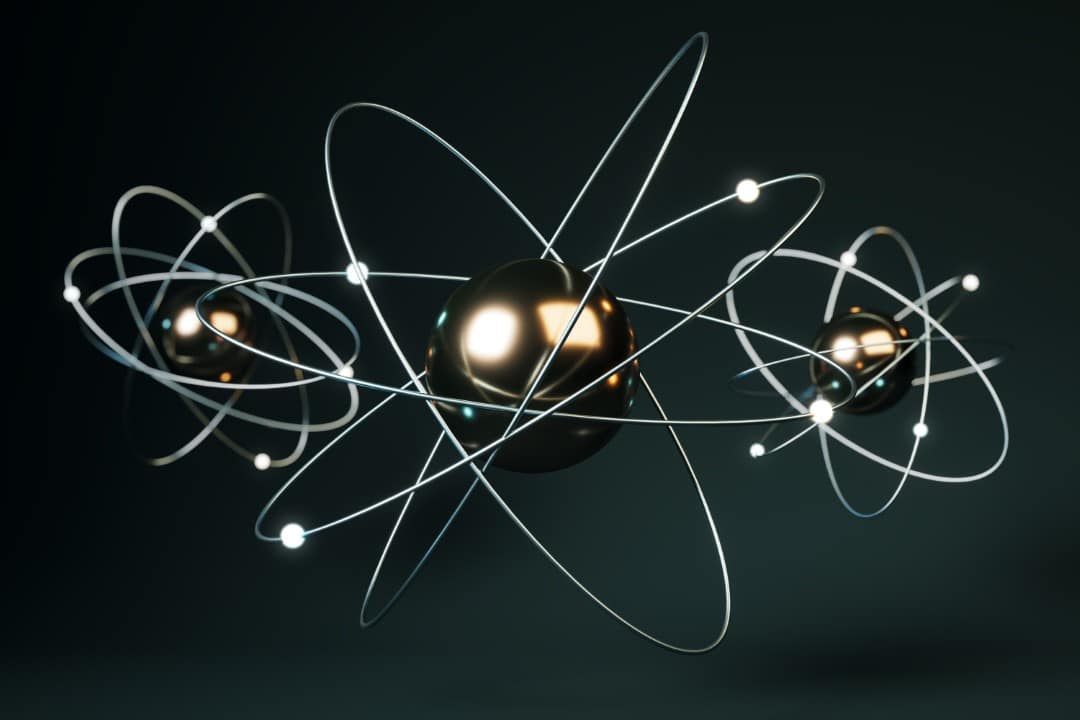
The internal architecture of the newly discovered particle differs substantially from the baryons that make up everyday matter. Enquanto the protons and neutrons house three light quarks that move symmetrically, the new formation presents a notable asymmetry in its nucleus. The two heavy quarks act as an intense gravitational center, forcing the lighter quark to orbit around them at high speed.
The physicists responsible for the measurement compare this dynamic to the functioning of a binary star system found in outer space. Nessa astronomical analogy applied to the quantum world, two very massive stars revolve around each other while a smaller planet traces a much wider and more distant orbit. Essa clear separation of mass scales within the same baryon drastically simplifies the mathematical equations needed to predict the behavior of the strong force. Theoretical simplification allows supercomputers to process collision data more efficiently, adjusting the parameters of simulations that try to explain the cohesion of hadrons. The practical result is a deeper understanding of the internal stresses that operate within stars and fusion reactors.
The particle’s double positive electrical charge arises directly from the sum of the properties of its three elementary constituents.
- The total mass reaches almost four times the weight of a conventional proton.
- Charm quarks dominate the baryon’s core structure.
- The orbit of the light component makes it easier to measure internal interactions.
Action of strong force in nature
The strong nuclear force acts as the fundamental binding element that prevents the immediate disintegration of atomic nuclei under electrical repulsion. Essa interaction is transmitted between quarks through mediating particles called gluons, which operate over distances on the submillimeter scale.
Accurately measuring this force in systems with high mass concentration remained a technical obstacle for researchers. Direct observation of the heavy baryon delivers the exact numbers needed to fill in the gaps in modern physics calculations.
European Accelerator Detection Equipment
Success in locating the particle’s specific signal depended on recent upgrades to the science complex’s silicon sensors. The equipment records the trajectory of subatomic debris with a resolution in the micrometer range.
Data filtering requires advanced algorithms capable of discarding billions of irrelevant collisions that occur every second in the underground tunnel. The trail left by the structure lasts only a tiny fraction of a second before natural decay.
The materials used in the construction of the detectors withstand extreme levels of continuous radiation during the months of collider operation. Essa resistance guarantees the uninterrupted capture of rare events that prove fundamental theories.
Theoretical validation and expansion of knowledge
The theory that describes elementary particles and their interactions gains considerable reinforcement with the materialization of this specific baryon. The current model classifies quarks into six distinct categories that form all observable matter in the cosmos.
The presence of two heavy components in the same structure confirms mathematical predictions made in the second half of the last century. Cada successful detection acts as a key piece in explaining the predominance of matter over antimatter.
Scientists use the newly measured mass as a calibration standard for future rounds of proton beam acceleration. The planned increase in luminosity from the collisions will pave the way for locating even more massive formations.
The search for variations containing bottom-type quarks is already on the agenda of the next experiments scheduled by the research teams. The diversity of the subatomic world appears to be broader and more complex than initial estimates suggested.
Primordial plasma dynamics
The scientific community focuses its efforts on understanding how these high-mass particles behave when immersed in a dense plasma of quarks and gluons. Esse extreme physical state recreates the exact conditions that permeated the universe in the first microseconds after the initial expansion. Observing these interactions on a reduced scale works as a temporal window for the formation of the first stable atomic structures.
The detailed study of particle decay provides valuable information about the weak interaction responsible for governing the processes of natural radioactivity. Measuring the average lifetime of baryon before its transformation into lighter elements refines the fundamental constants used in cosmology. Esses numbers feed the equations that describe stellar evolution and the synthesis of heavy chemical elements in the cores of galaxies.
Phenomenon of subatomic confinement
The complexity inherent to the strong force manifests itself in a peculiar way in the phenomenon known as confinement, which prevents the existence of isolated quarks in nature. Unlike gravity, which weakens with distance, the attraction between subatomic components increases exponentially as they try to move apart. The double charm structure challenges physicists to map how this extreme tension operates when most of the mass is concentrated in a very dense binary nucleus. Breaking this structural paradigm requires revisions in traditional mathematical approaches applied to baryons composed only of light elements. A deep understanding of these trapping dynamics has direct applications in applied nuclear physics, influencing the development of new clean energy generation technologies and the creation of synthetic materials in high-performance laboratories.
Joint effort to validate records
The consolidation of this discovery is the result of the integrated work of thousands of scientists distributed across hundreds of academic institutions around the globe. Processing the vast amount of information generated by the accelerator requires a worldwide network of supercomputers operating synchronously.
Calibration processes and transparency
The methodological rigor applied to the analysis of collision tracks ensures that the results presented are free from misleading statistical fluctuations. Constant calibration of measuring instruments eliminates background noise that could simulate the presence of non-existent particles.
Making the raw data openly available allows independent groups of researchers to replicate the calculations and confirm the integrity of the discovery. Essa transparency supports the credibility of the official catalog of elementary particles maintained by international scientific authorities.