

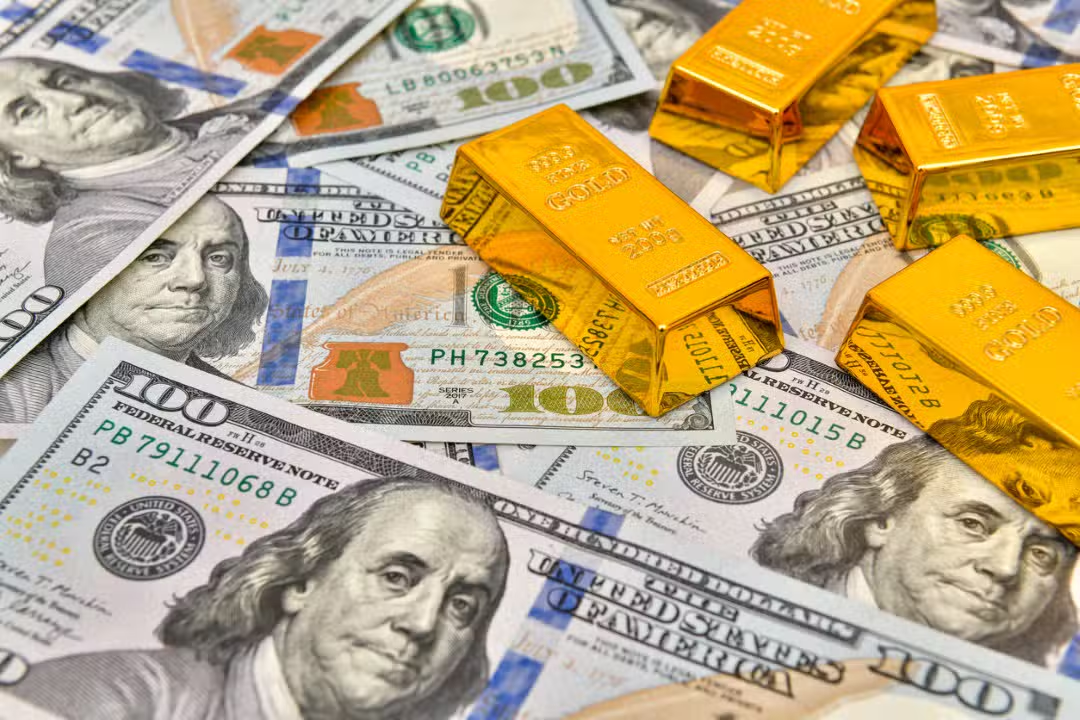
Gold prices registered a sharp drop in international markets and in Índia this Thursday, influenced by the strengthening of the US dollar and the rise in bond yields from Tesouro to Estados Unidos. Gold futures at Comex, at The pressure came from US economic data indicating persistent inflation, reducing the metal’s appeal as a safe-haven asset.
The devaluation occurred amid an environment of greater risk aversion in non-yielding commodities, with investors adjusting positions after recent rises in gold. The dollar gained strength globally, making gold more expensive for buyers with other currencies and putting downward pressure on prices.
Sharp drop in international futures
Gold contracts for April delivery at Comex closed with a significant decline, reflecting coordinated sales in the market. Analistas point out that high yields on US bonds attracted capital to fixed income assets, reducing demand for gold.
The movement followed producer inflation indicators in the Estados Unidos that were stronger than expected, which reinforced expectations of maintaining high interest rates for the Federal Reserve. Essa momentum has reduced interest in non-yielding precious metals.
Impact on the Indian market and variations by city
At Índia, local gold prices followed the global trend, with significant drops in several cities. Em Bengaluru, 24-carat gold was priced at around 15,464 rupees per gram, down 311 rupees from the previous day, while 22-carat gold was at 14,175 rupees.
In Delhi and Jaipur, the prices of 24 carats reached 15,479 rupees per gram, also with a similar decrease of 311 rupees. Mumbai, Calcutá,
In Chennai, prices showed a smaller variation, with 24-carat gold at 15,894 rupees per gram and just 1 rupee of decline, unlike other regions that saw sharper reductions. Ahmedabad and Bhubaneswar maintained similar levels to Mumbai, with 24 carat gold at 15,469 and 15,464 rupees per gram, respectively.
Pune and Kanpur followed the prevailing pattern, with 24-carat gold priced at Rs 15,464 and Rs 15,479 per gram, and declines of Rs 311 on a daily basis. Essas regional variations reflect local adjustments in taxes and resale margins, but all in line with international pressure.
Global economic factors put pressure on the metal
The strengthening of the US dollar occurred in parallel with the rise in Tesouro bond yields, which increased the opportunity cost of holding gold in one’s portfolio. Investidores migrated to American bonds in search of higher returns in a scenario of persistent inflation.
Recent data on producer prices in the Estados Unidos reinforced concerns about inflationary pressures, reducing bets on upcoming interest cuts. Essa combination weighed on gold, which traditionally benefits in low interest rate environments.
Demand and supply context in the short term
Demand for physical gold at Índia remains influenced by seasonal factors, but the current decline reflects global financial adjustment rather than changes in local demand. Joalherias and investors adjust stocks in response to volatile prices.
The volume traded on MCX indicated intense activity, with thousands of lots transacted during the day, signaling high liquidity despite the drop. Traders monitor American economic indicators to predict future movements.
Falling gold reflects portfolio adjustments by institutions, which reduce exposure to safe-haven assets amid attractive fixed income yields. The dynamics may persist as long as the dollar maintains strength.