

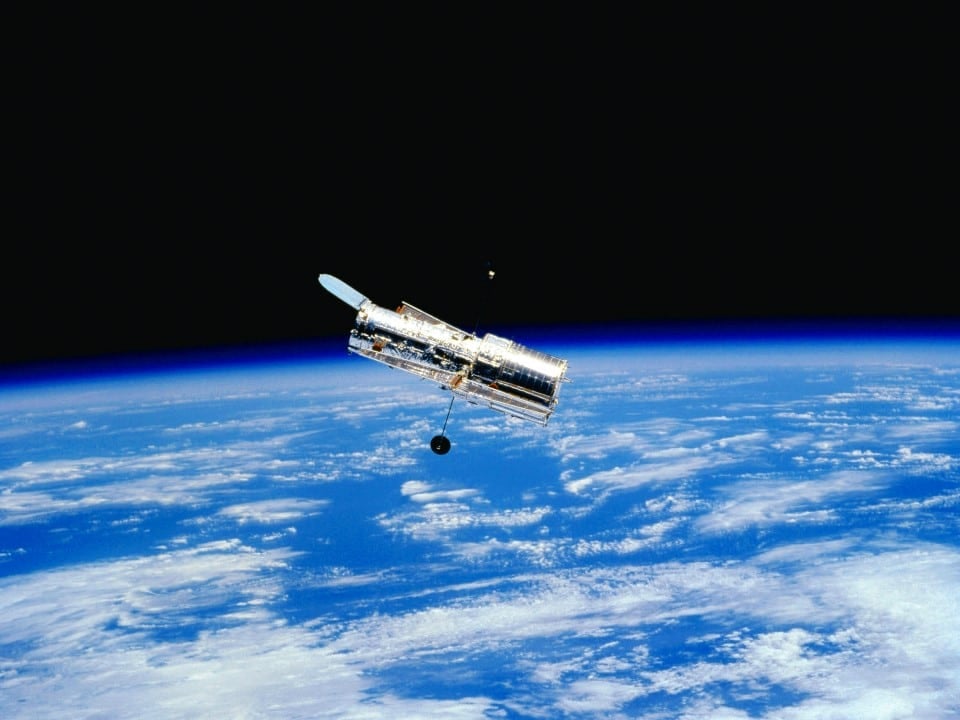
The Hubble space telescope recorded a unique astronomical event when it captured the fragmentation of comet C/2025 K1, also known as ATLAS, shortly after it passed through the closest point to Sol. The detailed observations took place at a specific interval, between the eighth and eighteenth of November last year, a period in which the celestial body was already transiting through the inner regions of the solar system. Inicialmente, the scientific community believed that the object had completely disintegrated due to the extreme thermal conditions it faced during perihelion. However, a quick maneuver to redirect the observatory’s instruments made it possible to identify that the nucleus had not disappeared, but had instead been divided into multiple parts. The high-resolution images revealed the presence of at least four main fragments, which continue to travel together through outer space. Este photographic record offers an unprecedented view of the initial stages of the process of destruction of a celestial body. The ability to observe the exact moment the physical structure gives way to external pressures provides crucial data about the density and internal cohesion of these ancient space travelers. Researchers are now dedicating their efforts to mapping the speed of separation of these pieces and understanding how solar radiation continues to interact with the newly exposed surfaces. The precision of the orbital equipment was essential in distinguishing individual debris amid the cloud of dust and gas that surrounds it.
Capturing this phenomenon required precise coordination between ground control teams and the orbital observatory’s automated systems. The window of opportunity to record fragment separation was extremely narrow, requiring rapid adjustments to exposure and tracking parameters.
Preliminary data extracted from the images points to specific physical characteristics of the disintegrated object. Initial analyzes highlight the following points about the astronomical event:
– The original nucleus demonstrated a low concentration of volatile materials compared to other similar bodies.
– Observatórios based on Terra detected anomalous fluctuations in the light curve days before the main rupture.
– The separation of the four main blocks occurred asymmetrically, indicating pre-existing structural faults.
Dynamics of spatial disintegration and thermal forces
Astronomical calculations indicate that the fragmentation process of C/2025 K1 began approximately eight days before the first photographic captures taken by the orbital observatory. Este temporal interval suggests that the rupture was not an instantaneous event, but rather a progressive and continuous structural failure.
The main cause given for the collapse of the core is the intense thermal force generated by the closest approach to the central star of the solar system. The extreme heat causes the violent sublimation of frozen elements inside the celestial body, generating pressure jets.
In addition to thermal stress, the gravitational forces exerted by Sol play a key role in destabilizing the comet’s physical structure. The difference in attraction between the front and back of the core creates unsustainable mechanical stresses along its surface.
The combination of these factors results in an internal pressure that exceeds the cohesive strength of the material that makes up the object. Quando the physical limit is exceeded, the body ruptures along its natural fault lines, releasing large amounts of dust and rock into space.
Analysis of the chemical composition of the celestial body
Comet C/2025 K1 has peculiar characteristics that differentiate it from other objects originating from the distant cloud of Oort. Spectrographic measurements revealed a chemical signature with surprisingly low levels of volatile substances, elements that normally enter a gaseous state quickly when exposed to solar heat. Esta atypical composition suggests that the celestial body may have undergone previous heating processes or that it formed in a specific region of the early solar nebula with a lower abundance of these materials. The absence of a dense and highly reactive coma facilitated direct observation of the dark rock and ice fragments by optical instruments.
The internal structure of the nucleus also proved to be less homogeneous than traditional theoretical models predicted for objects in this category. The way the comet broke into four distinct pieces, rather than pulverizing into a cloud of fine debris, indicates the presence of primordial building blocks held together by a more fragile matrix of ice. Scientists use this information to refine computer simulations of planetary formation, since comets are considered time capsules that preserve the original materials of the protoplanetary disk intact for billions of years in the cold of deep space.
Continuous monitoring by ground observatories
While the space telescope provided detailed images of the fragmented core, a network of ground-based observatories kept continuous track of the object’s overall luminosity. Esta combined surveillance is essential to cross-reference high-resolution data with the comet’s macroscopic behavior.
Records made from the ground showed a significant delay between the moment of physical rupture and Terra’s peak visible brightness. Este phenomenon occurs because the newly released dust takes time to expand and reflect sunlight optimally to the sensors.
Light curve analysis helps quantify the total mass of material ejected during the separation event. Astronomers use these photometric variations to estimate the rate of mass loss and predict the remaining lifetime of the larger fragments still orbiting Sol.
Formation mechanisms of the early solar system
The detailed study of spatial fragmentation offers direct evidence about the matter agglomeration processes that occurred in the early days of the cosmic neighborhood. Separating the blocks reveals the size scale of the original planetesimals that merged to create the central core.
The physical properties of the four main fragments, such as their density and ability to reflect light, are compared with meteorite samples collected at Terra. Esta correlation allows us to establish a more precise taxonomy for the smaller bodies that inhabit the boundaries of the stellar system.
Debris trajectory and next research steps
The astrodynamics team responsible for monitoring C/2025 K1 is currently working on precisely calculating the orbit of each of the four identified fragments. The relative speed of separation between the parts will dictate whether they continue to travel as a swarm or disperse completely through the vacuum.
Future observation campaigns depend on approval for time of use on large telescopes to track the evolution of the debris cloud. Long-term monitoring is vital to record possible secondary fragmentation as pieces move away from the heat source.
Importance of fast instrumental response
Obtaining these historic images was only possible thanks to the operational flexibility of the space telescope’s scheduling system, which allowed the replacement of a previously programmed target by the disintegrating comet. Executing the maneuver involved the precise pointing of the gyroscopes and the calibration of the image sensors to capture an object with extremely fast relative movement in relation to the background of fixed stars. During the observation campaign, the instruments performed short exposures of approximately twenty minutes, distributed over three successive orbits of the spacecraft around Terra. Este sequential capture method was specifically designed to avoid saturation of pixels by core brightness and to record the physical displacement of fragments over time. Initial processing of the raw data required the application of advanced filtering algorithms to remove visual artifacts caused by cosmic rays and to enhance the contrast between the solid chunks and the diffuse coma. The ability to reconfigure observation parameters in near real time demonstrates the continued vitality of veteran orbital platforms in frontier astronomical research. The raw data collected during these sessions were immediately archived in public databases, allowing independent researchers at multiple institutions to begin their own photometric and astrometric analyzes without institutional delays. The joint work of flight engineers and astronomers ensured that the unique opportunity to record the mechanics of cometary destruction was not missed. The astrometric precision achieved in these measurements will serve as a basis for calibrating future instruments dedicated to detecting anomalies in the solar system. Toda the operation highlights the need to maintain observation systems ready for transient and unpredictable events in deep space.
Physical evolution of distant objects
The documented event reinforces the understanding that celestial bodies from the most remote regions of space are subject to radical and irreversible physical transformations. Violent interaction with the high-energy environment of the inner solar system acts as the main mechanism of structural change for these ancient objects on their elliptical trajectories.



