

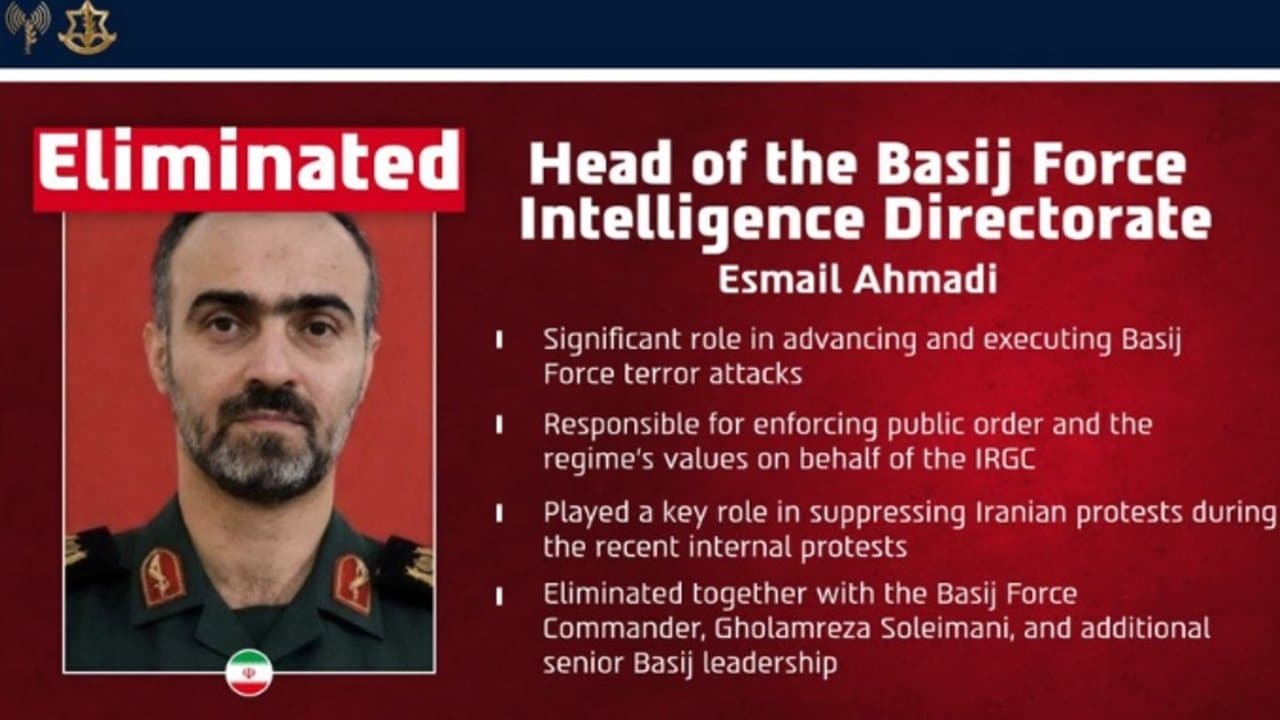
An operation carried out in the Iranian capital, Teerã, resulted in the elimination of Esmail Ahmadi, who led the intelligence division of Força Basij, as well as other high-ranking commanders from the same unit. The attack targeted directly the leadership of Força Basij, in the heart of the city, as announced.
Esmail Ahmadi was a central figure in the activities of Força Basij, acting decisively in the planning and execution of actions considered terrorist. Sua’s performance was strategic for the Guarda Revolucionária Islâmica (IRGC), guaranteeing the imposition of public order and the regime’s values.
In addition to his responsibilities in security and intelligence operations, Ahmadi was one of the main coordinators of repression operations during the recent internal protests that shook Irã. Sua death, therefore, represents a significant impact on the organization’s command structure.
The role of Força Basij in Irã
The Força Basij, or Sazman-e Basij-e Mostaz’afin (Organization for the Mobilização of the Fundada in 1979 by order of Aiatolá Ruhollah Khomeini, it plays a multifaceted role in Iranian society, extending far beyond military defense issues.
Historically, Basij has been essential for maintaining internal order and propagating revolutionary ideals. Seus members, largely volunteers, are trained to act on several fronts, from supporting the armed forces in times of war to monitoring compliance with social and religious norms in everyday life.
The organization is known for its vast network of cells in universities, schools, mosquitoes and government institutions, allowing a widespread presence throughout the country. Essa structure facilitates the rapid mobilization of its members to face external or internal threats, including participation in security operations and repression of popular demonstrations.
Strategic implications and repercussions
The loss of Esmail Ahmadi and other commanders is a significant event for the Força Basij leadership structure. The intelligence division, commanded by Ahmadi, is considered a pillar for the organization’s operations, and its disarticulation could generate a series of developments.
Regional security experts analyze the possible consequences of this attack. Força Basij is a key arm of the Iranian regime, both in defense and internal security, and the removal of key figures like Ahmadi could trigger a reassessment of strategies and a possible reorganization of its operations.
The action in Teerã, against such a high-ranking target, signals an escalation of tensions and a continued focus on strategic targets. The incident occurs in a scenario of regional instability and complex geopolitical dynamics, where the actions of paramilitary groups and security forces such as Basij are constantly monitored.
The exact details of the operation and the authorship of the attack have not been completely clarified, but the impact of the elimination of Força Basij leaders in the Iranian capital is undeniable. Esse type of event tends to provoke responses and change the balance of forces at play in the region.
Força Basij remains a crucial element in maintaining the power and influence of the Iranian regime, both within its borders and in its external projections. Surveillance over their movements and the capacity of their leaders are points of attention for international analysts.