


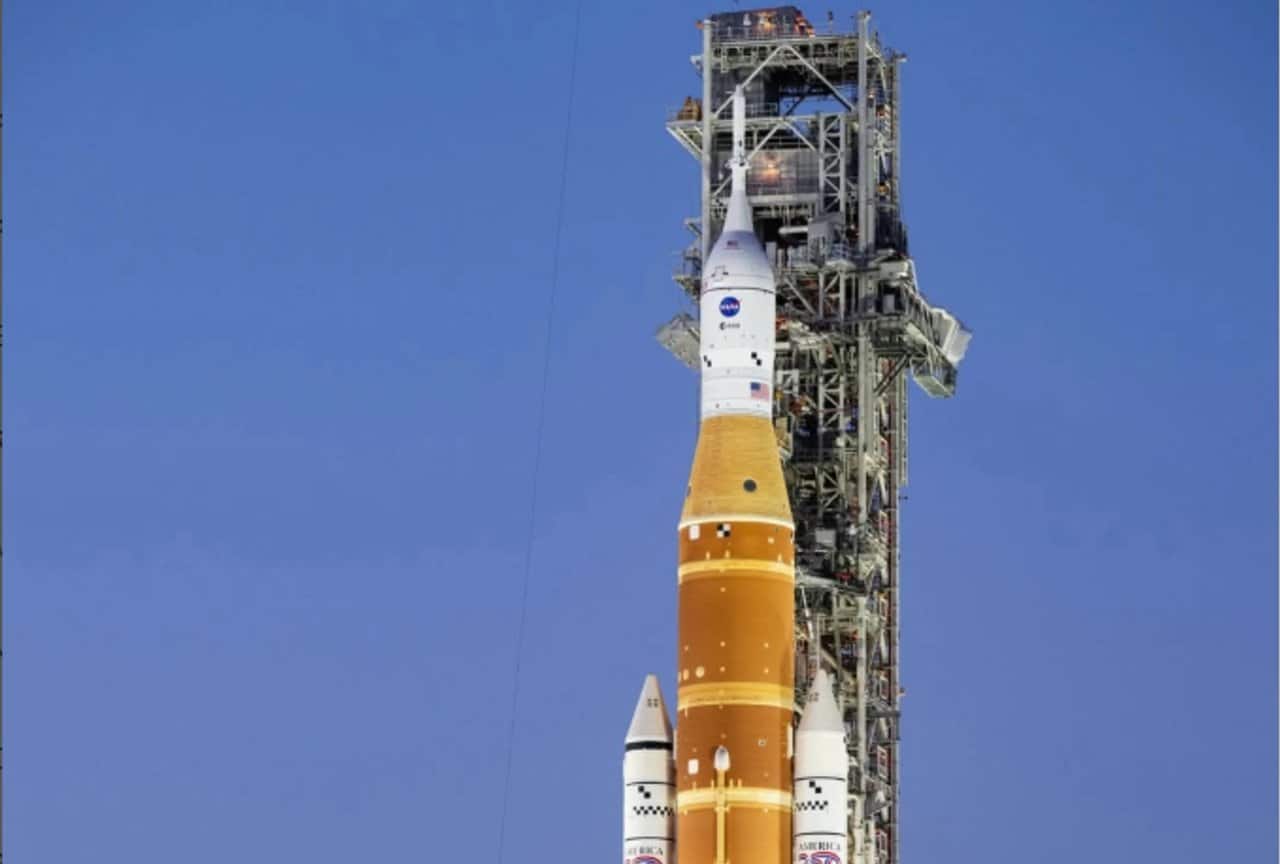
The space agency has successfully completed the complex movement of the gigantic Space Launch System rocket and the Orion spacecraft back to launch pad 39B, located at Centro Espacial Kennedy, in the state of Flórida. The transport operation began on Thursday night, local time, and lasted for a period of approximately twelve continuous hours. The crawler vehicle transported the immense structure at a controlled speed, covering the six and a half kilometer distance between the assembly building and the launch base.
Specialized engineers and technicians monitored every inch of the route to ensure the structural integrity of the assembly, which weighs around five thousand tons. Esta careful movement occurred shortly after critical repairs to the vehicle’s helium system were completed. The agency is now focusing all its efforts on carrying out final integrated tests, essential procedures to confirm the absolute readiness of the hardware before the opening of the launch window, officially scheduled for April 1st.
Final preparations on the platform involve a series of rigorous technical validations before authorization for flight:
– Verificação thoroughness of all electrical and communication interfaces between the rocket’s main stage and the manned capsule
– Testes accurate mechanical alignment and umbilical connections on platform structure 39B
– Confirmação absolute integrity of complex cryogenic propellant supply systems
– Análise detailed and visual inspection of the heat shield that will protect the crew during re-entry into the Earth’s atmosphere
This positioning maneuver represents a fundamental advance and an operational milestone for the lunar exploration program, especially after the team overcame several technical delays recorded at the beginning of the year.
Corrections in the helium system guarantee advancement of the space schedule
At the end of February, telemetry systems detected an anomaly in the flow of helium, an inert gas crucial for pressurizing fuel tanks and purging engine lines. Este technical problem required a conservative safety decision, forcing the return of the entire launch vehicle to the vehicle assembly building.
Inside the processing facility, experts performed detailed physical inspections and pressure tests to isolate the source of the leak. Technical teams replaced the compromised sealing components and re-evaluated the entire subsystem to ensure the failure would not recur under the harsh flight conditions.
Efficient resolution of this specific issue allowed the rocket to be returned to the launch pad in a timely manner. The uninterrupted work of the ground teams preserved the established schedule, keeping the launch opportunity for the beginning of April viable.
Isolation protocols for the lunar mission crew
In direct preparation for the historic flight, the four astronauts assigned to the mission entered a strict quarantine regime at the agency’s Houston facility last Wednesday. Commander Reid Wiseman, Pilot Victor Glover, Mission Specialist Christina Koch, and Mission Specialist Este isolamento preventivo é projetado especificamente para reduzir a zero os riscos de contaminação por doenças infectocontagiosas nos dias que antecedem o lançamento, garantindo que a equipe esteja em perfeitas condições médicas para suportar as exigências físicas do espaço.
During this confinement phase, the crew maintains an intense final preparation routine, reviewing flight plans, emergency procedures and operational details of the Orion spacecraft. The four professionals perform software simulations and maintain remote contact with the mission control teams. The quarantine will continue uninterruptedly until the astronauts are officially transferred to Centro Espacial Kennedy, where they will carry out their final dressing tests and board the vehicle.
Launch windows and planned trajectory for the flight
The first official launch attempt is scheduled for April 1st, with the countdown aimed at activating the engines at exactly 18:24, local time on the American East Coast.
If meteorological conditions at Flórida are not favorable or non-standard technical parameters arise, flight directors have alternative windows available on subsequent days, extending until April 6th.
An additional launch opportunity was also calculated and reserved for April 30th, depending on the orbital alignment required for the mission.
The total duration expected for this expedition is approximately ten days, during which the spacecraft will perform a lunar flyby trajectory in free return, using the gravity of Lua to propel the capsule back to Terra.
Overcoming obstacles with liquid hydrogen leaks
The path to the launch pad was marked by significant engineering challenges, especially with regard to managing extreme cryogenic fuels. Antes Even after identifying the problem with the helium system, the program faced a considerable obstacle with a liquid hydrogen leak, which interrupted fueling tests during the general water test. Liquid hydrogen, kept at extremely low temperatures, has tiny molecules that tend to escape through the smallest cracks in valves and connections under high pressure. To resolve this issue, the agency needed to replace critical relief valves and perform extensive structural integrity analyses. Teams conducted cold tank testing to verify that the new seals would withstand the thermal stress of actual fueling. Estas detailed corrections required considerable additional processing time, being the main factor for the postponement of the launch that was initially planned for March. The absolute priority of mission management remained focused on the non-negotiable safety of the crew and ensuring the reliability of the most powerful launch vehicle ever developed in the history of space exploration.
Validation of systems in deep space environment
The current mission represents a decisive milestone, as it configures the first manned flight integrating the heavy-lift rocket and the survival capsule. The four crew members will be responsible for manually testing orbital maneuvers and evaluating the performance of life support systems in a deep space radiation environment.
The astronauts will carry out several checks of the Orion’s communication, navigation and thermal control systems during the round trip. The central objective is to validate the spacecraft’s ability to sustain human life autonomously for long periods away from the low orbit of Terra.
Preparation for future operations on the lunar surface
The absolute success of all phases of this test flight will pave the safe path for the program’s subsequent missions. The data collected by the crew and the ship’s sensors will be essential to certify the hardware for the next steps, which include the effective landing of astronauts on the lunar surface and the construction of permanent orbital infrastructure.
Ground control teams will continue to perform final integrated simulations to perfectly coordinate all phases of the launch, translunar flight and complex reentry and ocean rescue maneuver. The flawless execution of this operation is the definitive test that aerospace engineering needs to advance the sustainable exploration of outer space in the coming decades.



