


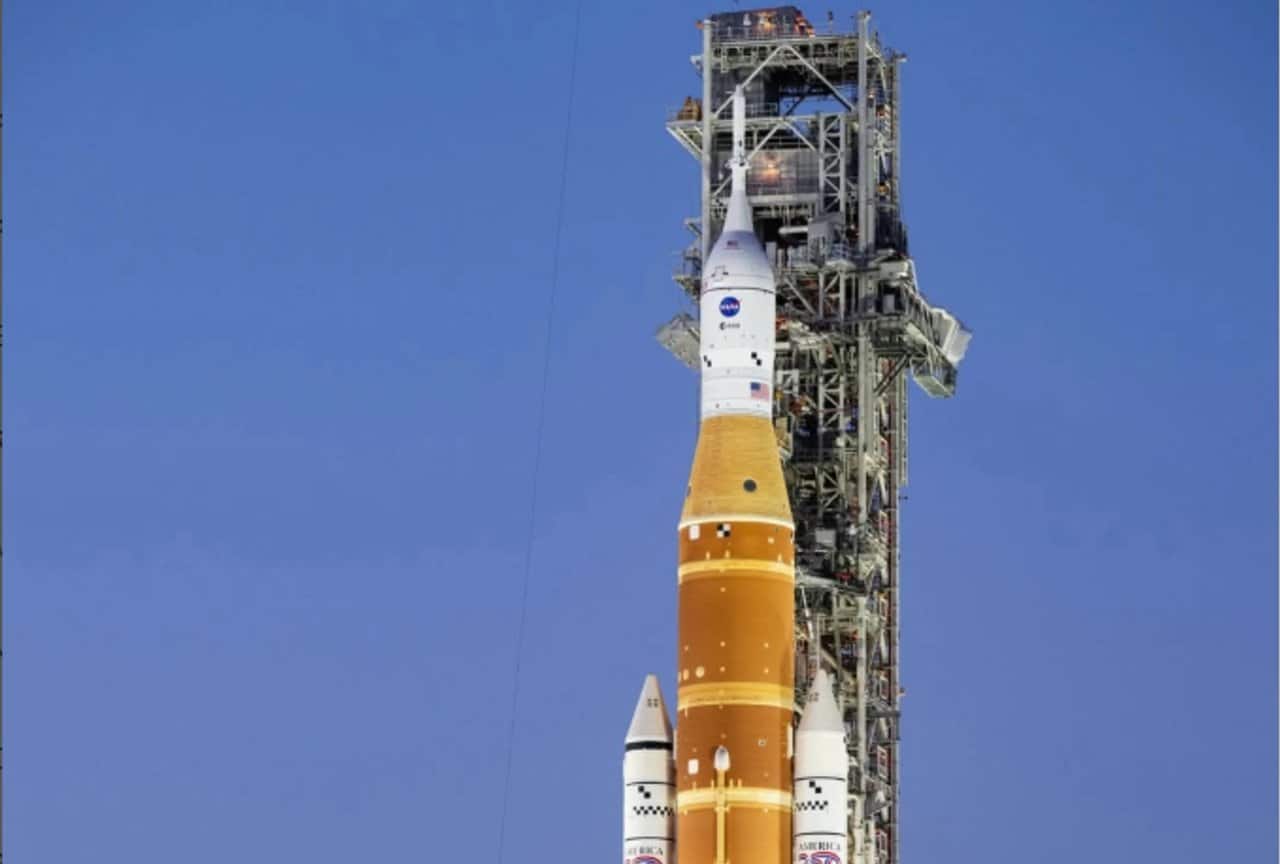
NASA has completed moving the Space Launch System (SLS) rocket and Orion spacecraft back to launch pad 39B on Centro Espacial Kennedy, on Flórida. The operation began on Thursday night local time and lasted approximately 12 hours. Engenheiros monitored the entire 6.5 km haul to ensure the integrity of the 5,000 tonne assembly following recent repairs to the helium system. The agency is now focusing on final integrated testing to confirm the hardware’s readiness ahead of the launch window that opens on April 1.
The maneuver represents an important advance in the Artemis program after several technical delays. The helium flow problem detected in late February required the rocket to be returned to the vehicle assembly building. Técnicos performed detailed inspections and replaced necessary components, allowing relocation to the platform and preserving the April schedule.
The crew of the Artemis II mission entered quarantine on Houston on Wednesday, following standard NASA protocol. The four astronauts — Reid Wiseman, Victor Glover, Christina Koch and Jeremy Hansen — remain isolated to reduce the risk of contamination in the days before the flight.
Top systems tested before launch
- Complete check of electrical interfaces between SLS and Orion
- Mechanical alignment tests on platform 39B
- Confirmation of the integrity of the propellant supply system
- Final analysis of the Orion capsule heat shield
Adjusted mission timeline
The first launch attempt is scheduled for April 1 at 6:24 pm Flórida local time. Janelas alternatives occur in the following days until April 6th and there is an additional opportunity on April 30th. The expected total duration of the mission is around 10 days, with a free return lunar flyby trajectory.
The astronauts will perform several checks on the Orion systems during the flight. The main objective is to validate the performance of the SLS rocket and capsule in a deep space environment before future lunar landing missions.
Technical challenges recently overcome
The Artemis program has faced multiple obstacles in recent months. Além of the problem with helium, a liquid hydrogen leak interrupted fueling tests in a general test with water. The agency replaced valves and performed extensive analysis to eliminate recurring risks.
These corrections required additional time, postponing the launch initially planned for March. The priority remained on crew safety and reliability of the most powerful launch vehicle ever developed by NASA.
Central objectives of Artemis II
The mission marks the first manned flight of SLS and Orion. The four crew members will test orbital maneuvers and life support systems at lunar distance. Success will pave the way for subsequent missions to land on the lunar surface.
The crew will continue specific training during quarantine and after transfer to Kennedy Space Center. Equipes on the ground perform final simulations to coordinate all phases of the launch and flight.



