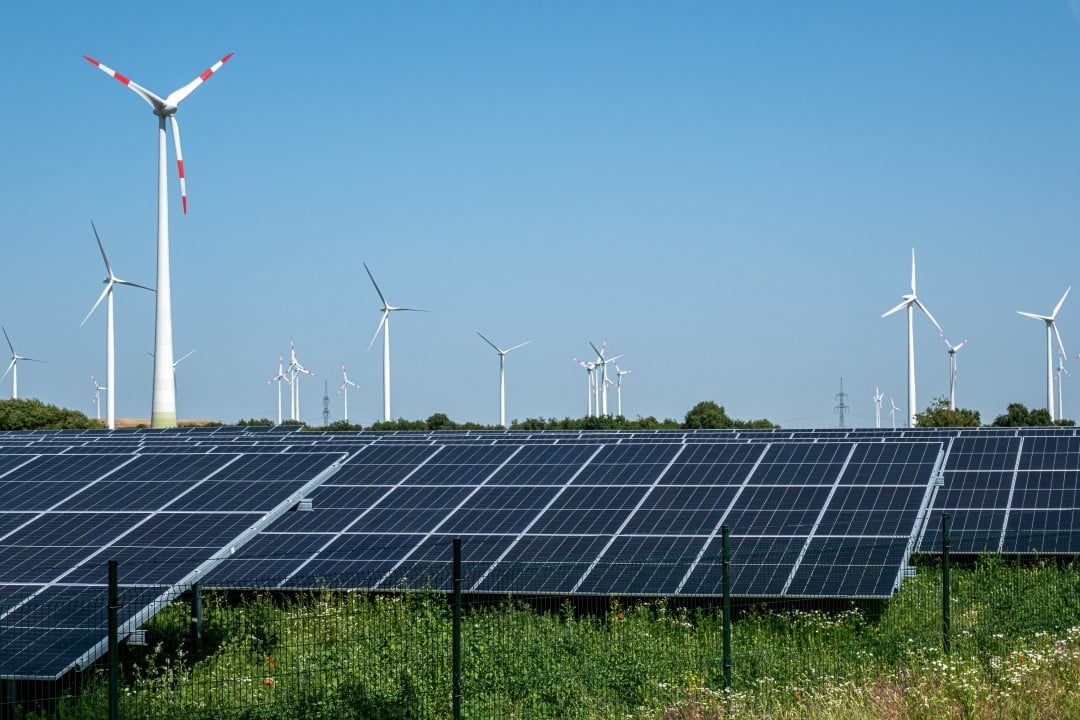
The world added a record 814 gigawatts (GW) of new solar and wind energy capacity in 2025, according to data released by think tank Ember. Essa mark represents 17% growth compared to the previous year and brings the global combined capacity of these sources to 4,174 GW, exceeding 4 terawatts. The expansion occurred amid geopolitical tensions affecting fossil fuel markets, highlighting the growing role of renewables in the energy matrix.
Solar energy concentrated the majority of new installations, with 647 GW added throughout the year. Esse volume surpassed the 582 GW registered in 2024, representing an increase of 11%. Solar technology continues to expand in a dominant way, accounting for almost four times the volume of new wind capacity installed in the period.
Wind capacity registered a significant recovery, with 167 GW of new installations in 2025.
Solar expansion dominates the global scene
Solar energy has consolidated itself as the main driving force of the energy transition. Países and China led the installations, contributing significant volumes that drove the overall numbers. The technology benefits from decreasing costs and shorter implementation times.
This predominance reflects advances in manufacturing and incentive policies in several markets. Global solar capacity reached close to 2,900 GW by the end of 2025, demonstrating continued acceleration.
Wind energy recovery advances
Wind energy has overcome recent challenges and recorded strong annual growth. Projetos onshore and offshore contributed to the increase, with emphasis on regions that invested in transmission infrastructure.
The wind sector benefits from technological improvements that increase the efficiency of turbines. Essa recovery positions the source as a strategic partner for solar in the generation of clean electricity.

Impact on electricity generation
New capacity installed in 2025 could generate approximately 1,046 terawatt-hours (TWh) of electricity annually. Esse volume is equivalent to more than a seventh of global generation from natural gas.
Additional production makes it possible to replace significant amounts of imported fossil fuels. Países dependent on liquefied natural gas see potential reduction in annual import costs.
Savings on fuel costs
The added wind and solar capacity in just one year could generate savings of around US$138 billion in gas imports, considering current market prices. Essa reduction occurs without fuel costs after installation.
Since the start of conflicts in Oriente Médio, existing solar and wind installations have prevented the generation of around 330 TWh from gas. Essa replacement resulted in savings of more than $40 billion in potential fuel costs.
Energy security gains prominence
The expansion of renewables offers an alternative to importers of fossil fuels. Tecnologias such as solar, wind and batteries enable rapid construction and operation without dependence on external supplies subject to geopolitical volatility.
These sources protect against price increases resulting from global supply disruptions. Domestic installation reduces exposure to international risks and strengthens energy autonomy.
Renewables consolidate in the matrix
The combination of solar and wind is moving forward to become the basis of the world’s electrical system. The current rate of additions indicates a gradual transition, with progressive replacement of fossil sources.
Consistent growth reinforces the economic and technical viability of these technologies. Países and utility companies are increasingly incorporating these sources into their long-term planning.
