

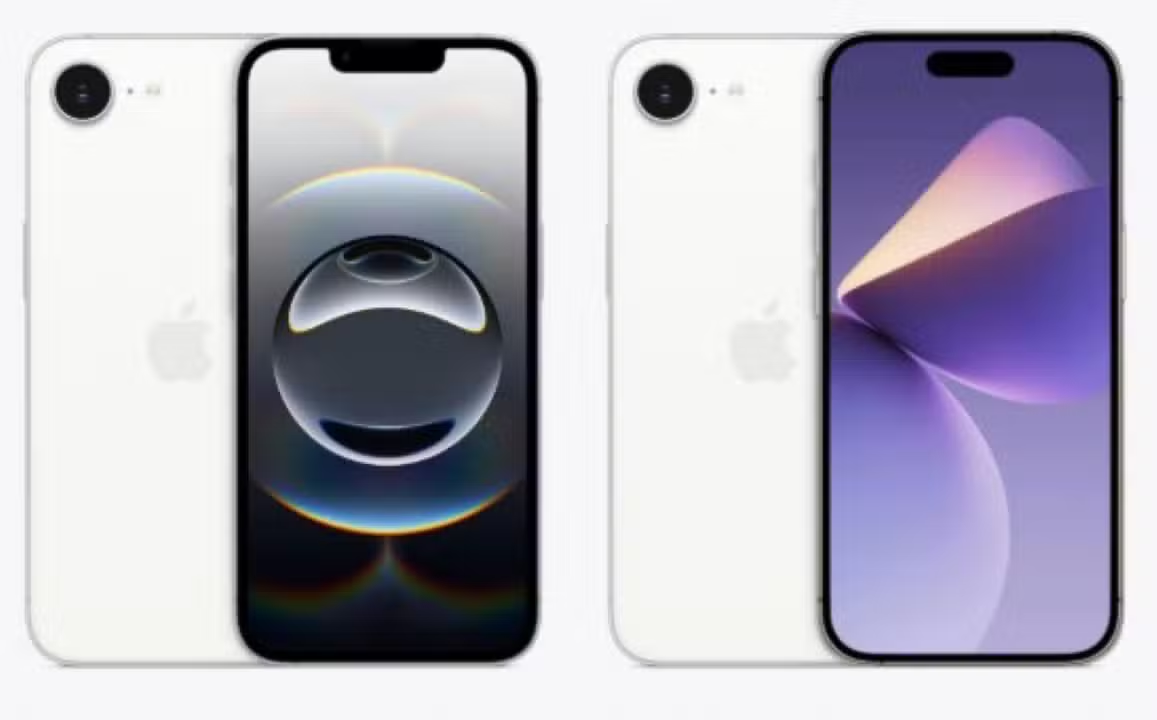
The technology giant based in Cupertino has officially announced the arrival of a new member of its main line of mobile devices. The recently presented model seeks to balance high computational performance with aesthetic refinements, focusing on consumers who demand cutting-edge technology without necessarily migrating to the brand’s more expensive versions. The announcement moves the telecommunications sector and establishes new hardware parameters for the current year.
The commercial availability schedule has already been established by the manufacturer to meet global demand. The device’s reservation period is scheduled to begin on the evening of March 4th, generating intense mobilization among brand enthusiasts looking to update their devices. The launch strategy aims to organize the supply chain and avoid product shortages in the first hours of offering to the public.

The physical arrival of the product on store shelves and the start of deliveries to the first buyers will take place exactly one week after the opening of pre-sales, on March 11th. The device hits the international market with two internal storage configurations, with the entry-level version with 256 GB sold for 99,800 yen, while the superior model, equipped with 512 GB of space, has a suggested price of 134,800 yen.
A19 processor architecture and everyday performance
The core component powering the new smartphone is the A19 processor, developed with cutting-edge lithography to support a wide range of digital activities. Este chip was designed to handle everyday tasks with extreme fluidity, such as browsing social networks and exchanging messages, to running games with complex three-dimensional graphics.
The engineering behind the silicon focuses on intelligent distribution of workload between processing cores. Essa architecture allows the device to direct maximum power only when high-demand professional applications are activated by the user. Durante light use, efficiency cores take over to minimize electrical consumption.
The precise balance between raw power and energy savings is the main differentiator of this generation of semiconductors. The manufacturer has optimized the integration between the hardware and the operating system to ensure that the device’s autonomy is significantly extended.
Laboratory tests and intense usage simulations indicate that the A19’s thermal management prevents overheating even after continuous hours of processor stress. Isso means that the user can keep the screen brightness high and use fast mobile networks without the device reducing its performance to cool down.
Advances in the C1X component and mobile connectivity
One of the biggest technical distinctions of this generation lies in the implementation of the C1X mobile network modem, a uniquely designed component that promises to raise connectivity standards on a global scale. The technical data revealed by the company’s engineering indicates that this new modem achieves data transfer speeds up to twice as high when compared to its direct predecessor, the C1 chip, which equipped the previous version of the same line of devices. Essa expanded bandwidth capacity allows the user to download large files in a matter of seconds and maintain video transmissions in very high resolution without interruptions, even in areas with heavy operator signal congestion.
In addition to the significant gain in speed, the C1X modem presents remarkable energy efficiency, consuming around 30% less battery than the network technology used in the previous generation’s Pro line. Essa optimization solves one of the biggest bottlenecks of modern smartphones, which is the rapid depletion of charge when searching for a signal in regions with unstable coverage. The deep integration of this component with the device’s motherboard guarantees much more stable internet browsing, reducing latency in online games and improving the quality of voice and video calls made over cellular data networks.
Screen technology and structural strength
The user’s visual experience is guaranteed by a 6.1-inch Super Retina XDR display, which uses advanced OLED technology to deliver superior image quality. Este panel is capable of reproducing absolute blacks by turning off individual pixels, resulting in a virtually infinite contrast ratio and extremely vibrant colors that respect cinematic calibration standards.
Screen brightness has been improved to peak at 1200 nits when viewing HDR content. Essa especificação técnica facilita imensamente a leitura de textos, a visualização de mapas e o consumo de mídia mesmo em ambientes externos sob forte incidência de luz solar direta, eliminando a necessidade de buscar sombras para enxergar o visor.
To protect this sophisticated hardware, the manufacturer implemented Ceramic Shield 2 glass on the front of the device. Este composite material offers scratch and impact resistance up to three times greater than the previous generation, while the side structure is forged in aerospace-grade aluminum, providing lightness and IP68 certification against water and dust.
Photographic and video recording capabilities
The device’s optical array is led by a 48-megapixel Fusion main camera positioned at the rear, designed to capture images with an impressive level of detail. The system uses advanced algorithms to combine multiple frames into a single photo, ensuring exceptional sharpness and visual noise reduction even in poorly lit scenarios or at night.
The main lens supports 2x optical zoom without any loss of quality, functioning as a dedicated telephoto lens. In the video department, the device allows recordings in 4K resolution with Dolby Vision technology at 60 frames per second, delivering professional quality material that suits both amateur photographers and demanding content creators.
Artificial intelligence and security features
Going beyond pure hardware specifications, the model deeply integrates artificial intelligence features processed locally on the device, ensuring privacy and speed. The system is capable of performing language translations in real time during telephone conversations or face-to-face interactions, in addition to offering instant visual recognition of objects, texts and tourist attractions highlighted by the camera. User personal safety has also received critical upgrades, with expanded satellite communications capability for emergency situations in remote locations where there is no traditional cellular network coverage. The device, which supports fast wireless charging via MagSafe and Qi2 standards, will be available on the market in three matte color options: black, white and light pink, offering a premium finish that resists fingerprints.
Strategic positioning in the technology sector
The launch of this specific model reinforces the company’s strategy of dominating the affordable premium smartphone segment. By integrating technologies that were previously exclusive to the more expensive versions, the brand is putting pressure on the competition to raise the standard of its own mid-range devices, guaranteeing system updates for several years thanks to the processing slack of the new hardware.
Storage Dynamics and Global Market
The decision to start the line with 256 GB of internal storage reflects the change in digital consumption habits, where applications, high-resolution photos and 4K videos require increasingly more space. The elimination of versions with lower capacity demonstrates alignment with the real needs of modern users, preventing the device from becoming obsolete quickly due to lack of memory.
The 512 GB variant serves a specific niche of professionals and content creators who use their smartphone as their main work tool. The pricing established in Asian markets indicates a competitive value policy that must be proportionally adapted to other global regions over the next few weeks of commercial expansion.