

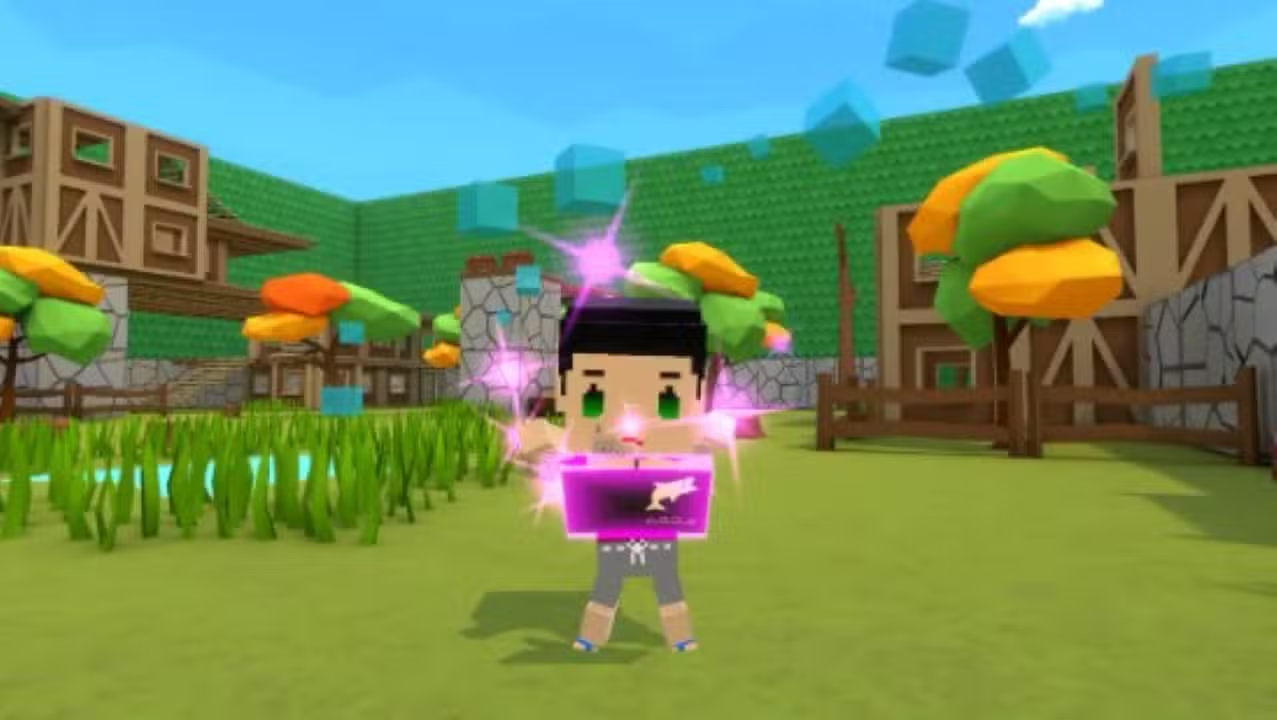
The electronic games industry welcomes a new addition to the portable console catalog with the confirmation of the release date of a popular asymmetric action franchise. Developers LiTMUS and Game Studio announced that the adaptation of the survival and strategy title will be available to users from April 28, 2026. The project marks the transition from a consolidated format on mobile devices to dedicated hardware, bringing graphical and mechanical optimizations adjusted for physical controls.
The official launch introduces a series of features developed specifically for the new hardware environment. The programming team has dedicated the last few months to ensuring that the frame rate and visual resolution meet the standards required by desktop and handheld console gamers.

Among the main features confirmed for this edition, the following technical and gameplay elements stand out:
– Suporte integral to multiplayer matches on local and online networks.
– Implementação of an account progression system that reaches level 999.
– Inclusão of three distinct survival and combat formats.
– Disponibilização of a free trial version for new users.
Commercialization values and technical adaptation
The product hits the digital market with a price set at 990 yen, positioning itself as an entry option in the multiplayer games segment. The commercial strategy aims to attract both the already established fan base and new consumers looking for low-cost cooperative experiences.
The decision to postpone the project, initially scheduled for the end of the previous year, allowed the studios to refine the source code. Esse additional development time resulted in a redesigned user interface and reduced loading times.
The voxel-style graphics, which define the visual identity of the work, were preserved and improved with new lighting effects. The color palette and scene design received higher definition textures to take advantage of the device’s screen.
Character progression and customization system
The rewards structure has been completely revamped to encourage ongoing participant engagement. The level system allows users to advance up to level 999, unlocking cosmetic content for free as they accumulate experience in matches. The initial catalog offers 93 different visual options, mixing classic costumes known to the public with new creations inspired by the new art direction of the maps developed for the console.
In addition to the main clothes, the level of customization extends to smaller details of the avatar. The inventory has more than 80 equippable accessories, divided between hand items and themed backpacks. Para non-verbal communication during sessions, around 50 body expression animations are available. A new player title engine has also been implemented, allowing users to combine words to display unique profiles on loading screens and waiting lobbies.
Survival dynamics in the form Hoshitori
The Hoshitori format adds a layer of tactical complexity by pitting eight participants in a battle royale-style arena. The central objective revolves around locating and capturing two special items that appear randomly in chests spread across the scene.
Once an individual acquires the valuable object, their position becomes the focus of other competitors. The bearer needs to navigate the map until he reaches a safe extraction point, while the other seven try to intercept him through ambushes and direct attacks.
Eliminating a carrier causes the item to be immediately repositioned at another coordinate on the map, restarting the chase. Essa mechanics prevent a single player from dominating the match from the beginning and keeps the pace of action high until the final seconds.
The structure encourages the formation of temporary alliances between pursuers. However, these informal agreements are quickly undone as soon as the target is neutralized, generating an environment of constant distrust and strategic adaptation.
Structure of traditional asymmetric matches
The classic survival format maintains the formula of three citizens trying to escape an opponent who takes on the role of a werewolf. The maps in this mode are designed with multiple escape routes and interactive traps, requiring the trio to coordinate their actions to activate the exit mechanisms before time runs out or they are captured.
The variant known as Keidoro expands this premise to a larger-scale scenario, pitting six survivors against two simultaneous hunters. The presence of a second antagonist forces citizens to divide their forces and use the environment more intelligently, creating distractions while the main objectives are completed in different parts of the arena.
Connectivity and network infrastructure
The multiplayer infrastructure was built to support high-stability local connections, allowing up to eight consoles to communicate directly without the need for internet access. Essa functionality facilitates the organization of in-person tournaments and casual meetings in environments without Wi-Fi network coverage.
For online clashes, the system uses the platform’s dedicated servers, requiring an active subscription to the console’s network service. The networking code has been optimized to minimize latency during fast-action matches, ensuring that dodge and attack commands are registered accurately regardless of the physical distance between participants.
Development trajectory and public reception
The intellectual property began its journey in the mobile device market, where it built a solid user base over three years of continuous operation. Desde its original launch, the app recorded over 1.1 million global downloads, establishing itself as a benchmark in the portable asymmetric action niche. During this period, the development team maintained a strict update schedule, introducing community map creation tools and seasonal events that kept the player base engaged. The decision to migrate to a dedicated console reflects the maturity of the franchise and the public’s demand for more precise physical controls and an experience free from aggressive microtransactions, consolidating the title as a complete and independent work on the new hardware.
Demo version availability
To facilitate access to the new audience, the companies made a free trial edition available in the console’s digital store. Esta version allows interested parties to try out the basic mechanics in matches against artificial intelligence and participate in limited multiplayer sessions, serving as a cost-free gateway to the game’s ecosystem.
Expansion of the cooperative games catalog
The arrival of this project reinforces a growing trend in the digital entertainment market, where social and cooperative experiences are gaining more and more space on table consoles. The combination of simple to understand rules with a high skill ceiling allows the title to appeal to different age groups. The responsible studios have already confirmed that they will monitor user behavior in the first few weeks after the launch to quickly apply balances and bug fixes.
Long-term planning includes the possibility of free expansions based on community feedback. The successful transition from a mobile environment to dedicated hardware demonstrates the technical feasibility of adapting touch mechanics to physical buttons without losing fluidity. With the date set for the end of April, consumers now have all the information they need to evaluate the purchase of this new multiplayer entertainment option.