

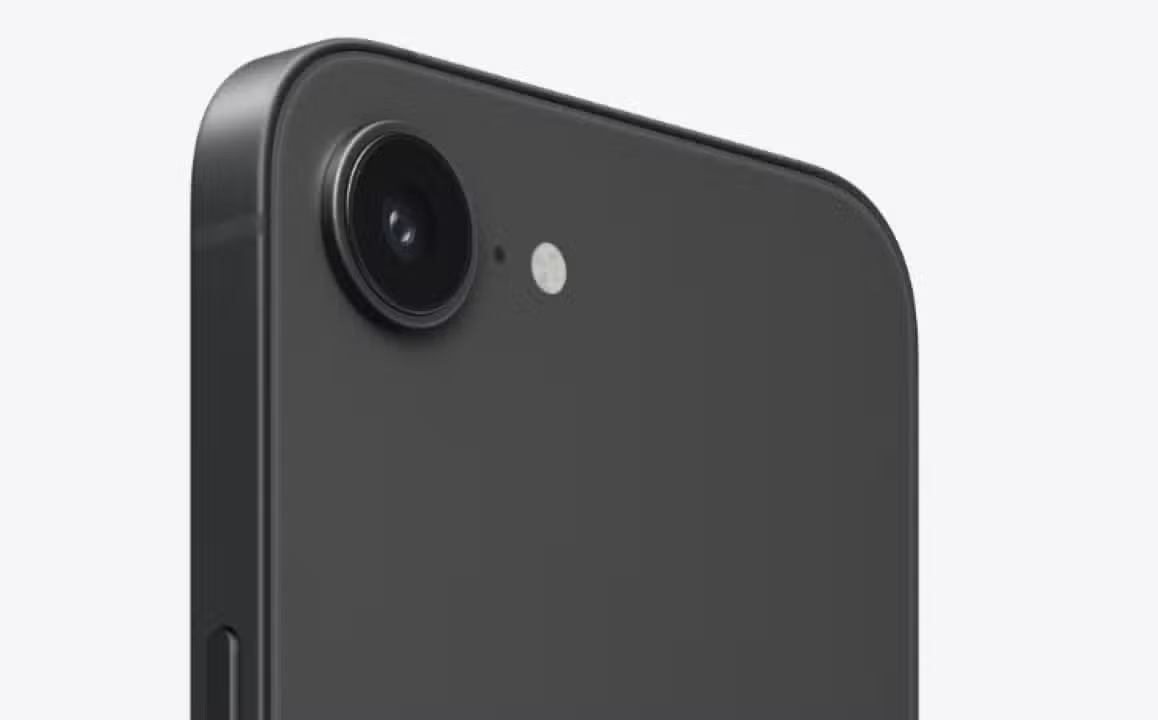
The first performance records of the new Apple mobile device began to circulate on specialized hardware testing platforms. The device, equipped with the company’s new generation of processors, presents numbers that reveal the component segmentation strategy adopted by the manufacturer for its entry-level line.
During central processing capacity evaluations, the equipment recorded 3,607 points in single-core tests and 9,241 points in multi-core measurements. Esses results demonstrate considerable technical proximity to the standard version of the line, which reaches averages of 3,627 and 9,249 points, respectively, under the same computational stress conditions.
The main technical distinction between the devices lies in the graphic architecture implemented by the manufacturer in the silicon. Essa hardware differentiation reflects a common practice in the semiconductor industry, designed to optimize production and target different levels of graphics performance for specific consumer profiles.
Core performance and recorded scores
The A19 processor maintains a computational structure divided into six main cores, designed to balance energy consumption and raw power delivery. The configuration includes two cores aimed at maximum performance in complex tasks and four cores dedicated to energy efficiency in background operations.
This structural division allows the device to manage multiple simultaneous tasks and artificial intelligence processes without overloading the thermal system. Compared to the previous generation, the new processing set presents an evolutionary leap that guarantees fluidity when navigating the operating system and opening heavy applications.
Graphic configuration and manufacturing process
The most substantial difference in the new model is found in the graphics processing unit, which operates with four active cores. The standard version of the line, in turn, maintains five graphics cores in operation, which provides a measurable advantage in applications that demand intensive three-dimensional rendering.
This structural limitation is the result of an industrial process known as binning, where chips that do not reach the maximum specification during manufacturing have a part deactivated. Apple has been using this technique for several years to utilize silicon components and reduce waste on the three-nanometer assembly line.
In specific tests for the Metal interface, the input device recorded scores ranging between 30,831 and 31,597 points, establishing an average close to 31,163. Esse value represents a reduction of approximately 16% compared to the main model, which exceeds the 37,000 point mark in the same graphic evaluations.
Internal architecture and artificial intelligence
The A19 chip integrates a sixteen-core neural engine specifically designed to accelerate machine learning tasks. Esse hardware component is essential for the functioning of the generative artificial intelligence resources embedded in the device’s operating system.
The presence of this coprocessor ensures that functions such as advanced image editing, real-time audio transcription, and intelligent organization of notifications occur directly on the device. Local processing increases user privacy and reduces dependence on constant connections to cloud servers.
In addition to the neural unit, the internal architecture features support for high-bandwidth unified memory of the LPDDR5X type. Essa technical specification facilitates fast communication between the central processor and graphics unit, minimizing bottlenecks when loading heavy textures or switching between open applications.
Despite the reduction in the number of graphics cores, the hardware maintains full support for modern visual rendering technologies. The device continues to be capable of hardware-accelerated ray tracing and advanced shading, ensuring compatibility with the latest graphics engines in the gaming industry.
Performance in daily use and running games
For the vast majority of consumers, the reduction in graphics capacity goes completely unnoticed during everyday use of the mobile device. Browsing social networks, exchanging instant messages, consuming high-resolution videos and capturing photographs occur with the same fluidity seen in the brand’s more expensive models. Aplicativos popular media systems operate without any type of choking or slowdown, showing that the central processor easily compensates for the daily demands of the operating system.
The difference in performance becomes evident only when running high-budget video games and professional video editing software. Títulos complexes that require rendering of vast scenes tend to run at frame rates between 5% and 12% lower when configured at maximum graphics quality. Nesses specific scenarios, the user may need to manually adjust visual settings within games to stabilize fluidity and ensure an entertainment experience without abrupt screen interruptions.
Energy efficiency and thermal stability
A configuração gráfica reduzida apresenta um benefício colateral significativo no que diz respeito ao gerenciamento de energia e à dissipação de calor do dispositivo. Testes preliminares de bateria indicam que o funcionamento com quatro núcleos gráficos contribui para um consumo elétrico ligeiramente inferior em situações de carga moderada, permitindo que o aparelho mantenha uma autonomia de uso equivalente ou até superior à do modelo principal em cenários específicos. O processo de fabricação avançado em três nanômetros garante uma eficiência térmica notável, evitando que o chassi do equipamento atinja temperaturas desconfortáveis durante sessões prolongadas de uso intenso. A estabilidade da temperatura interna previne o fenômeno de estrangulamento térmico, situação em que o sistema reduz drasticamente a velocidade do processador para resfriar os componentes. Dessa forma, o aparelho consegue sustentar seu nível máximo de desempenho por períodos mais longos, oferecendo uma experiência consistente para usuários que dependem do smartphone para tarefas contínuas de produtividade ou entretenimento móvel ao longo do dia.
Software support and updates
The device maintains full compatibility with future versions of the manufacturer’s operating system, with security updates and new features expected to be received for a minimum period of five to six years. Essa software longevity ensures that the device will continue to receive performance optimizations and privacy improvements over the long term.
Market positioning and cost-benefit
The strategy of using a slightly modified version of the main processor allows the manufacturer to offer the device at a more affordable price level. Essa approach aims to attract consumers looking for access to the brand’s ecosystem and artificial intelligence resources without the need to invest in cutting-edge models.
Benchmark data confirms that the device delivers a performance jump of approximately 12% to 15% compared to the previous entry generation. Essa technical evolution consolidates the model as a viable option for users who carry out equipment updates at intervals of three to four years.