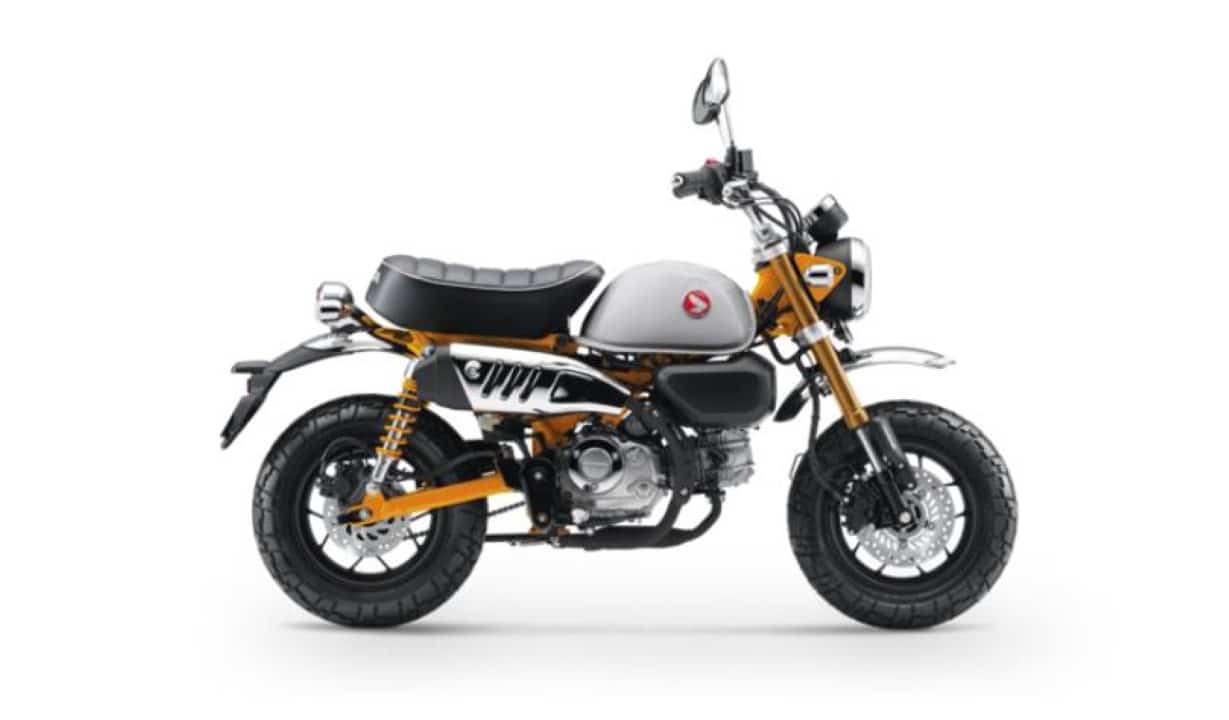
The Japanese workshop T.T.R
The customization package was officially named Bakemon and has its first public showing scheduled for the next edition of Salão of Motocicletas of Tóquio. The event brings together the main automakers and preparation workshops on the Asian continent during the month of March.
The adaptation allows the reduced-dimension motorcycle to receive the straight lines characteristic of the classic fuel tank, as well as specific side panels and an elongated seat. The modification preserves the current mechanical base of 125 cylinders while incorporating the visual identity of one of the most representative motorcycles in the history of the Japanese manufacturer.
Aesthetic details and design components
The structural assembly of the Bakemon kit includes a fuel tank with the rectilinear shape characteristic of the 1970s. The package also includes a front lighting system and rear lights molded strictly in the visual pattern of the original CB400FOUR.
The color options available to consumers follow the factory catalog for the 1974 model. Customers can choose finishes in red, blue and yellow, including a specific variation called Tipo 2, which presents a different shade of yellow to ensure greater historical fidelity.
Applied engineering and opening mechanism
One of the main technical highlights of the development is the implementation of a lateral opening mechanism for the seat. The functionality is described by the developers as an unprecedented system applied to the Honda Monkey 125 structure in the global customization market.
This engineering feature facilitates direct access to the motorcycle’s internal storage compartment and electrical components. The side opening was designed to operate without compromising the elongated design and classic silhouette required by the replica.
Images of the prototype in the testing phase also reveal the integration of a short exhaust system from the brand Yoshimura. The mechanical set is complemented by a reduced-dimension windshield in the Asahi style, elements that reinforce the performance aspect characteristic of motorcycles from that time.
Historical trajectory of the inspiring motorcycle
The CB400FOUR was introduced to the international market in 1974, representing the second generation of the Japanese manufacturer’s line of medium-sized motorcycles with four-cylinder engines. The model gained immediate notoriety due to its asymmetric exhaust system and the characteristic sound of the engine.
During its launch period, the motorcycle faced initial commercial obstacles caused by changes in licensing and qualification laws in the Japão. New regulations restricted entry-level motorcyclists’ access to larger cubic capacity engines at the time.
Despite initial regulatory difficulties, the model established itself as an icon of Asian automotive engineering. Atualmente, preserved units of the original CB400FOUR reach high trading values in the classic and collector vehicle market in several countries.
The Bakemon nomenclature chosen for the current kit has a direct link with the nickname Bakeyon. Este term was widely used in the 1970s to designate customizations that attempted to replicate the look of the CB400FOUR when the original model became a rage among Japanese enthusiasts.
Technical partnership and parts development
T.T.R Motors, a company specializing in the customization and restoration of the CB line, established a technical collaboration with the Shi House workshop to carry out this project. Shi House acts as a reference establishment in the specific CB400FOUR segment, providing the knowledge necessary to guarantee the millimeter precision of each replicated component. Joint supervision ensures that the new fiber and metal parts respect the exact proportions and spirit of the 1970s model, even though they are applied to a substantially smaller chassis.
The result of this commercial and technical union is a modification package that maintains the visual essence of the classic four-cylinder engine, adjusting all ergonomic elements to the compact platform of the Monkey 125. The side panels and seat have been designed for direct installation, using the original chassis mounting points. Este reverse engineering method eliminates the need for cuts, welding or permanent structural modifications to the base motorcycle frame, preserving the integrity and resale value of the original vehicle.
Features of the current base platform
The Honda Monkey 125, the vehicle chosen to receive the transformation, is recognized in the global market for its mechanical reliability and ease of customization. Equipada with a 124-cylinder single-cylinder engine, electronic injection and air cooling, the motorcycle delivers performance focused on urban mobility and fuel economy. The inverted front suspension and disc brakes with ABS system guarantee contemporary safety, contrasting with the retro look that the bike already has from the factory. The adoption of the Bakemon kit does not change the power, torque or consumption specifications, allowing owners to enjoy the aesthetics of a collector’s motorcycle without giving up daily practicality, ease of maintenance and agility in traffic in large cities. The initiative reflects a growing trend in the two-wheel sector, where consumers seek nostalgic designs combined with modern, efficient and affordable platforms, creating a highly profitable market niche for workshops specializing in fiberglass and parts modeling.
Exhibition at Asian automotive event
The Salão of Motocicletas of Tóquio will serve as the main stage for the official launch and practical demonstration of the Bakemon project. The workshop stand will feature the motorcycle equipped with all available accessories, allowing visitors to analyze the color variations and the matte black gel finish used in the pre-production units, while awaiting the release of the price list and commercial distribution schedule.
Expansion of the customization catalog
T.T.R Motors maintains a continuous investment strategy in the development of spare parts and modifications for classic and contemporary models from the Japanese manufacturer. The company’s portfolio already includes successful projects that preceded the creation of the current visual package for the 125-cylinder platform.
In addition to the new launch, the workshop’s production line covers specific components that meet a growing demand from collectors and customizers in the Asian market, including:
– Redesigned fuel Tanques for the CB750F series.
– Componentes fairing exclusive for the CB1000F line.
– Edições limited editions of the Efumon kit, which sold out quickly during the pre-sale period.
– Acessórios quick fixing devices that do not require changes to the original chassis.