

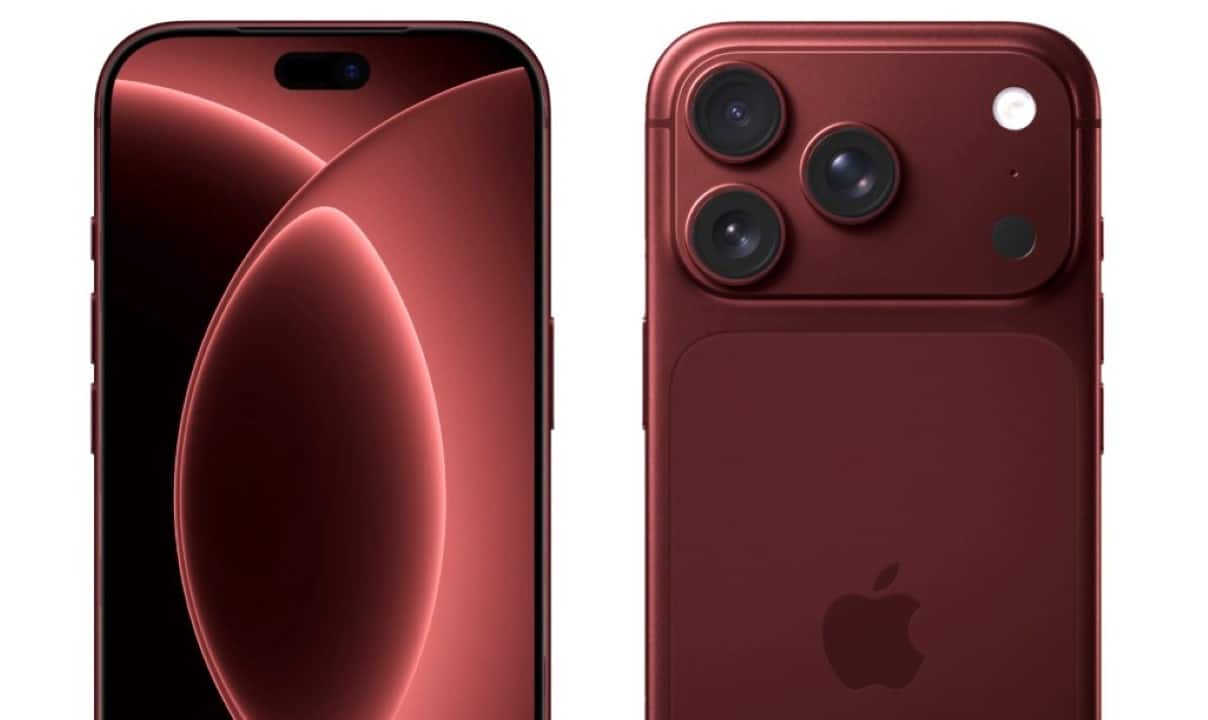
The global mobile device industry is witnessing significant movement behind the scenes at the leading technology manufacturer of Cupertino, as it fine-tunes the final details for the introduction of a new generation of high-performance devices. The internal development points to a profound aesthetic and functional reformulation, focused on serving consumers who seek advanced specifications and a differentiated design. Engenheiros work in a chassis that exposes internal components, requiring a complete rearrangement of hardware parts to ensure a clean, sophisticated look.
Engineering applied to the new translucent design
The adoption of a rear panel that allows the inside of the device to be viewed represents a paradigm shift in the traditional construction of smartphones. The development team had to redesign the motherboard and heat dissipation systems, elements that were previously hidden and now take on an aesthetic role. Cabos flexes and connectors have been repositioned to create visual symmetry that is pleasing to the end user.
To ensure durability and continued transparency, suppliers test tempered glass composites and high-strength polycarbonate resins. The chosen material needs to avoid yellowing caused by prolonged exposure to ultraviolet rays, a common problem in transparent polymers. The structure must maintain water and dust resistance certification, without compromising integrity against accidental falls.
The internal restructuring also affects the camera module and proximity sensors. The finishing of the internal components received a special treatment, with dark and metallic coatings that prevent unwanted reflections on the lenses during image capture. Essa attention to detail reflects the need to combine industrial aesthetics with the cutting-edge photographic functionality demanded by the market.
Energy autonomy and advanced cooling
Power supply receives a substantial upgrade with the integration of a battery cell that surpasses the 5000mAh mark, reaching up to 5200mAh in larger models. Esse capacity increase responds to the growing demand for autonomy in devices that process complex tasks locally. High-density battery technology allows you to store more charge without increasing the physical thickness of the device, maintaining balanced ergonomics and weight.
To deal with the heat generated by the processor and the larger battery, an unprecedented cooling system was implemented on the assembly line. Placas graphene and enlarged vapor chambers work together to efficiently dissipate temperature. The transparent design required these cooling structures to be strategically positioned, preventing heat from concentrating in areas in contact with the user’s hands during intense use.
Front panel and biometrics optimization
The dimensions of the screens maintain the standard established by recent generations, offering 6.3-inch and 6.9-inch options for the most robust version. The big visual change on the front occurs with the drastic reduction of the upper cutouts, maximizing the useful display area. State-of-the-art OLED panel technology provides intense brightness and superior energy efficiency in dark color reproduction.
The facial recognition sensors and the front camera were moved below the display, using a pixel matrix that allows light to pass through only at the time of capture or authentication. Essa innovation eliminates the need for dynamic islands or visible notches, delivering a truly seamless display. The adaptive refresh rate is still present, ensuring fluid animations and battery savings when reading static texts.
The transition to continuous display required the development of specific image processing algorithms to correct distortions caused by the layer of pixels over the front lens. Testes laboratory results indicate that the quality of video calls and frontal photographs remains unchanged, thanks to artificial intelligence that reconstructs image details in real time, compensating for any loss of sharpness.
The frontal usability reaches record levels, with extremely thin edges around the entire perimeter of the device. The titanium chassis, a material already consolidated on the assembly line, offers the necessary structural support to protect the glass panel against twisting and side impacts, guaranteeing the longevity of the display even under conditions of severe daily use.
Local processing and removal of physical components
The device’s processing core is powered by a chip manufactured using nanometer-precision lithography, designed specifically to handle machine learning and artificial intelligence operations directly in hardware. With 12GB of RAM, the operating system can keep multiple heavy applications in the background and perform video editing or graphic rendering tasks in real time. The processor architecture divides tasks between high-performance cores and energy-efficient cores, activating maximum power only when required by games or professional software, which directly contributes to preserving the battery charge throughout the day.
In a move that changes global telecommunications logistics, the manufacturer has decided to completely eliminate the physical tray for operator chips in all world markets. The definitive transition to digital format simplifies the device’s internal seal against liquids and frees up precious physical space on the motherboard, which was reallocated to cooling and battery components. The activation of telephone lines now depends exclusively on the reading of digital codes and direct communication with the operators’ servers, requiring telephone companies in several countries to accelerate the adoption of this technology so as not to lose compatibility with the new generation of smartphones.
Expanding satellite connectivity
The device’s communication infrastructure goes beyond traditional cell phone networks with the expansion of satellite connection capabilities in low orbit. Inicialmente Restricted to short emergency messages, the technology now supports sending multimedia messages, continuous location sharing and even short-duration voice calls in remote areas where there is no terrestrial antenna coverage. The radio frequency hardware has been enhanced with higher gain antennas embedded in the titanium edges, allowing the device to establish contact with the satellite network more quickly and stably, without the need to point the device directly at the sky for long periods. Essa functionality transforms the smartphone into an independent global communication tool, aimed both at adventurers and professionals working in isolated regions and in natural disaster situations where the local telecommunications infrastructure is compromised. Partnerships with aerospace companies guarantee a dedicated transmission band, ensuring that data travels with end-to-end encryption, maintaining the privacy of communications even outside the conventional network.
Variable aperture optical system
The main photographic set introduces lenses with variable aperture mechanisms, a technology inherited from professional cameras that allows physical control of the amount of light that reaches the sensor. Essa mechanical adaptation significantly improves natural depth of field and sharpness in challenging lighting environments, offering photographers and content creators a more versatile and accurate capture tool, complemented by image processing software that adjusts colors and contrast on the fly.