

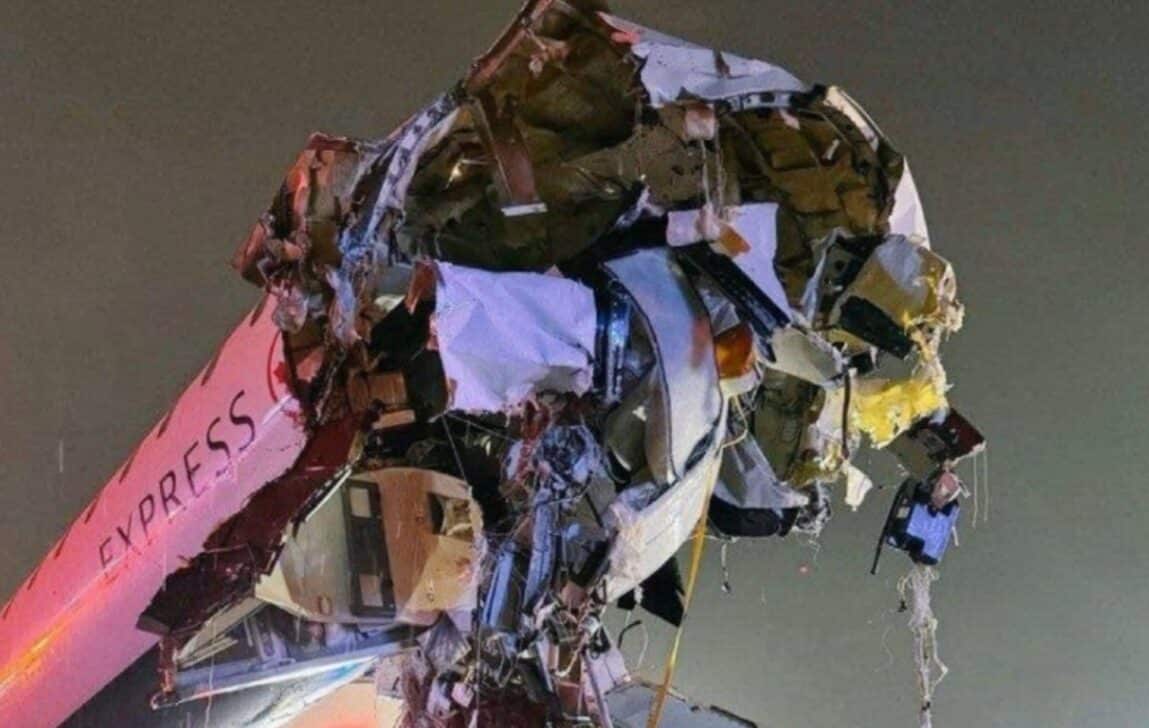
A significant aviation incident marked LaGuardia Airport on Nova York when an aircraft skidded off the runway during landing, causing seizure and mobilizing emergency crews. The incident, which did not result in fatalities, triggered a complex investigation by aviation authorities, seeking to understand the exact causes and implement preventive measures. The event highlighted the operational challenges faced by airports in adverse weather conditions and the importance of strict security protocols to mitigate risks. The aircraft, a McDonnell Douglas MD-88 of Delta Air Lines, was carrying more than 120 passengers and crew, who were evacuated safely after the incident, although some suffered minor injuries.
The sequence of events that led to the skid began under unfavorable weather conditions, with heavy snowfall and low visibility compromising operations at the airport. Segundo preliminary reports and data from the black box, the aircraft touched the ground abruptly and was unable to maintain the center line of the runway, sliding sideways until colliding with a safety fence. The quick response of rescue teams, including firefighters and paramedics, was crucial in providing immediate care to the occupants and containing any additional risk. The incident led to a temporary closure of the airport, impacting hundreds of flights and thousands of passengers who were preparing to travel or arrive in the metropolis.
Preliminary analysis of landing conditions
Comissão Nacional of The conditions of the track, which was covered by snow and ice, were one of the central points of the analysis. Reduced visibility and the presence of wind shear were also considered factors that may have contributed to the difficulty in controlling the aircraft during the final phase of landing. The investigation team focused on the aircraft’s performance, the crew’s decisions and the adequacy of runway maintenance and cleaning procedures.
The pilots reported using the aircraft’s reversers and brakes, but the traction available on the runway surface was insufficient to stop the plane effectively. Especialistas in aviation highlighted that, even with modern technologies, landing on runways contaminated by ice and snow remains one of the most challenging maneuvers. The investigation also examined weather reports provided to the crew prior to landing, assessing whether the information was complete and accurate enough to make appropriate decisions in a high-risk scenario.
Airport security measures and regulations
Following the accident, the Administração Federal of Aviação (FAA) and airport authorities reviewed safety protocols for operations in extreme weather conditions. Foram intensified the procedures for measuring the runway’s coefficient of friction and the requirements for the use of snow removal equipment and the application of anti-icing agents. The importance of effective communication between the control tower and aircraft was reinforced, with an emphasis on transmitting up-to-date information on runway and weather conditions.
These revisions aim to improve the safety of air operations, especially at airports located in regions subject to severe climate variations, such as LaGuardia. The regulations were updated to require more rigorous training for pilots in landing simulations on contaminated runways, in addition to improving risk assessment before authorizing landings in complex scenarios. The aviation industry has invested in new technologies to improve ice and snow detection on runways and to optimize aircraft braking systems in adverse conditions, always seeking maximum safety.
Repercussions for Delta Air Lines and the industry
The incident at LaGuardia had a significant impact on the image of Delta Air Lines, although the company was praised for the quick response and support offered to passengers. The company fully cooperated with the investigation, providing all data and information requested by the authorities. The incident served as a stark reminder to all airlines of the need to maintain high safety standards and continually invest in training their crews and maintaining their fleets.
The aviation industry as a whole has reevaluated its risk management procedures and policies for operating in extreme weather conditions. The discussion about the resilience of airport infrastructure in the face of increasingly unpredictable weather events has gained momentum. The LaGuardia incident, although localized, reverberated in international aviation safety forums, contributing to the global debate about continued improvements in civil aviation. The search for innovative solutions to ensure safety at all phases of flight is a constant priority for operators and regulators.
Lessons learned and technological advances
The LaGuardia Airport accident, like many other incidents in aviation history, provided valuable lessons that drove the development of new technologies and the revision of operational procedures. The NTSB, in its final report, made a series of recommendations to the FAA, Delta Air Lines and airport operators, focusing on improving runway friction measurement systems, runway closure criteria and crew training. The experience served to reinforce the safety culture that permeates modern aviation.
* Aprimoramento of runway sensing systems for ice and water detection.
* Revisão of operational limits for landings in low visibility and contaminated runway conditions.
* Introdução of new training models for pilots, focusing on emergency situations and adverse conditions.
* Investimento on aircraft with more advanced braking systems that are adaptable to different surfaces.
These technological and operational advances are fundamental to ensuring that aviation remains one of the safest means of transport in the world. Constant vigilance and the ability to learn from each incident are pillars for preventing future accidents.
The role of airport infrastructure
The infrastructure at LaGuardia Airport, one of the busiest in the Nova York region, was also the subject of scrutiny following the incident. The track where the skid occurred, as well as the drainage and lighting systems, were inspected to identify possible weaknesses. The importance of modern, well-equipped airports to deal with a variety of weather conditions is undeniable, and continued investment in infrastructure improvements is essential for safe operations.
Airport expansion and modernization, such as the projects that have been implemented at LaGuardia in recent years, are crucial to increasing operational capacity and safety. Pistas longer flights, improved lighting systems, and advanced snow and ice removal technologies contribute significantly to airport resilience. An airport’s ability to respond quickly to emergencies and recover from disruptions is a key indicator of its operational effectiveness and commitment to safety.
Future perspectives of security aviation
Aviation safety is a constantly evolving field, driven by incident analysis, technological advances and increasingly stringent regulations. The LaGuardia case is an example of how each event, even without fatalities, contributes to a body of knowledge that strengthens safety on a global scale. Collaboration between airlines, aircraft manufacturers, regulatory agencies and airport operators is vital to maintaining the high safety standards that characterize civil aviation.
The pursuit of zero accidents continues to be the industry’s primary goal, and continuous learning from each challenge is the path to achieving it. Attention to detail, strict adherence to protocols and the ability to adapt to new information and technologies are key elements for the future of aviation safety. The incident at LaGuardia Airport, although a tense moment, served as a catalyst for improvements that benefit all who fly.