

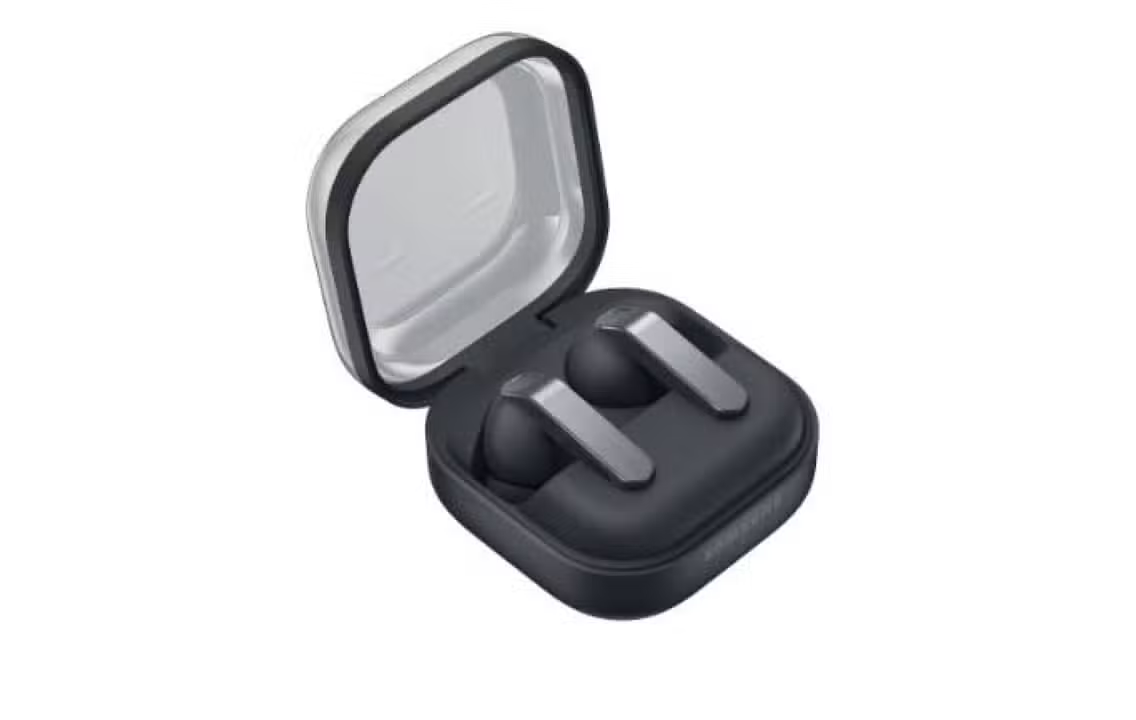
Samsung officially launched the Galaxy Buds4 Pro, consolidating its line of accessories as independent high-performance hardware. The new device is designed to offer deep integration with the brand’s ecosystem, featuring fluid connection animations and an interface optimized for Galaxy smartphones. Mesmo with a focus on integration, the accessory stands out for its superior technical quality, positioning itself competitively in a price range slightly below other competitors in the premium segment.
The design of the Galaxy Buds4 Pro maintains a modern and industrial aesthetic, characterized by elements that the manufacturer calls blades in its metal structure. The elongated aluminum arms give it a futuristic and discreet look, allowing the product to be easily identified by technology enthusiasts. To take advantage of the maximum audio potential at 24 bits and 96 kHz, the user must activate the function manually on a compatible device, which reinforces the exclusivity of the experience for owners of Galaxy line devices.
- Native support for high-resolution audio on platforms such as Qobuz and Tidal.
- Aluminum rod structure with refined industrial finish.
- Optimized integration with the brand’s Android operating systems.
- Charging case with translucent lid and wireless induction stand.
The prolonged use experience was one of the pillars in the development of this model, aiming at the total comfort of the urban consumer. The silicone tips have been adjusted to maintain flexibility and softness, avoiding pressure points or discomfort after several hours of continuous listening. The compact charging case has a texture that is pleasant to the touch, although the long-term durability of the plastic finish is a point of attention for more demanding users seeking aesthetic preservation.
Dual driver technology and audio fidelity
The internal architecture of the Galaxy Buds4 Pro represents a significant leap compared to the brand’s previous versions and entry-level models. The device uses a dual driver system, consisting of an 11 mm woofer dedicated to mid and bass frequencies, as well as a 5.5 mm planar tweeter. Essa configuration is inspired by high-fidelity speakers, ensuring much more precise frequency separation than the single dynamic driver systems found in most traditional wireless headphones.
The choice of a planar tweeter is a technical difference that directly meets the desires of the global audiophile public. Enquanto Conventional dynamic drivers are the industry norm, the planar component offering faster transient response and lower distortion at high frequencies. Para power this complex array, the Samsung has implemented a dual amplification system, ensuring that each driver receives the power necessary to operate with maximum clarity and sonic detail at any volume.
Battery performance and autonomy in daily use
The complexity of the internal hardware and the abundance of technological resources directly impact the accessory’s energy consumption during the day. With active noise cancellation (ANC) turned on, continuous playback time reaches approximately 6 hours, which is considered an acceptable average for the segment. When using the additional charge provided by the carrying case, the total usage time increases to 25 hours, allowing for a less frequent charging routine for the average user.
Although these numbers do not set new duration records on the market, the practicality of wireless charging compensates for the moderate autonomy. Muitos users report that a bi-weekly recharge routine for the case is enough to cover daily commutes and work sessions. The energy efficiency of the latest generation Bluetooth also helps with connection stability, minimizing signal drops even in urban environments with high radio frequency interference.
Exclusive features for the Samsung ecosystem user
Access to 24-bit audio is restricted to users who have smartphones from the same manufacturer, creating an entry barrier for those using other platforms. Essa strategic decision aims to strengthen brand loyalty, offering tangible benefits in sound quality for those who invest in the complete ecosystem. Além of sound quality, users can count on quick transitions between devices, allowing the headset to switch audio between a tablet and a phone automatically during calls.
High-fidelity audio setup requires a subscription to premium streaming services that provide lossless files to be fully appreciated. Sem suitable content and compatible hardware, the technical difference of planar drivers may be less noticeable to the average ear. However, for those seeking maximum technical performance in a compact format, the investment in the Galaxy Buds4 Pro reflects the search for a studio standard in portable devices.
Ergonomics and high-resistance construction materials
The use of aluminum in the rods is not only an aesthetic choice, but also a functional one to increase the durability of the product. Este material offers greater rigidity than common polycarbonate, protecting internal components against light impacts and the wear and tear of daily handling. The metallic finish also aids in heat dissipation from the internal micro-amplifiers, maintaining stable operation even during long periods of intense audio processing and noise cancellation.
Comfort is guaranteed by an ergonomic study that mapped different ear shapes to create a universal and secure fit. The tips do not harden over time, maintaining the acoustic seal necessary for passive noise cancellation to complement active digital technology. Essa Sealing is essential to preserving the 11mm woofer’s bass response, ensuring that sonic impact is not lost to air leaks during on-the-go use.
Artificial intelligence and real-time signal processing
The digital signal processing in the Galaxy Buds4 Pro constantly works to adjust the equalization according to the external environment. Internal Sensores detect the level of ambient noise and calibrate the intensity of noise cancellation automatically, allowing the user to maintain focus without constant manual adjustments. Essa AI technology also improves voice clarity in phone calls, filtering out unwanted sounds such as wind or heavy urban traffic so that the caller hears only the user’s voice.
Latency has been drastically reduced in this model, making it a viable option for mobile gamers and high-definition video consumption. Synchronization between image and sound is maintained through proprietary codecs that prioritize the stability of data transmission in real time. Essa heavy processing capacity is what justifies the use of dual amplifiers, ensuring that signal fidelity is preserved from source to output in the planar and dynamic drivers.
Considerations on the global premium headphones market
The Samsung positions the Galaxy Buds4 Pro as a superior technical alternative to traditional single-driver models, challenging established brands in the audio sector. The inclusion of planar technology in a mass-produced in-ear headset is a bold move that signals a shift in mobile technology consumer priorities. The focus has moved away from just wireless convenience to embracing audio quality that was previously restricted to oversized wired headphones.
The commercial success of the device in 40 different languages depends on the perception of added value in relation to its market price. By offering cutting-edge hardware at a slightly lower cost than its main rivals, the company seeks to capture a portion of the market that values robust technical specifications. The strategy of keeping the device linked to the brand’s own hardware reinforces the “walled garden” concept, where the best possible experience is reserved for the most loyal customers of the mobile product line.
The evolution of the Buds line demonstrates that the miniaturization of high-fidelity audio components has reached a new level of maturity in 2026. The Galaxy Buds4 Pro is not just a calling accessory, but a high-quality media consumption tool designed to last. With constant firmware updates, the tendency is for sound processing and battery management algorithms to continue to be refined, extending the technological useful life of the product in a highly competitive and dynamic market.