

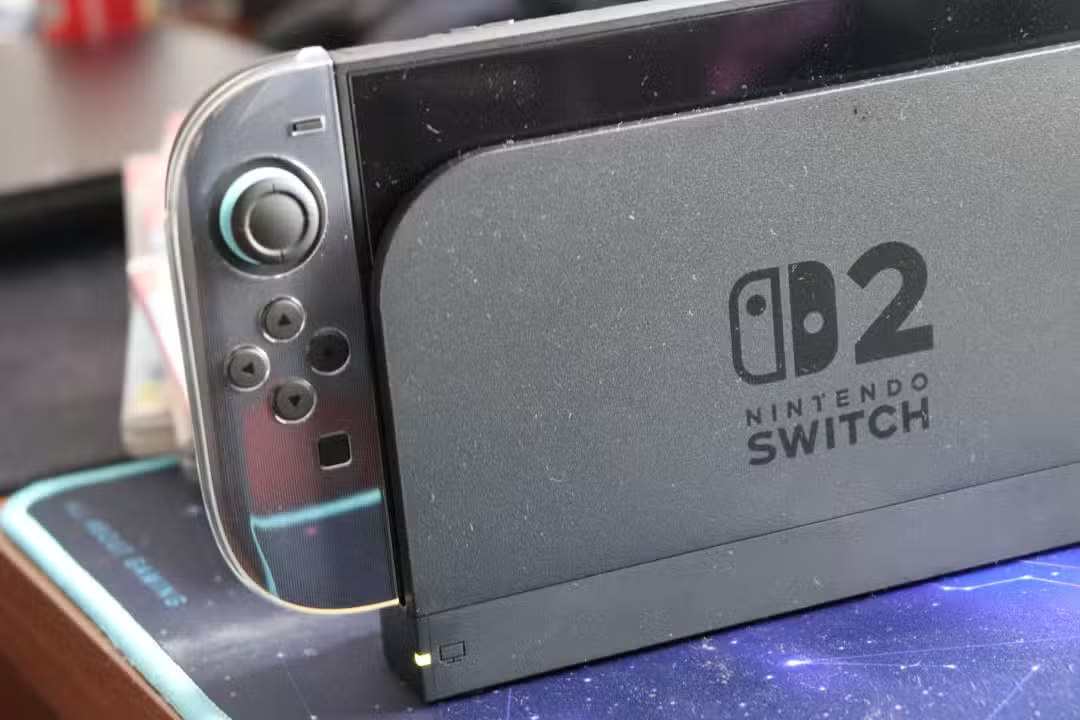
This week, Nintendo released system update v22.0.0 for Switch 2, which introduces the Handheld Mode Boost feature. Essa functionality allows games from the original Nintendo Switch to run in portable mode with the same performance profile used in docked mode, achieving higher resolutions, such as 1080p, and graphical improvements. The change results in significantly higher visual quality for legacy titles, eliminating the stretching and blurring effect that occurred when stretching 720p images onto the new console’s 1080p screen. Usuários report that the handheld experience is very close to that obtained when the console is connected to the TV.
The feature requires greater power consumption from the hardware, as it ignores thermal and battery restrictions typical of portable use. Testes independent devices indicate an approximate 25% reduction in charge duration in demanding games. In DOOM (2019), for example, autonomy went from 5 hours and 5 minutes to 3 hours and 43 minutes with boost activated. Nintendo described it as a brute-force approach to extracting maximum sharpness from older software without impacting the performance of titles developed natively for Switch 2.
Feature activation and compatibility
Handheld Mode Boost can be enabled in the system settings, in the Nintendo Switch software handling section. The option appears specifically for compatible games from the back catalogue. Quando enabled, the console forces high graphics processing even in portable use. Isso benefits ports that have not received specific optimizations for the most powerful hardware.
The functionality does not impact all titles in the same way. Jogos Light weights maintain good performance without major losses, while heavier productions demonstrate the energy trade-off. The Nintendo included a toggle mode, allowing the user to deactivate when prioritizing longer battery life for extended sessions away from home.
Impact on user experience
Community reception has been mostly positive, with reports highlighting the elimination of visual issues in classic games. Muitos players consider the loss of autonomy an acceptable cost for the improvement in clarity and graphical fidelity during mobile use. The feature aligns the Switch 2 with high-performance portable devices, where the player manages the balance between visual quality and game time.
Some limitations arise with activation. The screen’s touch sensitivity is disabled during boost, and the attached Joy-Con are recognized as a single Pro Controller. Para connect other peripherals, you need to remove them temporarily. Essas adaptations guarantee stability in high processing.
Technical details and test reports
Tests carried out by users on specialized forums confirm the additional energy consumption. Running in a docked profile increases the load on the processor and GPU, even with the smaller screen in portable mode. Nintendo anticipated this behavior when presenting the feature as a solution for legacy ports without dedicated updates.
The v22.0.0 update brought other improvements, such as improvements to GameChat and accessibility options, but Handheld Mode Boost stands out as the main new feature. The flexibility offered allows each player to choose between maximum graphical fidelity or greater mobility without frequent reloading.
Considerations for daily use
The new mode reinforces the console’s hybrid proposal, prioritizing experience customization. Jogadores who value clear graphics in any situation tend to keep the boost activated most of the time. Para long trips or intensive use without access to sockets, deactivation is recommended.
The update reinforces Nintendo’s commitment to evolving the ecosystem, even with inevitable trade-offs. The community continues to test combinations in different titles, sharing results that help to better understand the balance between performance and battery.