

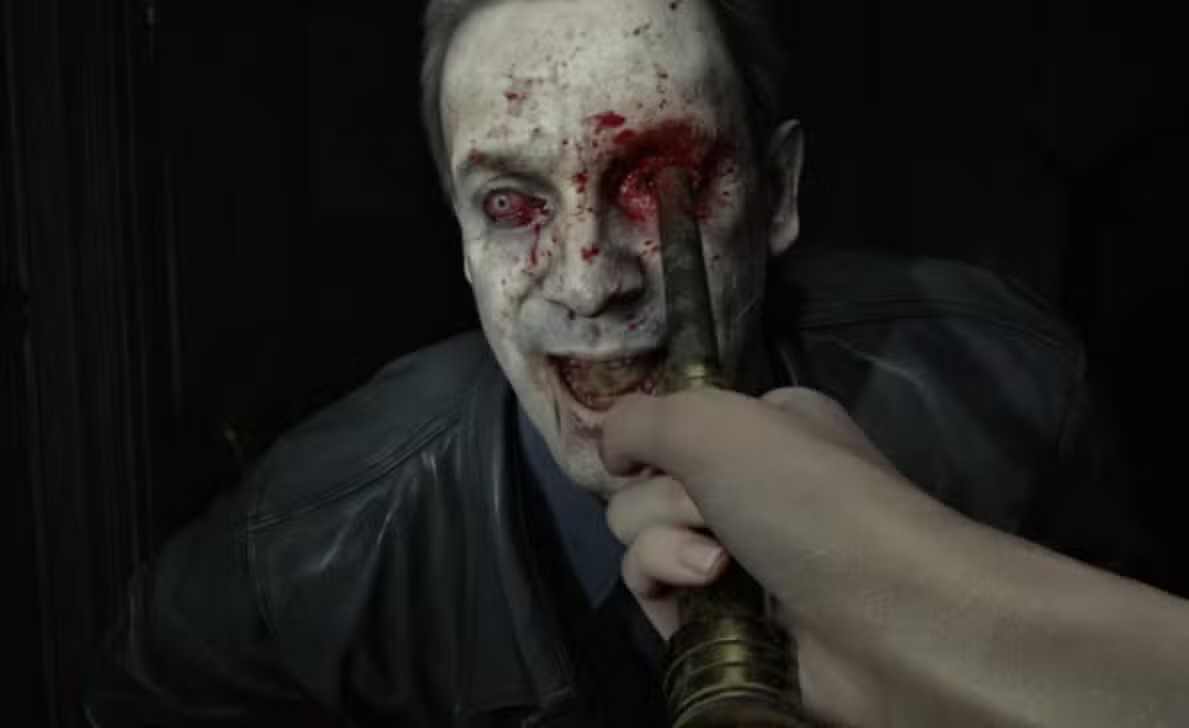
Japanese developer Capcom has established a new strategic timeline for the future of its flagship survival horror franchise. The company’s internal plans detail the continued development of new titles, in addition to the revitalization of classic games through complete recreations for the current generation of consoles and computers. The initiative aims to strengthen the brand’s presence in the global digital entertainment market.
Corporate planning covers the transition between the next main chapters in the series, specifically the ninth and tenth volumes, ensuring a constant flow of releases. The company’s strategy seeks to avoid long periods without news for consumers, maintaining public engagement through a structured calendar of annual or biannual publications. The simultaneous production of multiple projects allows for an efficient allocation of resources between the developer’s studios.
Documents and market movements indicate that the producer allocated substantial teams to work on different intellectual property fronts. The central objective is to raise the technical and narrative standard of the works, using proprietary graphics engine technologies to deliver high-fidelity visual experiences. The internal restructuring also facilitates the sharing of digital assets and technical knowledge between development teams.
Structural changes in the ninth chapter of the series
The next numbered title in the franchise, provisionally recognized as the ninth main game, will introduce significant changes to the way users interact with the virtual environment. The project’s architecture moves away from traditional linear corridors to adopt an approach of large, interconnected scenes. Essa geographic expansion requires a complete overhaul of navigation and resource management systems.
The software engineering team implemented new artificial intelligence routines for adversaries, adapting hostile behavior to open areas. The global illumination system and object physics have been rewritten to support the increased scale of the map without compromising the frame rate per second. The transition to a more open world format represents the series’ biggest technological leap since adopting a first-person perspective.
Revitalization of classics from the early 2000s
In parallel with the new chapters, the production line focuses on the modernization of works originally launched at the beginning of the century. Dois specific projects received approval for full development: the recreation of the narrative that precedes the events of the first game and the title update that follows the characters’ journey on an isolated island. Ambos the games have a strong nostalgic appeal and canonical importance for the chronology of the series.
The modernization of these titles goes beyond simply improving texture resolution. The developers are redesigning the geometry of the sets, re-recording dialogue with new actors and replacing the fixed camera system with an over-the-shoulder third-person perspective. Essa Mechanical standardization aligns classic games with the gameplay expectations of contemporary audiences.
The recreation process also involves adjustments to the narrative’s pacing and puzzle solving. Elementos that caused frustration in the original versions undergo a design refinement, while the atmosphere of tension and ammunition scarcity is preserved. The art direction works to maintain the characteristic visual identity of each environment, using modern physics-based rendering techniques.
Long-term planning for the tenth volume
The tenth chapter of the main line is already in the initial stages of artistic conceptualization and script planning. The company’s internal forecast points to a commercial launch in the final stretch of the current decade, possibly in 2029.
Pre-production involves defining the protagonists and the main scenario, with the team of writers seeking to close narrative arcs that have remained open for several generations of consoles. The company’s board of directors has established strict mechanical innovation goals for this title, requiring it to feature survival mechanics that are unprecedented in the video game market.
To facilitate the scale of the tenth game, the producer began hiring specialists in complex systems design and procedural animation. The extended timeline allows the team to perform extensive usability testing before locking in the core mechanics. The prototyping phase evaluates different approaches to combat and exploration in hostile environments.
The server infrastructure also receives special attention, indicating the possible integration of cooperative elements or asynchronous online functionalities. The network architecture is designed to support continuous content updates after launch, a business model that the company has successfully adopted across other intellectual properties in its catalog.
Market strategy and audience retention
The franchise’s financial sustainability is based on the calculated alternation between new releases and recreations of past successes. Este business model mitigates the risks associated with developing high-budget games, which currently require hundreds of millions of dollars and production cycles exceeding five years. By interspersing launches, the developer guarantees a constant presence on physical shelves and digital stores, maintaining shareholder interest and the stability of corporate cash flow. The strategy also makes it easier to attract new consumers, who use recreations as an entry point to understand the complex mythology of the series before investing in the most recent chapters.
The marketing department works in sync with the development teams to orchestrate global outreach campaigns. The unveiling of new projects follows a strict schedule designed to maximize impact at industry events and technology conferences. Community management plays a key role in player retention, monitoring public feedback on forums and social media to guide adjustments to software updates. The company invests in data analysis tools to understand consumption patterns and adapt its additional content offerings, ensuring that the user base remains active months after purchasing the base product.
Transmedia expansion and audiovisual adaptations
The strengthening of the brand transcends the electronic games market, encompassing an aggressive expansion into the audiovisual and licensing sector. The production company established strategic partnerships with streaming platforms and film studios in Hollywood for the production of computer graphics films and series in live-action format. Estas adaptations are closely supervised by developer executives to ensure fidelity to the source material and consistency of the fictional universe. The transmedia strategy aims to reach demographics that do not regularly consume video games, transforming the intellectual property into a pervasive pop culture phenomenon. The success of these audiovisual productions generates a ripple effect, boosting sales of the back catalog of games and increasing public awareness of imminent releases. Coordination between the software and linear entertainment divisions requires complex logistical planning, aligning release dates in theaters or video platforms with the arrival of new titles in online stores.
Licensing of products and consumer goods
The company’s consumer products division has stepped up issuing licenses to manufacture collectibles, apparel and printed publications. The sale of high-quality statues, novels that expand the narrative universe and collaborations with urban fashion brands diversifies the corporation’s sources of revenue. Strict control over the quality of licensed products protects the integrity of the brand and meets the demands of a dedicated fan base willing to invest in exclusive items.
Technological evolution of the proprietary graphics engine
The foundation of all projects under development is the continuous evolution of the company’s proprietary graphics engine. The software tool, originally designed for the seventh chapter of the series, has undergone extensive updates to support the demands of the current generation of hardware. Improvements include native hardware ray tracing support, loading optimization via solid state drives and ultra-high resolution texture rendering.
The research and development team focuses on creating tools that automate repetitive design processes, allowing artists to focus their efforts on art direction. Standardizing the graphics engine across all internal studios drastically reduces training time for new employees and facilitates technology transfer between different production teams. Essa Technological independence protects the company against fluctuations in licensing costs for third-party graphics engines.