

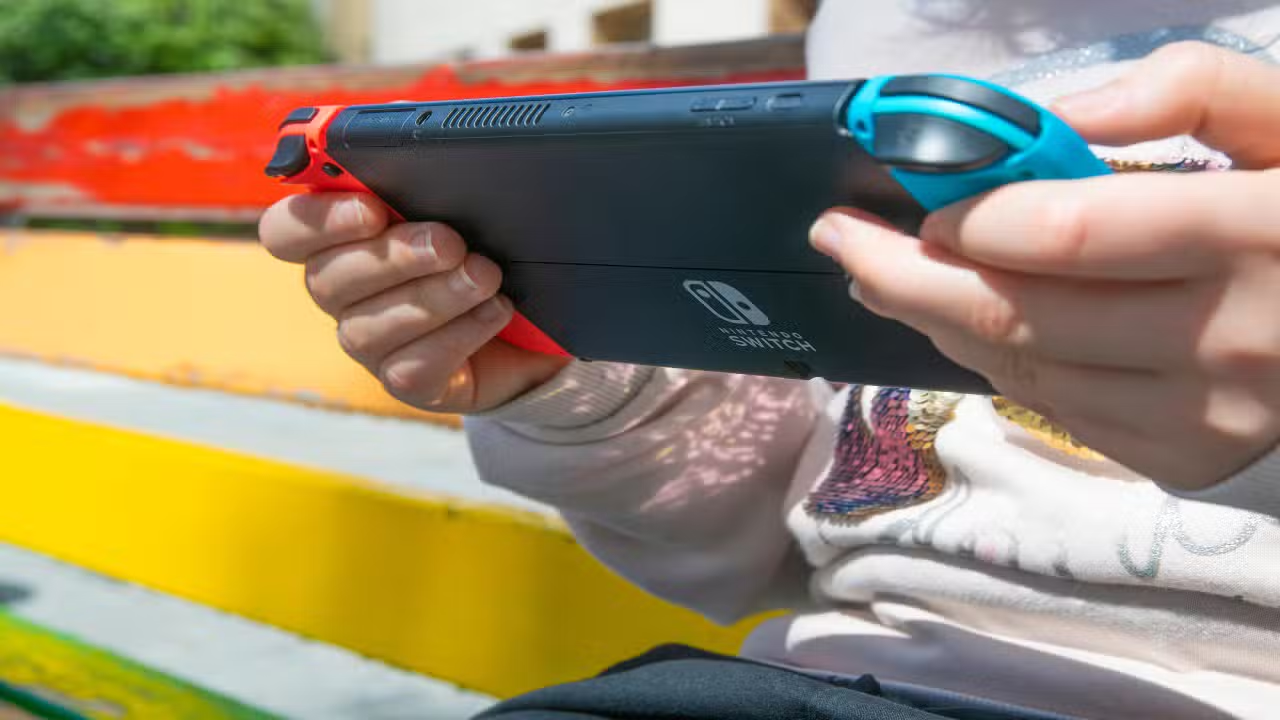
The Japanese video game maker has released a new set of software updates aimed at resolving backwards compatibility glitches on its latest hardware. The technical procedure aims to ensure that a specific group of titles, originally released for the previous generation, works natively and without interruptions on the brand’s new electronic entertainment equipment.
The software engineering initiative is part of the Asian corporation’s ongoing strategy to establish a seamless platform transition for consumers. The development department identified that certain lines of code from the original architecture presented processing conflicts when executed on the new system, requiring the rewriting of initialization and graphics rendering protocols.
The corrections package covers a variety of genres, ranging from lower-budget independent productions to works of great commercial appeal developed by third-party studios. These patches are applied automatically as soon as the device is connected to the internet, replacing problematic files with versions optimized for the new hardware environment.
Technical adjustments to highly visible titles on the market
The modifications implemented in the source codes resolve severe technical issues that prevented high-budget works from functioning correctly on the new portable console. The manufacturer’s engineering team worked in direct partnership with several external developers and global publishers to map execution errors, analyze crash reports and program the necessary improvements in memory allocation. The result of this joint effort allows users to enjoy digital adventures with full frames per second stability and without unexpected crashes during gaming sessions.
Among the most prominent productions that have received this enhanced support are Final Fantasy 12: The platform title Kirby’s Return to Dream Land Deluxe, belonging to one of the company’s own exclusive franchises, was also included in the stability corrections. The release of these updates occurred within a short space of time after the public identification of the flaws, demonstrating the technical mobilization of the studios involved.
Updated list of independent productions and consolidated franchises
The complete list of digital entertainment works that have gone through this optimization process covers a diversity of gameplay styles and narrative proposals, ensuring that different consumer profiles are served. Titles that now fully function when running on next-generation hardware include: – A Hat in Time, a three-dimensional platformer focused on exploration; – Botany Manor, an experience focused on solving puzzles in a historical environment; – Dadish, an independent two-dimensional platform title; – Dariusburst: Another Chronicle EX+, an exponent of the space shooter genre; – Dariusburst SC Core + Taito/SEGA Pack, an expansion of the aerial combat universe; – Doom (2016), focused on non-stop action; – Earnest Evans Collection, a collection of action classics; – Final Fantasy 12: The Zodiac Age, focused on exploration and tactical combat; – Kirby’s Return to Dream Land Deluxe, focused on cooperative lateral progression; and – Limbo, an independent work recognized for its dark atmosphere and physical puzzles. Todos These patches were applied in conjunction with the latest updates to the device’s operating system, creating a standardized execution environment that eliminates processing discrepancies between the original version of the game and the new console architecture.
Residual progression failures in specific works in the catalog
Despite progress in stabilizing the collection, an isolated group of games continues to experience technical difficulties related to advancing the plot or executing fundamental mechanics. Obras as Hoop Shoot, Roman Rumble in Las Vegum – Asterix & Obelix XXL 2, that still demand attention from the programming team.
Recent highly successful independent titles, such as Pizza Tower and Laysara: Summit Kingdom, also have residual issues documented by users on the new console. Technical reports indicate that these specific cases mainly involve failures in recording the player’s progress in internal memory or instabilities in the rendering of two-dimensional elements at high speed.
The manufacturer’s technical support division informed, through official communications on its service platforms, that it continues to monitor the behavior of this software. The company maintains a task force in collaboration with the studios responsible for the original development to formulate and test new fix packages for these exceptions.
Corporate strategy for maintaining the collection of previous generations
Maintaining compatibility with the back catalog requires constant, structured dialogue with third-party publishers of all sizes. Developer Relations provides up-to-date diagnostic tools so that business partners can identify incompatibilities even before consumers report errors.
In addition to critical bug fixes, a significant portion of games from the original catalog now receive automatic performance improvements when running on the new equipment. The gain in processing power allows software to achieve higher screen refresh rates and higher image resolutions without the need for manual intervention from programmers.
The corporation’s president, Shuntaro Furukawa, addressed the topic during formal meetings with shareholders and financial market investors. The executive highlighted the commercial importance of updating old software to new hardware, pointing out the practice as a pillar for retaining consumers in the brand’s ecosystem.
The company’s operational guidelines focus on offering a broad technological transition, without requiring players to repurchase titles they already have in their digital or physical libraries. Essa technical approach protects the consumer’s prior investment and strengthens confidence in purchasing new brand products.
Corrective package validation and release procedures
The software engineering schedule foresees the release of fixes in successive batches, as telemetry systems detect new execution failures. Internal quality protocol requires rigorous testing in different usage scenarios to ensure that applying a patch does not introduce new errors into the game’s original programming.
Consumers who have the affected titles installed on their devices are advised to keep the device connected to the wireless network. The operating system performs periodic checks on the company’s servers to download and install automatic updates, ensuring that the most stable version of the software is ready for use.
Execution and texture optimizations on new portable hardware
The scheduled technical adjustments primarily fix script execution bugs, failures in loading high-definition textures and progression blocks that arose exclusively due to the new central processor architecture. In specific cases, developers took advantage of the need for updates to implement extra lighting and loading time optimizations, going beyond the simple compatibility fix required by the console manufacturer.
Valuing the personal library of ecosystem users
Owners of the new entertainment equipment now have the ability to resume campaigns and multiplayer sessions that had been temporarily paused due to system incompatibilities. The list of corrected works covers varied options for different age groups and gameplay preferences, which expands the immediate value of the personal library accumulated by each user over the years.
The process of improving backward compatibility operates continuously and gradually in the company’s testing laboratories. Standard technical advice advises users to keep the background refresh function enabled in the system settings menu. Essa preventive practice avoids abrupt interruptions and guarantees immediate access to stability improvements as soon as data packages are made available on global servers.