The North American space agency has successfully completed the transfer of its super-heavy launch system and crew capsule to complex 39B, located at Centro Espacial Kennedy, in the state of Flórida. The highly complex logistical procedure began at night and required around twelve hours of uninterrupted work from the engineering teams on the ground, who monitored every inch of the six and a half kilometer route. The equipment, which has a total mass estimated at five thousand tons, was moved with extreme caution using a special conveyor to preserve the structural integrity of all sensitive components. The operation takes place following fundamental repairs carried out on the vehicle’s pressurization system, a step that enabled the set for the take-off window scheduled for the first day of April.
The return of the machinery to the firing site represents an essential technical advance for maintaining the exploration schedule for the Terra natural satellite, which had undergone recent adjustments. Flight directors have established strict guidelines for this new phase of external deployment to ensure the safety of subsequent operations.
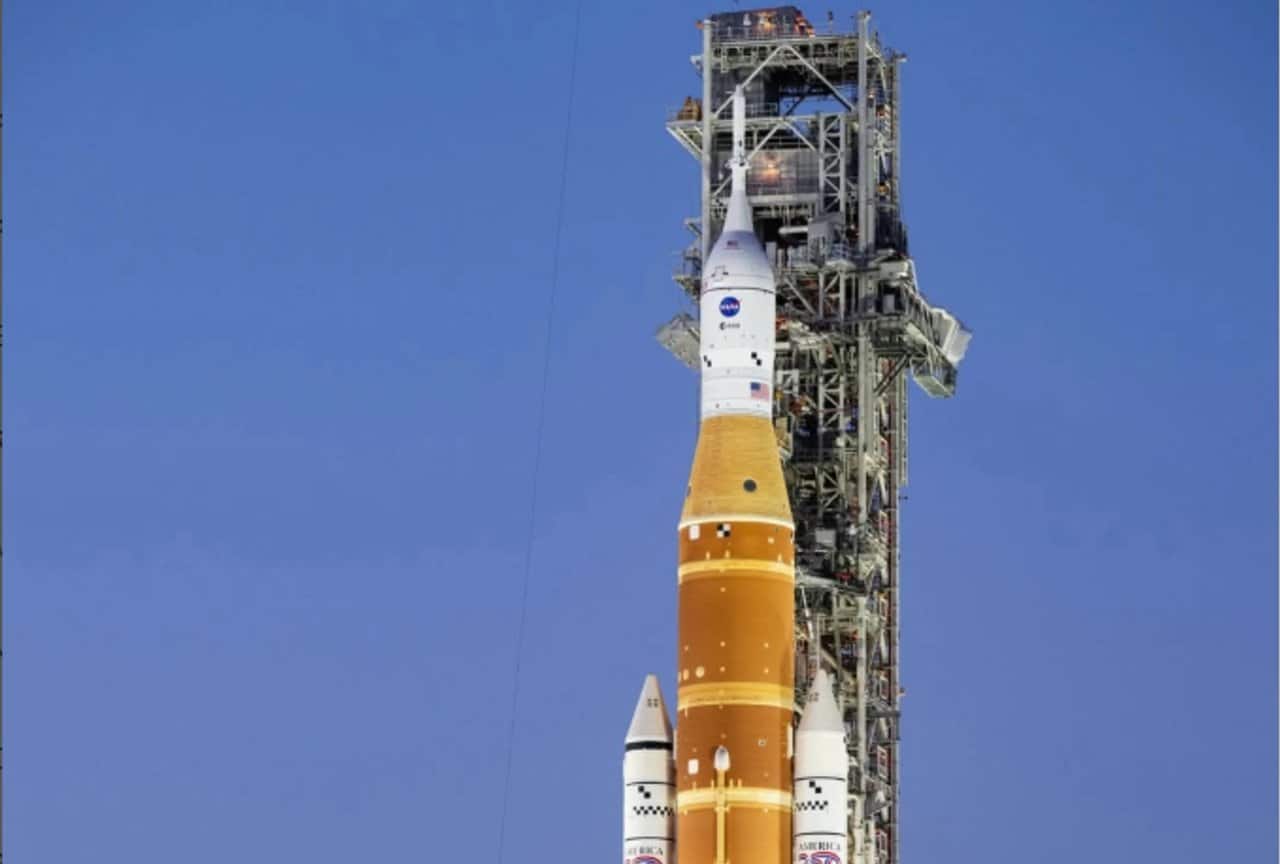
Immediate priorities for ground teams on the platform include the following operational actions:
– Calibração end of main structure telemetry sensors.
– Sincronização of onboard computers with the mission control center.
– Inspeção visual and mechanical of the service tower umbilical connections.
Technical corrections to the propulsion system
The current displacement comes after the agency’s diagnostic sensors identified, at the end of February, an anomaly in the helium flow. Este gas acts as an essential element for the pressurization of fuel tanks and for the proper functioning of the main engine valves. The early detection of this technical failure forced the retreat of the entire structure back to the vehicle assembly building, a closed and controlled environment that allowed for a safe, precise and protected engineering intervention from the harsh climate of the coastal region.
During the period of intensive maintenance in the hangar, technicians performed detailed inspections of the rocket’s entire piping network. The work involved replacing seals and components that were worn or defective, ensuring the restoration of the integrity of the propulsion system. The teams also took the opportunity to re-evaluate the liquid hydrogen connections, applying new sealing protocols and replacing relief valves to definitively mitigate the risks of leaks that had caused interruptions in previous fueling trials.
Medical isolation of designated crew
While engineers finalize preparations on the east coast, the mission’s official crew has entered a strict quarantine regime at the Houston facility, on Texas. The four astronauts comply with a physical isolation protocol designed specifically to protect the health of the group before the trip.
The team is made up of commander Reid Wiseman, pilot Victor Glover and mission specialists Christina Koch and Jeremy Hansen. The health measure has the central objective of eliminating any risk of contagion by viral or bacterial agents in the days before boarding the space capsule.
During this period of restriction, professionals maintain a routine focused on theoretical reviews and virtual simulations of the critical phases of the flight. In-person contact remains restricted to immediate family members and authorized medical professionals, all of whom have undergone rigorous health testing.
Bateria de testes na plataforma de lançamento
The vehicle’s arrival at complex 39B marks the beginning of an exhaustive series of operational readiness tests. Software engineers conduct thorough checks on the communication interfaces between the core stage and the Orion capsule computers.
The primary objective of these electronic evaluations is to certify that the abort commands and stage separation work with zero latency. Simultaneamente, infrastructure teams perform mechanical alignment tests on the launch tower to validate the structure.
The umbilical arms undergo rigorous certification to ensure seamless connection to the rocket’s service panels. Outro vital procedure involves analyzing the ship’s heat shield using high-precision laser scanning across its entire length.
This scan confirms that the protection plates did not suffer microcracks during the overland journey from the assembly building. The thermal component is essential to withstand the extreme temperatures generated during re-entry into the atmosphere of Terra at the end of the journey.
Windows of opportunity and orbital mechanics
The first official attempt to ignite the main engines is scheduled for 18:24 on April 1st, considering the east coast time zone of Estados Unidos. Caso weather conditions prove to be unfavorable, with strong winds or the formation of storms, or technical parameters outside the standards required by mission directors arise, flight controllers have alternative daily launch windows that extend until April 6th. If neither of these dates offers the ideal scenario for a completely safe liftoff, strict orbital mechanics rules will force a pause in firing operations. A new opportunity for planetary alignment, which allows correct insertion in the trajectory towards the natural satellite, will only arise on April 30th. The mission planning foresees a total duration of approximately ten days, covering everything from leaving Earth orbit, navigation in deep space, approaching the target, until the final recovery dive in the ocean waters.
Free return path and safety
The navigation plan establishes a free return trajectory, using lunar gravity to propel the ship back to the planet without the need for continuous activation of the main engines. Esta orbital strategy provides an additional layer of safety for astronauts in the event of failure of primary propulsion systems during travel.
Validation of equipment in deep space
During the space transit phase, the crew will take manual control of the capsule at predetermined times in the schedule. The action aims to test the vehicle’s maneuverability and evaluate the behavior of the attitude thrusters in an environment without the protection of the Earth’s magnetic field.
Life support systems will undergo operational limit testing, with constant monitoring of oxygen levels, carbon dioxide removal and thermal regulation. The uninterrupted collection of biometric data will provide crucial information about the human body’s adaptation to cosmic radiation outside low orbit.
Preparations for sea rescue
The execution of this flight consolidates the transition to active human exploration, using the most powerful launch vehicle ever tested by the space agency. The presence of a Canadian astronaut on the crew reinforces the strategic international partnership that seeks to share the development of new technologies for the aerospace sector.
Maritime recovery teams are already conducting intensive training on Oceano Pacífico, preparing ships and helicopters assigned to rescue the capsule. Coordination between mission control on Texas, engineering teams on Flórida and rescue forces at sea requires absolute synchrony to guarantee the safety of the crew when landing in the water.