

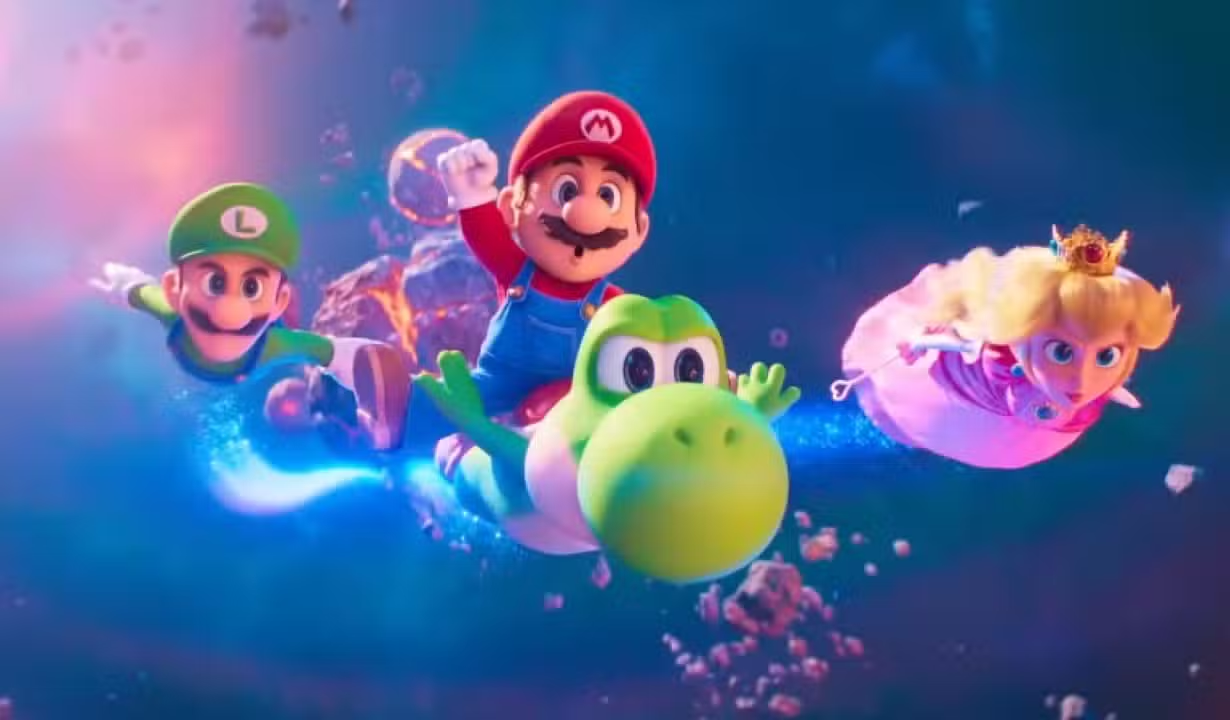
Originally released in 2007 for the Wii console, *Super Mario Galaxy* quickly established itself as one of Nintendo’s most acclaimed titles, redefining 3D platformers with its innovative gravity mechanics and spherical level design. The game took Mario on an intergalactic adventure to rescue Princesa Peach from archenemy Bowser, who had once again kidnapped Reino Cogumelo’s royalty and, this time, threatened the universe itself. Mario’s journey takes him through a vast constellation of worlds, each with unique challenges, stunning aesthetics, and secrets to uncover.
The complexity and creativity behind each galaxy are central elements to the immersive experience the game provides, making each new planet visited feel like a genuine discovery. Nintendo knew how to explore spatial freedom in a masterful way, transforming gravity into a gameplay element that challenged players’ perception and logic. Essa innovative approach allowed the creation of scenarios that transcended the traditional limitations of platform games, offering a sense of exploration and wonder with every jump.
The game’s developers, led by Shigeru Miyamoto and Yoshiaki Koizumi, drew inspiration from astronomical and fantastical concepts to create a diverse universe. Essa mix resulted in environments ranging from lush celestial gardens to volcanic fortresses and haunted mansions, all interconnected by an immersive narrative about the origin of the universe and the role of the Lumas. With each star collected, a new area of the Cometa spacecraft, the central hub, became accessible, encouraging players to explore every corner of the cosmos.
The galaxies that defined an era
Among the myriad of worlds that Mario explores, six galaxies in particular stand out for their exemplary design, innovative mechanics or the way they introduce new narrative and gameplay elements. Essas areas are key to progression and understanding the richness of the *Super Mario Galaxy* universe, offering a diverse experience that continues to delight players of all ages, even years after its initial release. With each visit, new details and nuances can be perceived, enriching the experience.
* Galaxy Ovo-Good:Servindo as the perfect introduction to gravity mechanics, this galaxy is a starter playground that teaches the fundamentals of Mario’s motion on spheres and minor planets. Ela presents the first jumping and exploration challenges, with the presence of classic enemies like Goombas and Koopas, and the introduction of Estrela from Salto, who launches Mario to distant planets. The simplicity of its design belies the genius of how the player is gradually familiarized with the new environment.
* Colmeia Galaxy (Honeyhive Galaxy):A natural paradise of gigantic proportions, Honeyhive Galaxy is notable for its vibrant aesthetic and the introduction of the Abelha Mario transformation, which allows the character to fly for short periods and climb honey walls. Esta galaxy is an exquisite example of how verticality and exploration of different levels of height are explored, with floating platforms, gigantic flowers and friendly bees that help Mario on its journey, as well as a memorable boss.
* Galaxy Jardim Ventilado (Gusty Garden Galaxy):Conhecida for its iconic orchestral soundtrack and wind-based challenges, Gusty Garden Galaxy is a visual and auditory spectacle. Flight mechanics and wind manipulation of the environment are crucial here, with Mario using wind flowers to propel himself between platforms and face enemies that move with currents. The feeling of freedom when gliding through the open skies is one of the game’s highlights.
* Galaxy Gelo and Fogo (Freezeflame Galaxy):Esta galaxy is a testament to duality and contrast, divided between a frozen and a burning half. Mario must switch between the two areas, using the properties of each to solve puzzles and progress. The Mario transformation from Fogo is essential for melting ice blocks, while the Mario transformation from Gelo allows you to glide across water and freeze enemies. Switching between climate extremes requires quick thinking and adaptability.
* Galaxy Fantasmagórica (Ghostly Galaxy):Trazendo a darker and more mysterious atmosphere, Ghostly Galaxy is a haunted space mansion where Mario faces Boos and other spectral creatures. Navigating dark environments, searching for secret passages and using light sources to ward off ghosts are key elements. The galaxy also introduces the concept of an underwater planet, where Mario must swim and dodge aquatic obstacles while dealing with the constant presence of invisible enemies.
* Galaxy Tempo of Brinquedo (Toy Time Galaxy):A galaxy that resembles a gigantic toy set, with building blocks, gears and everyday objects on a macro scale. Mario’s shrinking mechanic is introduced here, allowing him to explore tiny areas and solve puzzles that rely on manipulating small objects. The creativity in the level design and the way the perspective is changed make this galaxy a standout in terms of originality and fun.
Striking elements and the game’s longevity
The “revelation” of these galaxies is not just limited to their existence, but also the depth of their elements and how they connect to the game’s larger narrative. The “new characters” mentioned in the premise can be interpreted as the diverse life forms and unique interactions that each galaxy offers. For example, the Lumas, small star creatures that accompany Mario, gain a prominent role, and their stories are told through the Rosalina and her Observatório Cometa, adding an emotional and philosophical layer to the adventure. With each galaxy, new challenges and opportunities for interaction arise.
The diversity of enemies and bosses in each galaxy also contributes to the feeling of constant newness. From the colossal bosses that require specific strategies to the smaller enemies that populate the planets, each encounter is carefully designed to complement the mechanics of each environment. The game’s ability to constantly introduce new ideas and gameplay variations is one of the pillars of its success and remarkable longevity on the video game scene.
The *Super Mario Galaxy* soundtrack, composed by Mahito Yokota and Koji Kondo, is another crucial factor for immersion. The orchestral melodies adapt perfectly to the atmosphere of each galaxy, elevating the experience to a cinematic level. The music of Gusty Garden Galaxy, for example, is often cited as some of the most beautiful and memorable in the history of video games, encapsulating the grandeur and adventure of space exploration. Sound is a vital component that reinforces the identity of each location.
Legacy and influence in the gaming universe
The impact of *Super Mario Galaxy* transcends the time of its release, influencing generations of developers and platformers that followed. Sua Innovative approach to gravity and spherical level design opened up new possibilities for creating virtual worlds, showing that creativity can overcome technical limitations. The game is frequently cited in “best games of all time” lists, a testament to its enduring quality and the affection fans hold for it.
Nintendo, in creating *Super Mario Galaxy*, not only delivered an exceptional game, but also solidified Mario’s position as a global cultural icon. Mario’s space adventure is a reminder of the power of video games to transport players to fantastical worlds and offer experiences that are both challenging and deeply rewarding. Exploring its galaxies is a journey that many revisit, always discovering something new.
The success of the title led to an equally acclaimed sequel, *Super Mario Galaxy 2*, which further improved the mechanics and introduced new concepts, such as the Yoshi and the possibility of having an Luma companion. The persistence of its legacy and recent inclusion in collections for modern consoles like the Nintendo Switch demonstrate that the magic of these galaxies and their “secrets revealed” continue to fascinate and inspire, keeping the game relevant to new and old generations of players. The rich detail and depth of each galaxy contribute to a timeless experience.