

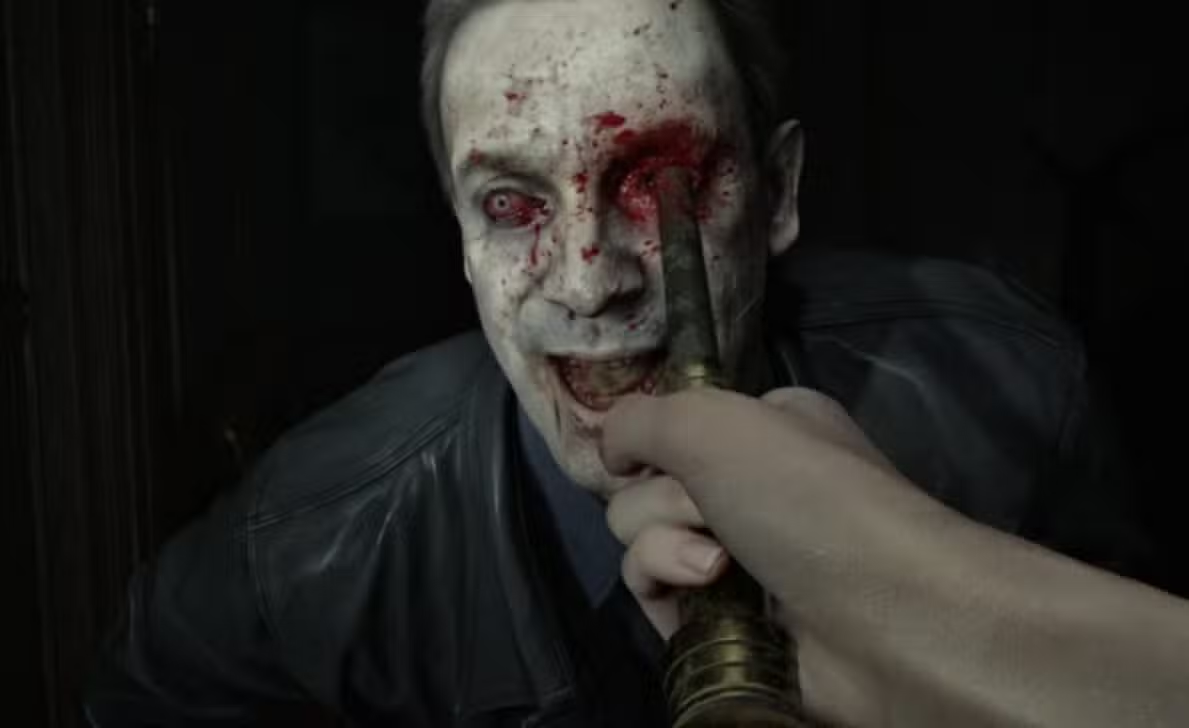
Japanese producer Capcom has established a new long-term roadmap for its main survival franchise, structuring the development of new titles and updates to classics. Internal planning points to the launch of the tenth main chapter of the series at the turn of the next decade, consolidating a production cycle that requires years of technical and financial dedication.
Simultaneously, the company began the preliminary creation phases for a new version of the brand’s first game, restructuring the original work with contemporary technologies. The strategy aims to fill the calendar of annual releases, alternating between continuous narratives and the recovery of consolidated stories in the digital entertainment market.
The schedule established by the developer reflects an adaptation to the demands of the current generation of hardware, requiring work cycles that vary from four to seven years per project. Essa extended window forces the company to manage multiple simultaneous teams to avoid prolonged commercial gaps between major debuts on virtual and physical shelves.
Technological update and graphics engine
To sustain the volume of simultaneous productions, the company’s software engineering division works on the evolution of its proprietary graphics engine, known in the market as RE Engine. The transition to an updated architecture seeks to optimize the workflow of programmers and designers, allowing the creation of virtual environments with greater visual fidelity without uncontrollably inflating operational costs. Improvements to the tool include the implementation of more complex artificial intelligence routines for the behavior of non-controllable characters, as well as advanced lighting systems and material physics.
Technological standardization between different internal studios facilitates the transfer of resources and the sharing of technical solutions, reducing downtime during the pre-production phases. By maintaining control over the base technology, the company avoids paying for licensing fees to third-party companies and ensures that the software is tailored specifically to the needs of its action and exploration games. Essa structural independence is pointed out by technology sector analysts as one of the central factors for the consistent profit margin presented in the corporation’s latest fiscal reports.
Release calendar and side projects
The strategic planning leaked by sources linked to the production chain indicates a sequence of premieres scheduled to maintain consumer engagement. The ninth chapter of the main series is in an advanced stage of development, expected to hit the market in the coming months, serving as a narrative bridge for the future of the franchise.
Next, the company plans to focus on revitalizing titles originally released in the early 2000s. The recreation of the game focused on the character Claire Redfield, set on an isolated island, is mapped out for the following years, meeting a historical demand from the active consumer base who request the modernization of this specific narrative.
Soon after, the schedule points to the modernization of the title that narrates the events prior to the incident in the original mansion. Este specific project aims to unify the visual aesthetics and control mechanics with the standards established by the most recent remakes, creating cohesion across the brand’s digital library and facilitating access for new players.
The culmination of this phase of releases will occur with the arrival of the tenth main game, which already has an approved design document and teams assigned to conceptualize scenarios and game mechanics. The board’s goal is to ensure that each release offers a noticeable qualitative leap compared to its immediate predecessor, justifying the extended production time.
Brand expansion in the global market
In addition to interactive software development, the corporation maintains a division dedicated to expanding intellectual property into complementary media. The licensing strategy involves the production of digital animations, film adaptations and a wide range of collectible products distributed globally by commercial partners.
The continuous presence on video streaming platforms and television channels helps attract new audiences that do not have the habit of consuming electronic games. Essa transmedia approach strengthens brand recognition and creates an ecosystem where the launch of a new game drives the consumption of derivative products, and vice versa, generating multiple sources of revenue.
The marketing department works in sync with the development teams to ensure that the visual identity and central themes of the narratives are respected in all adaptations. Strict control over the image of the main characters prevents the erosion of intellectual property and maintains the commercial value of the franchise at high levels in the international entertainment market.
Financial impact and corporate sustainability
Maintaining a high-budget franchise for more than two decades requires rigorous financial planning and the ability to adapt to fluctuations in the global economy. The decision to intersperse new projects with recreations of classics acts as a risk mitigation mechanism for the company’s investors. Enquanto an unreleased numbered title carries the burden of innovating mechanics and expanding the user base, remakes offer much greater revenue predictability, as they appeal directly to the nostalgia of already loyal consumers and use previously tested and approved narrative structures. Sales performance reports from recent years demonstrate that the modernized versions achieve sales figures equivalent to or greater than the original releases, justifying the continued investment in restructuring the old catalogue. Essa constant injection of capital allows the research and development division to explore new rendering technologies and invest in hiring specialized talent, ensuring the company remains competitive against the North American and European technology conglomerates that dominate the digital entertainment sector.
Restructuring of the founding title
The project to recreate the first game in the series represents a particular technical and creative challenge for the company’s directors. The work, which defined the parameters of the survival horror genre in the nineties, has already received a graphic update in the past, which raises expectations about the level of innovation required for this new version developed from scratch.
The developers focus on transitioning from a fixed camera perspective to a third-person free movement system, aligning gameplay with current ergonomic standards. Reinterpreting classic settings requires a meticulous balance between preserving the original atmosphere of isolation and implementing dynamic exploration mechanics.
Work dynamics in the studios
Human resources management within the production company was restructured to support the simultaneous workload required by the new calendar. Equipes support teams specialized in texturing, motion capture and sound design operate transversally, providing services to different project directors according to schedule needs, optimizing the use of time and the corporate budget without overloading a single studio.
Positioning against the competition
The high-budget video game market has become an extremely competitive environment, with production costs that often exceed the hundreds of millions of dollars mark. The Japanese developer’s long-term planning aims to ensure a constant share of consumer attention in a scenario saturated by subscription services and free-to-play games that demand daily engagement.
By focusing on tight, high-fidelity, technical narrative experiences, the company differentiates its product from prevailing trends of aggressive monetization. Delivering polished and optimized products on launch day has become the brand’s main selling point, building a relationship of trust with the installed base of players that guarantees the financial return necessary for the approval of the next development cycles.
Transition to the digital market and distribution
The company’s commercial strategy also reflects the drastic change in consumer habits, with an accelerated transition to digital software distribution. Reducing dependence on physical media reduces logistics and storage costs, increasing the profit margin per unit sold on state-of-the-art computer platforms and desktop consoles.
This digital infrastructure allows for targeted promotional campaigns and the sale of extended additional content, keeping titles relevant in online stores for years after their initial launch. The recreation catalog directly benefits from this model, reaching players in emerging markets where physical distribution has always presented complex tariff and logistical barriers.