

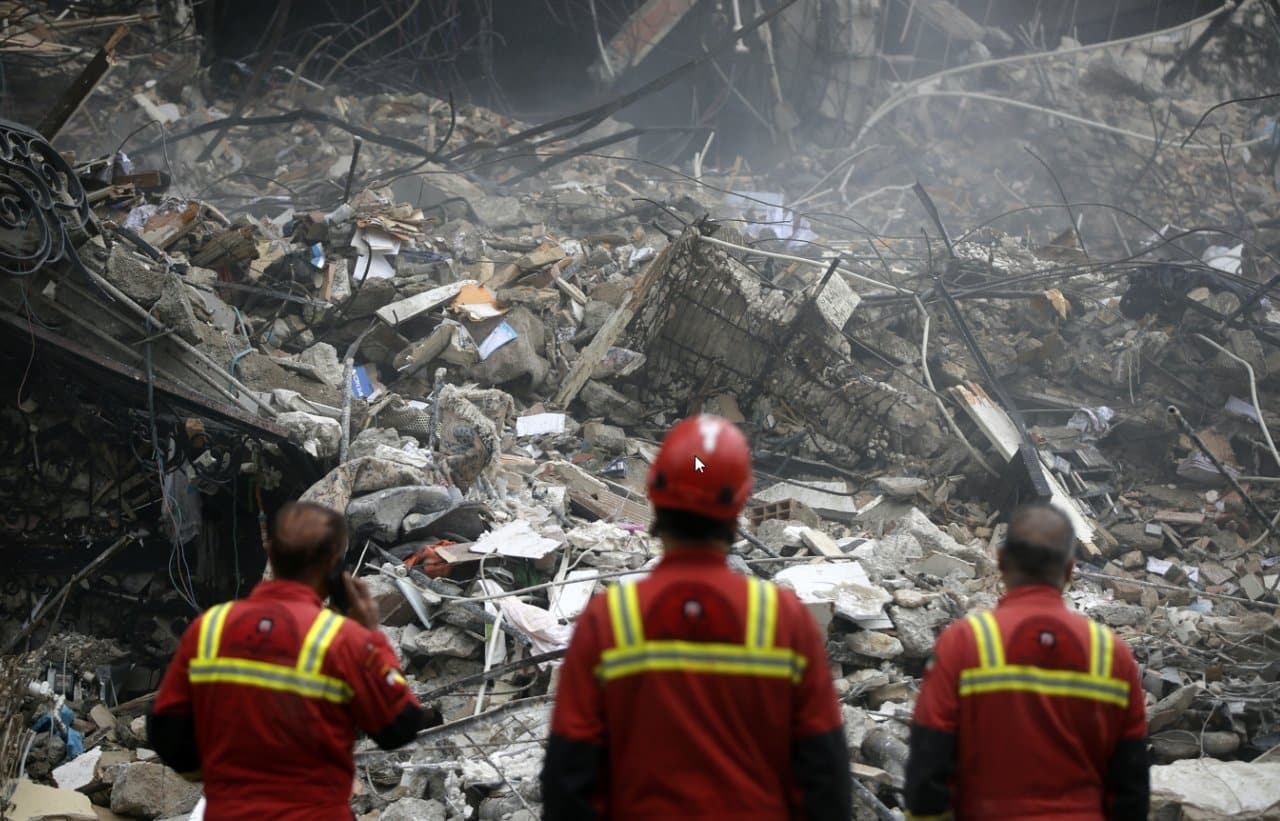
Geopolitical tensions in the Oriente Médio reached a new level of complexity and confrontation this Wednesday, with the Estados Unidos and the Irã failing to find a way to begin peace negotiations. Cada nation insists on its advantageous position, resulting in an impasse that deepens the regional crisis. Enquanto Washington seeks a diplomatic solution with strict terms, Teerã reacts with his own demands and a defiant stance.
The scenario is marked by intense military and diplomatic activity. Os Estados Unidos, through their diplomats, circulated a 15-point peace plan, which includes a demand for a complete deactivation of Iran’s nuclear program and severe restrictions on its missile arsenal. Casa Branca, represented by press secretary
Contrary to the American narrative, Iranian officials, speaking on state television, demonstrated a firm attitude. Eles have declared that the attacks will not cease unless the Estados Unidos pay war reparations and recognize Iranian control over the strategic Estreito of The statement reinforces Teerã’s refusal to accept an end to the war dictated by Washington.
This standoff occurs amid an escalation of hostilities. Israel, concerned that the conflict might end before achieving its goals of dismantling Irã’s ballistic missile program and blocking its ability to develop nuclear weapons, has intensified its own military efforts. Prime Minister
Reactions of Teerã and Washington
Casa Branca’s press secretary, Karoline Leavitt, reiterated the belief that Iranian forces had been significantly weakened. Sua statement pointed to a Irã allegedly seeking an “off ramp”, indicating a perceived weakness on the American side after weeks of military operations against Iranian targets and their allied militias in the region.
However, Teerã’s rhetoric diverged drastically. Autoridades Iranian women did not appear dejected, with a spokesperson declaring that the government would not end the attacks. The demand for war reparations and the recognition of Estreito’s control of Ormuz by the Irã demonstrate a robust negotiation strategy, despite intense external pressure and military operations aimed at weakening its war capacity.
Israel accelerates offensive
Israel’s move to intensify its military attacks highlights a fundamental concern: the possibility of an early end to the conflict, which would impede the achievement of its long-term security objectives. The focus on dismantling the Irã’s ballistic missile program and preventing the development of nuclear capabilities is a strategic priority for the Jewish Estado, which views these capabilities as an existential threat. The 48-hour campaign ordered by Prime Minister
Military incidents and regional escalation
On the military front, the Irã claimed to have launched cruise missiles against the American aircraft carrier Abraham Lincoln. The semi-official Iranian news agency Mehr reported the incident, which occurred hours after an Iranian naval commander warned of attacks if the vessel came into range. Este incident raises tension between the two powers, demonstrating Iran’s ability to respond and the risk of an even greater maritime conflict.
Simultaneously, Líbano became the scene of Israeli attacks. The army of Israel reached the southern outskirts of Beirute, a stronghold of the Hezbollah group, supported by the Irã, as well as several cities in the south of the country. The Lebanese national news agency reported that the targets included gas stations linked to the Hezbollah financial network, indicating an Israeli strategy to decapitalize the group through attacks on its supporting infrastructure.
Developments in the American Congress
In Capitólio, frustration grows among Republicans in Congresso regarding the management of the war in Irã by the Trump administration. Membros of the G.O.P. Those who participated in classified briefings with Pentágono officials expressed displeasure at the lack of crucial details about the next steps and objectives of the conflict, now in its first month. Essa dissatisfaction arises despite the fact that Republicans have granted President Trump broad freedom to conduct the war without significant congressional intervention, and that they have resisted calling administration officials to public account.
Representante Mike Rogers, of Alabama, Republican president of Comitê of Serviços Armados, criticized the lack of basic information about the scope and direction of the military campaign. Suas statements echoed the dissatisfaction of other colleagues, including Senador Roger Wicker of Mississippi, who also chairs his chamber’s Serviços Armados panel, indicating widespread concern about transparency and war strategy.
Além Despite the lack of clarity, there are growing concerns about the financial costs of the operation and the possibility of sending ground troops. The Pentágono prepares the mobilization of approximately 7,000 additional troops for the Oriente Médio, including units from the 11th Unidade Expedicionária of the Fuzileiros Navais and the 82nd Divisão Aerotransportada of the Additionally, lawmakers are preparing for a possible $200 billion funding request from the Trump administration to cover conflict expenses, raising questions about the economic sustainability of the intervention.
Representante Nancy Mace, from Carolina from Sul, expressed deep unrest, pointing out discrepancies between the public justifications for the war and the military objectives discussed in private sessions. Ela warned that the longer the war drags on, the faster it will lose the support of Congresso and the American population, highlighting the growing internal division over the conduct of foreign policy.
Situation on Iraque and Kuwait
The Iraque demonstrated its dissatisfaction with the regional escalation by calling on the US charge d’affaires of the Embaixada to deliver a “vehement letter of protest.” The measure was taken after an attack that, according to the Iraqi defense ministry, resulted in the death of seven soldiers and injuries to 13 others at a location in western Iraque. The Este incident, which occurred in an area belonging to the Forças of Mobilização Popular, an organization that includes brigades supported by the
In Kuwait, authorities reported the dismantling of a terrorist network and a plan that targeted vital installations in the country. Sheikh Fahad Yusuf Al Sabah, deputy prime minister and interior minister of the Kuwait, reported the arrest of 10 individuals affiliated with the Hezbollah. Ele accused them of coordinating with foreign entities and providing location coordinates for attacks, highlighting the extent of the influence of groups supported by Irã on regional security.
Balance of victims and impacts
The human cost of the conflict continues to rise, with casualty figures reflecting the brutality of the fighting. The Irã ambassador to the UN reported that at least 1,348 civilians have been killed in the country since the start of the war, although that number has not been updated since March 11. Agência of Notícias of Ativistas of
In Líbano, authorities counted around 1,100 deaths as of Wednesday, a testament to the devastating impact of the Israeli attacks. Israel, in turn, recorded the deaths of at least 15 people as a result of Iranian attacks, while the Estados Unidos mourn the loss of 13 soldiers. Esses numbers, even if partial, illustrate the extent of the human tragedy and the extent of the involvement of several nations in the escalation of regional violence, with the shadow of the conflict extending across multiple borders and affecting countless lives.
Air strikes and infrastructure
The air campaign led by the Estados Unidos has been relentless, with the Almirante Brad Cooper, head of the US Comando Central, claiming that more than 10,000 military targets in the Irã have been hit since the war began on February 28. In an operational update, the Almirante Cooper detailed that American warplanes damaged or destroyed more than two-thirds of the Irã’s missile, drone and naval production facilities, including shipyards. Apesar of clarity on targets struck, he did not provide details on the possible duration of the conflict or new initiatives to fully reopen Estreito from Ormuz, which remains blocked to much commercial traffic. Adicionalmente, the Ministério of the Interior of the Bahrein blamed “Iranian aggression” for a fire at a facility in the province of



