

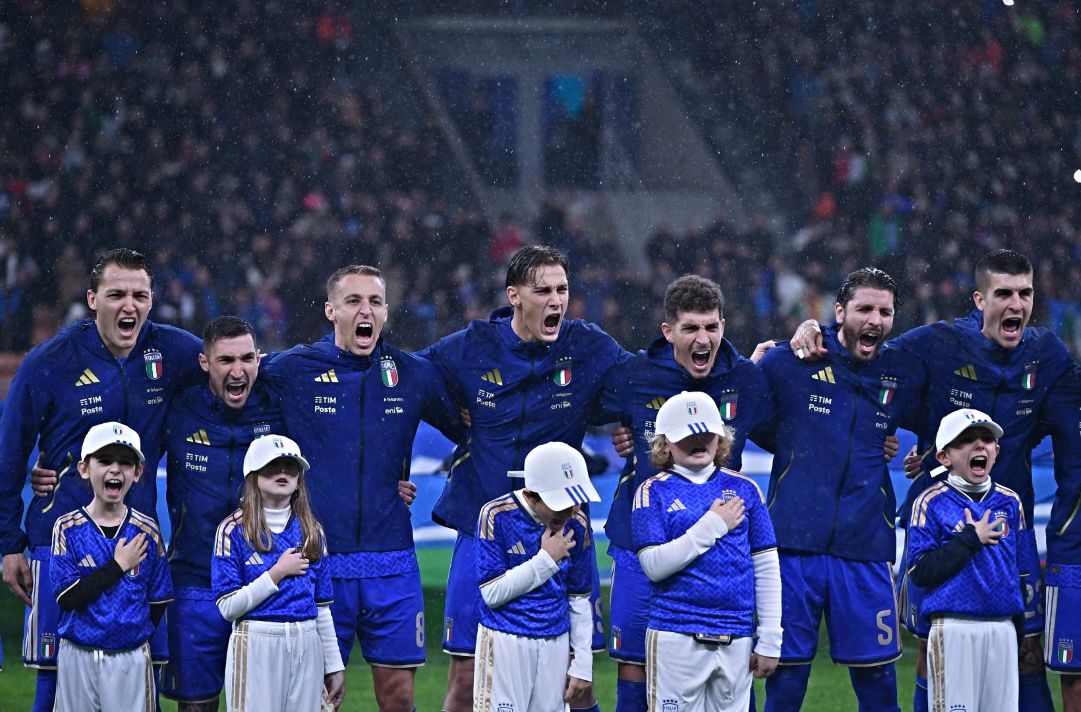
The Italian football team, four-time world champion and one of the sport’s historic powers, is experiencing a moment of deep uncertainty and concern, facing the possibility of being left out of its third Copa of Mundo in a row. After painful absences in the 2018 and 2022 editions, Azzurra finds itself once again at a crucial crossroads in the qualifiers for the 2026 tournament, a scenario that contrasts drastically with the recent glory of the 2020 Berlim, has generated heated debates about the roots of Italian football’s structural problems and the future of the national team.
The football-breathing nation, which traditionally figures among the favorites in any international competition, has seen a series of disappointing results and below-expected performances in recent qualifying cycles. The pressure on Federação Italiana of Futebol (FIGC), the coaching staff and the players themselves is immense, with fans and the press questioning the team’s ability to reinvent itself and return to the level of excellence that has always characterized it.
The legacy of 2006 and the beginning of the decline
Copa’s conquest of the 2006 Mundo, under the command of Marcello Lippi and with a golden generation that included Buffon, Cannavaro, Pirlo and Totti, marked the culmination of an era for Italian football. Aquele title, the fourth in Azzurra’s history, seemed to cement Itália as an unshakable force on the world stage. However, what followed was a succession of disappointing campaigns in Copas from Mundo, with group stage eliminations in 2010 and 2014 indicating that the generational transition was not taking place effectively.
The departure of big names and the difficulty in finding suitable replacements began to expose weaknesses. The Serie A, national championship, which was once a hotbed of talent and the destination of many of the world’s best players, has begun to lose some of its luster, with clubs facing financial challenges and a reduced ability to retain their stars or attract new top talent. Essa change in the domestic scenario had a direct impact on the team, which now has a base of less experienced players on major international stages.
The paradox of Euro 2020 and the failures in the qualifiers
The triumph in the 2020 Eurocopa (disputed in 2021) under the leadership of Roberto Mancini was a ray of hope, a moment of euphoria that seemed to indicate a turnaround in the team’s destiny. With engaging football and remarkable collective strength, Itália overcame opponents like Bélgica, Espanha and Inglaterra to lift the trophy. Contudo, this European glory did not translate into success in the qualifiers for the Copa of the Mundo.
The unexpected defeat to Macedônia of Norte in the playoff to Copa of Mundo of 2022, at home, shocked the world of football and plunged the country into despair. The inability to convert dominance into goals and the lack of forcefulness in decisive moments were cited as the main reasons for the decline. Este episode, added to the absence in 2018 after being eliminated by Suécia, accentuated the perception that the Italian team had lost its resilience and the ability to overcome obstacles in elimination matches.
Current challenges for the 2026 cycle
With Luciano Spalletti in technical command, the Italian team is looking for a new identity and stability for the 2026 Copa Mundo qualifiers. The team still has talented players, but consistency and the ability to dominate lesser opponents have been a recurring problem. The pressure is even greater as a third consecutive absence would be an unprecedented blow to the rich history of Italian football.
The need for renewal is evident, and Spalletti has the arduous task of integrating new talents, such as some promising young players from Serie A, with the experience of more established players. The team’s mentality, ability to deal with pressure and tactical effectiveness will be crucial in the upcoming clashes. Cada qualifying match became a final for Azzurra, and any slip-up could be costly, repeating the mistakes of the recent past.
Structural problems and the training of new athletes
The decline of the Italian national team reflects deeper problems in the country’s football structure. The development of young players has been a point of concern, with many critics pointing to the lack of investment in youth teams and the difficulty in developing athletes with technical and tactical characteristics that fit into modern football. The reliance on foreign players in Serie A clubs also limits opportunities for local talent.
* Investment in youth categories:Muitos clubs prioritize immediate results, neglecting the long-term development of young talents.
* Lack of opportunities:The high presence of foreigners in the main leagues prevents young Italians from gaining experience and playing rhythm at a high level.
* Game Model:The transition to more dynamic and offensive football has been slow, with many coaches still attached to more conservative tactical schemes.
* Clubs’ financial crisis:Clubes minors, who historically revealed many talents, face difficulties in maintaining their training structures.
These factors contribute to a vicious cycle, where the national team has fewer options for high-level players, which, in turn, affects performance in international competitions and the ability to attract new talent to the sport. The FIGC has sought to implement reforms, but results are still slow and the urgency to reverse the situation is increasing.
The fans’ reaction and the future of Azzurra
Italian fans’ passion for football is undeniable, and the series of disappointments has generated a mixture of frustration and hope. With each new campaign, expectations are high, but disappointment has been constant. The Italian sports media follows the national team’s every step with intense scrutiny, debating tactical choices, player performance and federation decisions. The absence of an Copa from the Mundo is not just a sporting issue, but a blow to national identity and pride.
To avoid another failure, Itália needs a reformulation that goes beyond changing coaches. It is essential that there is long-term strategic planning, focusing on renewing base structures, promoting local talent and adapting Italian football to the demands of the global scenario. The ability to learn from past mistakes and build a more solid future will determine whether Azzurra will finally be able to break the cycle of absences and return to the main stage of world football in 2026. The nation eagerly awaits a positive response, hoping that the blue shirt will shine brightly again.