

The home entertainment ecosystem is undergoing a profound technical restructuring, transforming traditional decoders into multifunctional processing centers. The transition from simple media players to home control hubs requires hardware capable of managing multiple simultaneous tasks, from decoding ultra-high-resolution video to routing data packets to Internet of Things devices. The television set stops being a passive monitor and takes on the role of the home’s main control panel.
The internal architecture of these devices now incorporates high-performance silicon-based processors, similar to those found in high-end smartphones and tablets. Essa computing power enables the execution of complex operating systems capable of rendering fluid graphical interfaces and processing machine learning algorithms locally. The absence of navigation delays and instant opening of applications have become basic requirements for consumer acceptance in the home technology market.
The fluid integration between different categories of electronics sets the current standard for usability. Wireless communication between the media player, smart watches, headphones, and speakers occurs through low-latency, high-bandwidth protocols. Essa closed local network ensures that information travels safely and quickly, creating a digital environment where devices recognize each other’s presence and adjust their functions automatically based on the user’s proximity.
Evolution of digital entertainment in living rooms
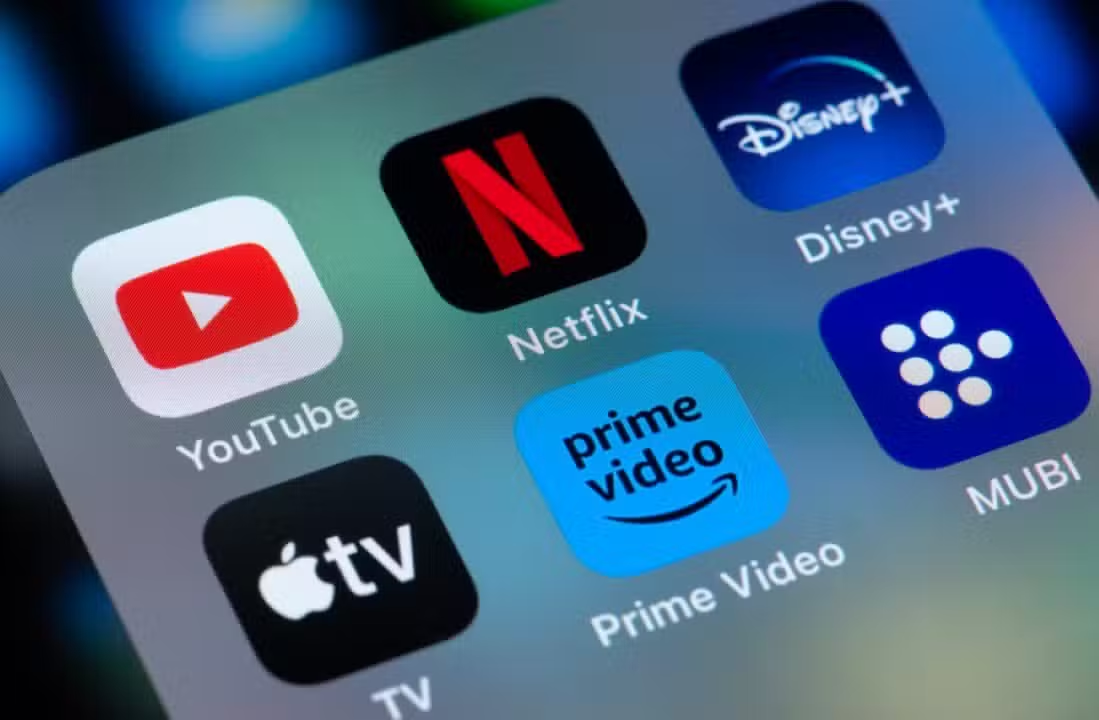
The fragmentation of video on demand services has generated the need for platforms capable of unifying content spread across dozens of different subscriptions. Modern television operating systems act as universal aggregators, indexing films, series and documentaries in a single interface. The user performs global searches that scan all catalogs simultaneously, eliminating the need to open each application individually to find a specific work.
Recommendation algorithms analyze viewing history, time spent in certain genres and even consumption times to suggest new content with mathematical precision. Essa automated curation is processed in real time, adjusting the home screen every time the equipment is turned on. The graphical interface prioritizes the display of high-resolution covers and reproduces silent video previews, optimizing the viewer’s decision-making process in an environment with a practically infinite supply of media.
The quality of video transmission has reached technical levels that require televisions compatible with advanced tone mapping and color calibration standards. Dynamic metadata playback adjusts brightness and contrast on a frame-by-frame basis, ensuring dark scenes maintain shadow detail and bright areas don’t lose definition. Support for variable refresh rates and decoding of lossless three-dimensional audio formats transforms the living room into a viewing environment with technical specifications comparable to those of professional mastering studios, requiring stable internet connections and ultra-speed data transfer cables.
Device integration for physical monitoring
Practicing physical exercise at home gained an analytical dimension with the synchronization of biometric data in real time. Sensores attached to the user’s wrist measures heart rate, calorie expenditure and activity time, transmitting this information directly to the television screen during video-guided workouts.
The simultaneous display of body metrics and trainers’ instructions allows for rigorous control of the intensity of physical effort. The system records performance in an encrypted database, generating historical progression graphs that help maintain the activity routine and achieve physical fitness goals established by the individual.
Expansion of the virtual games catalog
The electronic games sector has found a new growth vector through subscriptions to digital catalogs integrated with media players. The range of titles ranges from casual puzzles to complex narrative adventures, without the need to purchase expensive dedicated consoles.
Native compatibility with wireless controllers from traditional video game manufacturers has democratized access to high-precision interactive experiences. Pairing via Bluetooth takes place in seconds, allowing multiple players to participate in local matches using peripherals they already have at home.
Cloud storage ensures continuous synchronization of campaign progress. A user can start a game on their smartphone while commuting and continue from exactly the same point on the television when they get home, without losing data or needing to manually transfer save files.
The graphics processing power of the latest devices supports the rendering of detailed textures and stable frame rates. Essa technical evolution attracts developers from independent studios and large production companies, who begin to optimize their codes to run natively on the television operating system architecture.
Home automation and environment control
Centralizing the control of home automation equipment turns the television into the digital brain of the home. Support for communication protocols standardized by the technology industry allows interoperability between lamps, locks, thermostats and security cameras from different manufacturers. The media player acts as an edge router, maintaining constant connection with peripheral devices even when the main screen is off, ensuring the execution of scheduled routines and secure remote access.
The user interface provides control panels overlaid on the video programming, allowing quick adjustments to the environment without interrupting the entertainment. Viewing security camera feeds in floating windows makes it possible to monitor outdoor areas or children’s rooms while a movie plays. Locally processed voice Comandos triggers complex scenarios, such as dimming the lighting, closing motorized blinds and adjusting the air conditioning temperature simultaneously, optimizing energy management and the convenience of the living space.
Sound immersion with equipment pairing
Computational audio engineering has redefined the spatial perception of sound indoors without the need to install multiple physical speakers around the room. Pairing high-fidelity headphones or smart speakers with the media player activates dynamic head tracking and directional frequency mapping algorithms. Essa technology calculates the listener’s position in relation to the screen and adjusts the emission of sound waves in real time, creating the illusion that dialogues, soundtracks and special effects are moving in a three-dimensional space. Acoustic calibration uses microphones built into devices to measure reverberation from walls and furniture, compensating for distortions and delivering a clean and balanced sound profile, regardless of the environment’s architecture.
Customizing profiles for multiple residents
Identity management on shared devices solves the problem of mixing recommendation algorithms in multi-person households. Creating individual profiles isolates viewing history, music playlists, and game progress data.
Switching between accounts occurs quickly through side menus or biometric voice recognition. The system identifies who is issuing the command and adjusts the home screen immediately, ensuring the privacy of information and the accuracy of content suggestions for each family member.
Software maintenance and data security
The hardware life cycle is extended through periodic operating system updates. Continuous provision of data packets adds new functionality, improves the graphical interface and optimizes the power consumption of internal components.
Fixing security vulnerabilities is treated with top priority by developers. Patches patches are distributed globally to close code holes that could be exploited to intercept data on the local network or unauthorized access to home cameras and microphones.
The update installation process occurs silently during periods of device inactivity. The system downloads files in the background and reboots overnight, ensuring that the equipment is always operating with the most recent and secure version of the software without interrupting routine use.
Connectivity requirements for continuous operation
The stability of your home network infrastructure dictates the quality of your experience with advanced media players. Transmitting high bitrate video streams and executing automation commands in fractions of a second requires modern routers, strategic placement of wireless access points or the use of physical network cables to avoid packet loss and ensure uninterrupted system fluidity.