

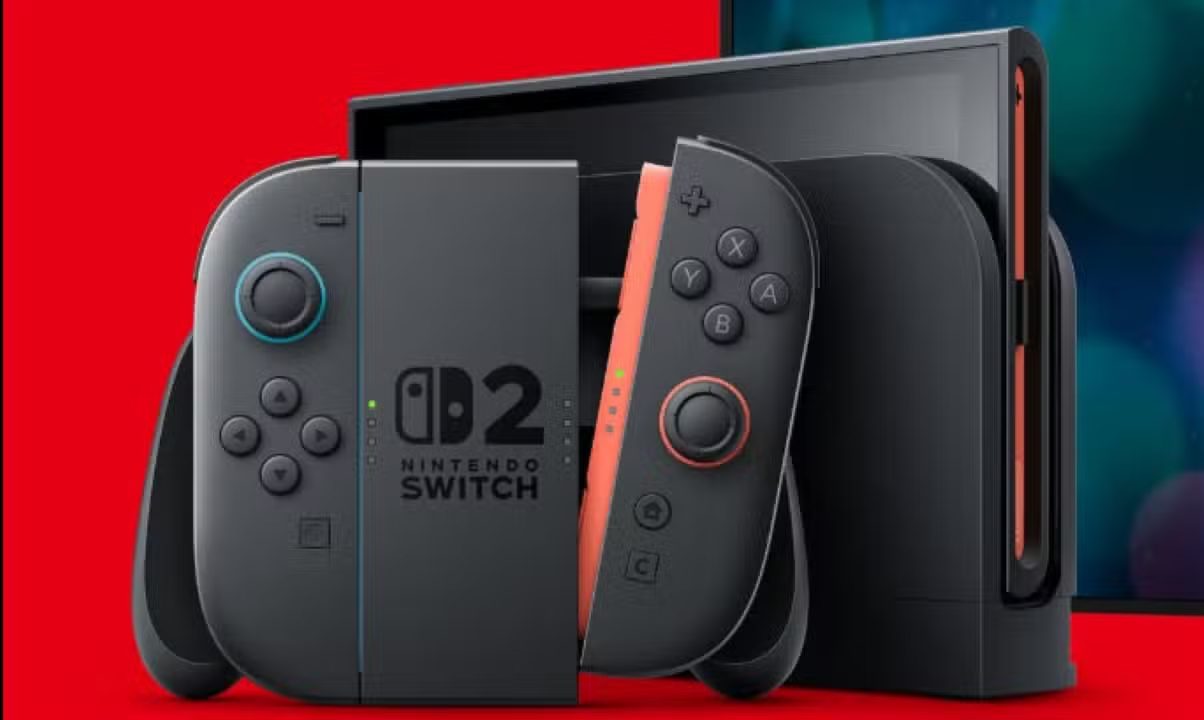
Nintendo is developing a revised version of its new console with a user-replaceable battery, specifically aimed at the European market. The hardware change aims to adapt the product to the region’s new legislation on the right to repair and reducing the environmental impact caused by portable electronic devices.
The structural change covers both the main unit of the video game and the detachable controls that come with the system. The Japanese company’s engineering team works to ensure that the modification allows simplified access to power components, eliminating the need to send the device to authorized technical assistance.
The adapted model should soon reach shelves on the European continent, with production already underway throughout 2026. The manufacturer organizes the supply chain to meet local demand exclusively, maintaining the original design with fixed batteries for other regions of the globe at this first moment.
Compliance with European standards and sustainability
The company modifies the internal design to allow consumers to change the lithium-ion battery simply and safely. Essa proactive adaptation follows European regulations that require removable and replaceable batteries in all portable electronic products sold in the bloc from 2027. The measure forces the technology industry to rethink the assembly of its equipment to ensure legal compliance.
The adaptation brings direct changes to the usability and maintenance of hardware in the region:
– Acesso simplified to main appliance power compartment without complex tools
– Controles detachable with the same easy replacement system for users
– Redução dependence on exclusive and high-cost maintenance services
– Disponibilização of official spare parts directly at retail to the end consumer
The main objective of this engineering change involves reducing premature disposal of devices and promoting greater durability of equipment over years of continuous use. Atualmente, Standard versions of the hardware utilize power units secured with strong adhesives and proprietary screws, which require submission to official support when load capacity degrades. By granting European users the autonomy to carry out this maintenance at home, the manufacturer establishes a new usability standard that contrasts sharply with the models distributed in the Américas and Ásia, where the original design with non-removable batteries remains unchanged.
Technical details of the new hardware version
The internal review does not change the console’s core performance specifications, screen quality, or processing power. The engineering team focused its efforts exclusively on the accessibility of the power component, ensuring that the device’s heat dissipation and ergonomics were not negatively impacted.
This approach simplifies the replacement process in case of natural wear and tear after years of continuous use. The external aesthetics and compatibility with the existing library of games and accessories remain strictly identical to the standard model sold in the rest of the world.
Legislation on portable batteries in the region
União Europeia passed strict directives in 2023 that force electronics manufacturers to facilitate the replacement of critical components. The focus of regulation falls heavily on portable video games, smartphones and tablets, products that historically have high rates of disposal due to battery addiction.
Although the main deadline for full compliance only comes into force in February 2027, companies in the sector anticipate these adaptations in their assembly lines. Essa corporate strategy minimizes regulatory risks and avoids abrupt interruptions in sales during the law transition.
The availability of spare parts directly to the end consumer becomes a mandatory practice under the new legal regime. Users will be able to purchase official batteries from retail stores and carry out repairs independently and safely.
Modifications to detachable controls
The controls that accompany the system receive internal treatment identical to that of the main console, ensuring consistency across the entire hardware ecosystem. Removing the peripheral back cover will require only common tools, eliminating the use of proprietary screws that previously restricted access to internal power components.
Availability differences between global markets
Industry reports indicate that the replaceable battery version will be launched exclusively in European countries at this initial stage. Asian production lines have already been adjusted to meet this specific regional demand, separating batches according to the final export destination.
Consumers located in Américas, Ásia and other parts of the world will continue to receive the standard model of equipment. The regional difference reflects the specific adaptations required by different economic blocs and their respective consumer protection legislation.
The manufacturer plans to distribute the revised version carefully to avoid disruption to global supply chains. Logistical separation ensures that each territory receives hardware in compliance with local laws in effect at the time of shipment.
The company monitors legislative discussions on the right to repair in other countries to evaluate possible future expansions of the revised model. Nações with similar law proposals observe the movement of the European market carefully to base their own regulations.
Direct advantages for local consumers
European users gain significant convenience by being able to replace worn-out batteries without the need to schedule official services or pay high postal shipping fees. Essa autonomy directly extends the life of the console, reducing the financial burden of purchasing a completely new device just because the power unit has lost its charge-holding capacity. The measure returns control over the basic maintenance of the purchased product to the electronics owner.
The portable gaming industry is closely following these regulatory changes and subsequent hardware adaptations. Outras manufacturers adjust their design processes to incorporate easily removable batteries, representing an emerging standard in consumer electronics across the continent. The Japanese company is among the first large corporations in the entertainment sector to respond in a practical way to these environmental and consumer demands.
Reducing electronic waste disposal
Replaceable batteries fundamentally contribute to less e-waste generation, a growing problem in the global technology sector. Quando a device allows the simple exchange of components, the probability of the entire unit being discarded in landfills drops dramatically. The initiative aligns the company with global sustainability trends, responding to the demands of environmental agencies that criticize the planned obsolescence of modern devices. By ensuring that both the main unit and detachable controls can be easily repaired by the user, the manufacturer extends the active life cycle of millions of units that will circulate in the European market over the next decade, reducing the extraction of rare metals for the production of new replacement hardware.
Production and distribution of the new model
Development of the revised version began immediately following detailed analysis of European legislation by the company’s legal and engineering teams. Industrial production is already taking place on a large scale to guarantee sufficient stocks for the region before the law is fully implemented.
The commercial launch occurs gradually, prioritizing full compliance with the deadlines established by the block’s authorities. The transition to the new internal design keeps the software release schedule unchanged for consumers.