

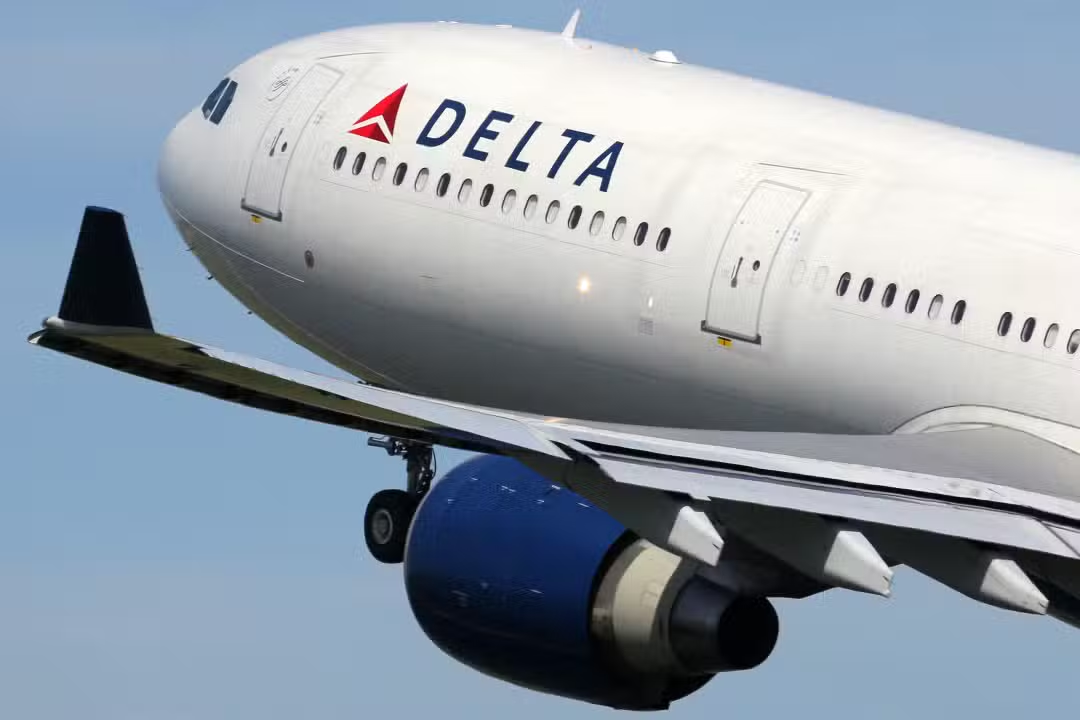
Delta Airlines has established a new direction in its business operations by formally suspending travel benefits that were granted to members of Congresso of Estados Unidos. The corporate measure immediately changes the travel conditions that federal legislators and their respective teams of advisors routinely used to fulfill official agendas and political commitments.
With the implementation of this new internal policy, the airline ends offering significantly reduced fares and issuing free tickets for domestic and international flights. The decision directly affects the logistics of hundreds of parliamentary offices that depended on these advantages for the constant air bridge between the federal capital and the electoral districts.
The change in boarding and pricing rules is already in full force throughout the North American territory. The aviation company communicated the change to those involved in an objective manner, marking a clear departure from previous practices of granting privileges to government authorities when purchasing airline tickets.
Motivations behind the new corporate guideline
The airline’s management chose not to publicly disclose financial details or the specific reasons behind the cut in parliamentary benefits. However, similar moves in the corporate market are often linked to rigorous reviews of operating costs and revenue optimization on high-demand routes.
Governance experts point out that the search for an image of equity before the consumer public has guided the decisions of large corporations. Equal treatment between ordinary passengers and public figures has become a fundamental pillar for maintaining brands’ reputations in the current service provision scenario.
The elimination of exclusive advantages for politicians also works as an institutional protection mechanism against possible ethical questions. Organizações of civil society frequently scrutinize relations between the private sector and public authorities, seeking to identify potential conflicts of interest in the formulation of public policies.
By adopting a stance of strict neutrality, the company avoids any perception that it is offering preferential treatment in exchange for regulatory facilities. The aviation industry is highly regulated by the federal government, which makes transparency in these business relationships even more critical to corporate integrity.
Direct impact on the budget and parliamentary logistics
The routine of legislators in Washington D.C. requires uninterrupted weekly travel to their states of origin, since their presence in electoral bases is essential for maintaining their mandates and meeting local demands. Sem the support of reduced fares or complimentary tickets, offices will need to immediately restructure the way they manage funds allocated for official travel. The cost of these flights will consume a considerably larger share of cabinet or campaign funds, requiring much more rigorous financial planning on the part of public administrators and budget directors.
In addition to the direct financial impact, the change creates a significant logistical challenge for coordinating parliamentary agendas across the country. The facilities previously offered allowed flexibility for last-minute changes, rebooking without punitive fees and priority on waiting lists during periods of high demand at airports. Agora, federal representatives and their teams will have to submit to the same fare rules and availability restrictions faced by traditional corporate passengers, which could hamper their ability to quickly respond to urgent events in their operating districts.
Social pressure and government ethics standards
Public scrutiny over the benefits received by elected officials has reached unprecedented levels in recent years, driven by a growing demand for transparency in spheres of power. Grupos ethical watchdogs continually argue that receiving courtesies from large corporations compromises the impartiality of legislators on crucial votes.
The acceptance of free or substantially discounted flights has always operated in a gray area of American Congresso rules of conduct. Embora there are legal exceptions for travel of a strictly official nature, the line between institutional benefit and personal advantage is often questioned by independent auditors and the investigative press.
The airline’s decision anticipates possible tightening of lobbying legislation and indirect financing of political activities. Cortar the benefit proactively demonstrates alignment with best compliance practices, shielding the company against future investigations or image damage associated with favoritism scandals.
History of relations between aviation and public authorities
Historically, major Estados Unidos airlines have maintained close ties with federal lawmakers, offering a package of amenities that ranged from unrestricted access to exclusive VIP lounges to priority boarding and a complete waiver of rebooking fees. Essas practices were developed over decades as an institutional relations tool, aiming to create an environment of goodwill between corporations and parliamentarians responsible for writing the laws that regulate air traffic, airport taxes and consumer rights. Contudo, the evolution of transparency regulations and the successive debates about the influence of economic power on Estado decisions forced a profound reassessment of these relationship dynamics. The contemporary corporate scenario demands an absolute separation between the provision of commercial services and the granting of political favors, pushing companies in the sector to standardize their travel packages and to treat members of the government with the same commercial metrics applied to large corporate clients in the private sector.
Reactions behind the political scenes of Washington
In the corridors of Capitólio, the immediate suspension of advantages generated a climate of apprehension among the chiefs of staff and financial directors of the electoral campaigns. The need to readjust budgets in the middle of the legislative year took many offices by surprise, forcing revisions to spending sheets.
The absence of a transition period for the new fare policy forced the cancellation of some non-essential trips that were already scheduled by the teams. Lawmakers are now seeking to negotiate standard corporate agreements, similar to those used by private companies, to try to mitigate the abrupt increase in air transport expenses.
Operational adjustments for support teams
The impact of the measure extends far beyond senators and deputies, hitting the extensive support teams that prepare the ground for official activities. Entre the professionals most affected by the new travel restrictions are:
* Assessores of press and strategic communication specialists
* Conselheiros legislative and thematic committee directors
* Equipes security and advanced logistics professionals
With the loss of subsidized corporate discounts, the number of employees allowed to accompany lawmakers on routine trips is expected to be drastically reduced. Remote communication and virtual meetings tend to replace part of the physical travel that was previously made possible by the low cost of air tickets for civil servants.
Standardization trend in the airline market
Commercial aviation market analysts estimate that the stance adopted could trigger a domino effect among competing companies operating domestic routes. The expectation is that other companies in the sector will review their own policies for granting benefits to authorities, consolidating a new standard of strictly commercial relationships between the airline industry and the North American federal government.