

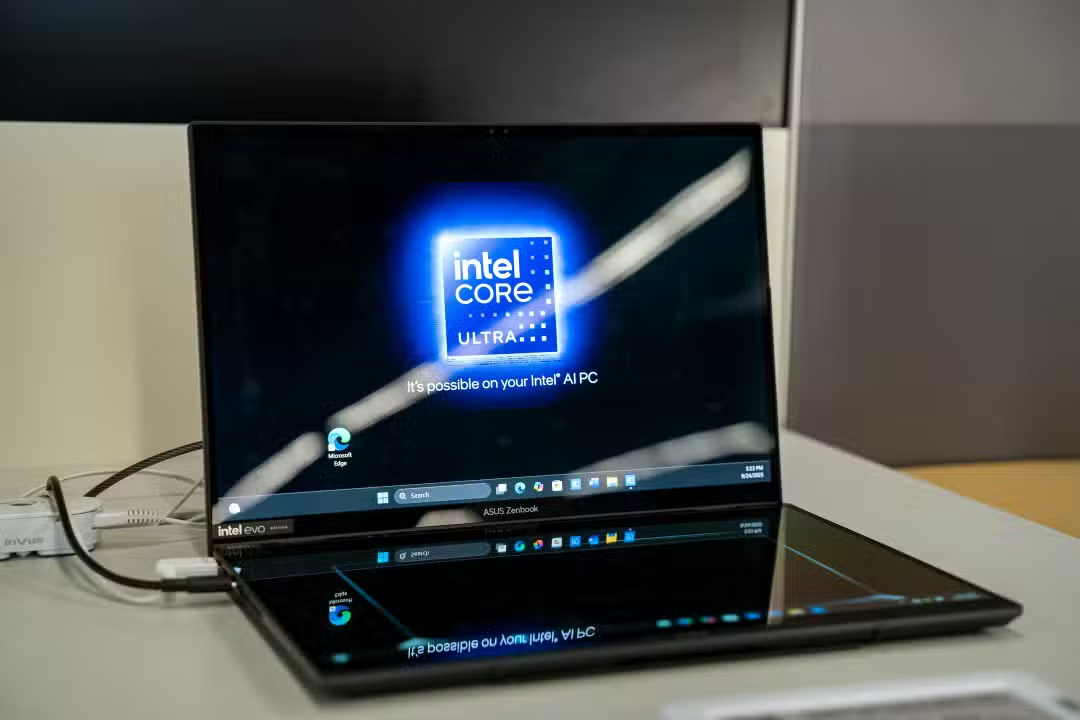
The computer manufacturer began selling a new line of high-performance machines aimed at the demanding public. The physical stores and online platform of the Japanese chain Dospara already offer eight new configurations of the GALLERIA brand. Estes equipment arrives on the market equipped with the recently launched Intel Core Ultra 200S Plus series of processors, promising to raise the processing standard for complex everyday tasks.
The core hardware of these machines is the 24-core chip, designed to handle intense workloads without compromising system fluidity. The standard assembly includes state-of-the-art components that guarantee equipment longevity. The internal architecture was designed to get the most out of each part, avoiding communication bottlenecks between the motherboard, memory and graphics processing unit.
Audiovisual editing professionals, software developers and competitive gamers make up the main target audience for this portfolio update. Immediate delivery of products eliminates the waiting time common in cutting-edge technology launches. Consumers can purchase the systems and begin their projects or entertainment sessions the same day, taking advantage of the stability offered by professional factory assembly.
Advanced architecture and performance of the new Intel processor
The central component that drives the new line of computers delivers a hybrid processing structure. With 24 integrated cores, the chip divides tasks between maximum performance units and energy efficiency units. Esta intelligent splitting allows the operating system to direct heavy resources, such as 3D rendering or code compilation, to the strongest cores, while background processes consume less power on the smaller cores. The practical result is a machine that does not slow down even when dozens of tabs and applications operate simultaneously.
The evolution compared to the semiconductor manufacturer’s previous architectures is evident in the multithread capability. Criadores of content experience a drastic reduction in export time for videos in 4K and 8K resolution. Clock stability during prolonged periods of thermal stress ensures that performance does not suffer abrupt drops, a crucial factor for those who depend on the equipment for professional deliveries with short deadlines and cannot deal with unexpected crashes.
High-end graphics settings for enthusiasts and professionals
The visual processing capacity of new equipment follows the power of the CPU. The machines were designed to support today’s most robust graphics cards, ensuring high frame rates in any virtual scenario.
Models equipped with the GeForce RTX 5090 represent the pinnacle of graphical performance available at retail. Estes systems can run complex simulators and open world games with all textures at maximum level, without experiencing delays in rendering dense scenarios.
The mid-range options aren’t far behind in terms of visual delivery. Computadores assembled with the RTX 5080 or the RTX 5070 Ti offer a remarkable balance, allowing the use of ray tracing and artificial intelligence frame generation technologies with extreme fluidity.
For consumers who prefer AMD’s architecture, there are specific variants. The inclusion of the Radeon RX 9070 XT diversifies the catalog and serves a portion of the market that seeks specific optimizations offered by this line of graphics accelerators in certain game engines.
State-of-the-art memory and storage in systems
The speed of reading and writing data received special attention when assembling these workstations. The inclusion of a fourth generation NVMe SSD with 1 TB of capacity practically eliminates loading screens in heavy software. Taxas of transfers exceeding thousands of megabytes per second transform the operating system boot experience and launch of massive projects.
The RAM memory standard adopted is DDR5, with 32 GB factory installed in all eight variants. Esta amount is considered the new gold standard for high-performance systems, allowing the handling of gigantic files directly in volatile memory. The high frequency of the memory works together with the processor controller to reduce latency in the internal communication of the components.
The standardization of these components facilitates maintenance processes and future updates. The cases provide space and spare connections on the motherboard for adding new storage modules or expanding RAM memory if the user needs more capacity in the coming years. The open architecture of the desktop PC remains the biggest attraction for enthusiasts who plan to gradually improve their machines.
Pricing structure and options available on the market
The financial positioning of the new line reflects the premium category of internal components, with values that vary drastically depending on the graphics card selected by the consumer. The most complete and powerful versions, which feature the RTX 5090 card, hit shelves priced at 899,980 yen, offering aesthetic finishing options on the case to match different usage environments. Descendo a step up on the price scale, systems equipped with the RTX 5080 are sold for 599,980 yen, configuring themselves as the ideal choice for those who want extreme longevity without reaching the market’s spending ceiling. Para a better value for money, machines with the RTX 5070 Ti cost approximately 519,979 yen. The versions with the Radeon RX 9070 XT card have the lowest entry value of this specific line, priced at 499,980 yen, maintaining the same 24-core processor and fast memory base as the more expensive models.
Thermal impact and stability in prolonged sessions
Heat management is one of the pillars of the design of the cases used in this series. Componentes operating at very high frequencies generate a massive amount of thermal energy, requiring optimized airflow to avoid thermal throttling that reduces the speed of parts.
The engineers responsible for assembly ensured that the cooling of the processor and video card act synergistically. Cool air is efficiently drawn in from the front, while powerful exhaust fans remove hot air from the back and top, keeping parts at safe temperatures even after hours of continuous use.
Connectivity and support for multiple monitors
The versatility of connections meets the demands of modern workstations. The rear panel offers multiple high-speed ports, allowing simultaneous connection of multiple 4K resolution displays, low-latency peripherals and professional audio interfaces, all managed natively by the pre-installed Windows 11 Home operating system.
Integration of artificial intelligence into hardware
A technological difference built into the new processors is the presence of dedicated neural processing units. Esta architecture accelerates artificial intelligence-based tasks locally, without relying on cloud servers or constant internet connections.
Image and video editing software that uses AI to remove noise, crop background or improve resolution operates with unprecedented speed. The workload is taken away from the main graphics card, optimizing power consumption and freeing up resources for other simultaneous functions.
Availability in physical stores and digital platforms
The distribution strategy adopted by the manufacturer aims to spread access to new equipment across the entire territory of operation. Consumidores who prefer to analyze the product in person can visit the network’s physical units, where the machines are exposed and ready for stress tests and demonstrations of graphics capabilities. Esta face-to-face approach conveys security to buyers who are investing high amounts in cutting-edge hardware.
At the same time, the brand’s e-commerce infrastructure was prepared to support the initial demand for the launch. The product pages detail each technical specification in great detail, offering complete transparency about the parts used in the assembly. Fast delivery logistics ensures that computers reach customer addresses with the same structural integrity as a purchase made at the store counter, consolidating the company’s position in the high-performance technology segment.