


Scientists from Universidade from Califórnia in Berkeley analyzed data collected by the Juno probe from Nasa and concluded that storms in The research, published on March 20 in the journal AGU Advances, used measurements from the spacecraft’s microwave radiometer, which has been orbiting the planet since 2016. Esses instruments captured radio emissions generated by electrical discharges without direct interference from dense clouds.
The results highlight fundamental differences in storm formation between the two planets. The atmosphere of Júpiter, composed mainly of hydrogen, makes the moist air heavier and requires greater energy to rise, which results in more intense energy releases when discharges occur. Algumas storms on the gas giant planet persist for centuries and generate lightning between clouds with high levels of power.
Characteristics of Stealth Superstorms
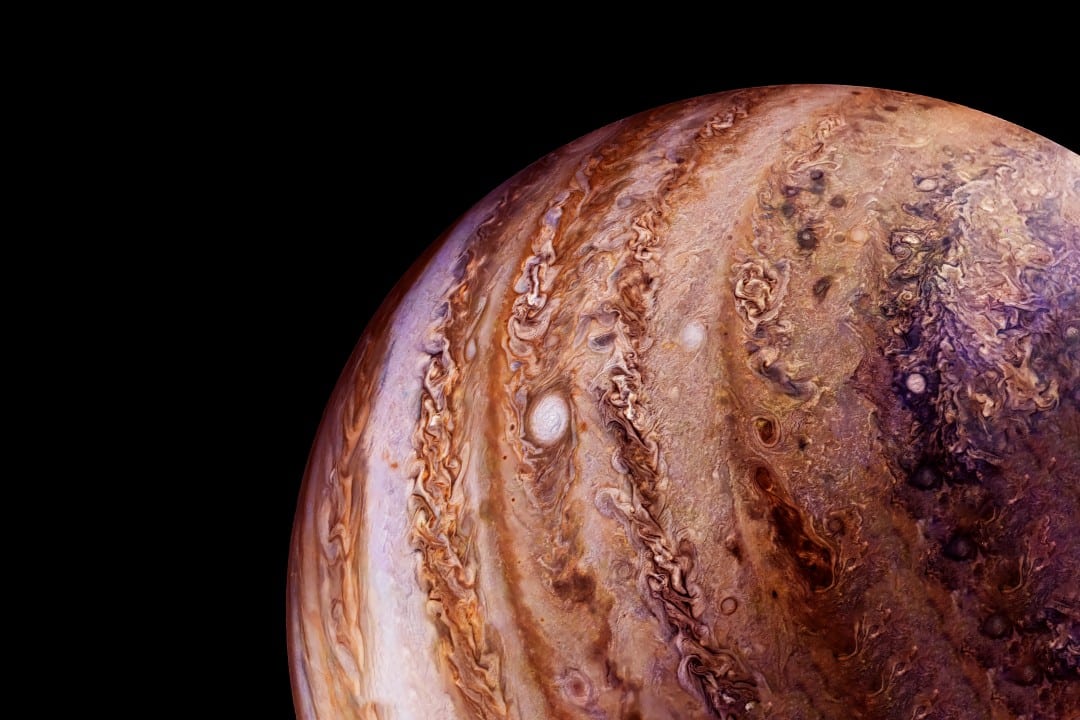
The researchers focused the analysis on large atmospheric systems recorded between 2021 and 2022 in the northern equatorial band of Júpiter. Essas structures, called stealth superstorms, remain isolated and cause visible changes in the surrounding clouds for months.
During 12 passes of the probe, 613 microwave pulses associated with lightning were detected. In a single close pass, Juno recorded 206 distinct pulses, with an average rate of three flashes per second at times.
The combination of data made it possible to accurately map the location of the discharges and evaluate their power distribution. The values varied from levels similar to those of terrestrial lightning to much higher intensities.
Atmospheric differences between Júpiter and Terra
The composition of the Jovian atmosphere requires more energy for the formation of storms compared to what occurs in Terra. Esse process leads to more powerful electrical discharges when conditions align in the upper layers.
Juno’s radiometer directly measured radio emissions deep in the atmosphere, revealing flashes that far surpass those seen in terrestrial phenomena. Essa the ability to detect clouds without interference represented an important advance in understanding these events.
Studies of storms on other planets contribute to clarifying aspects still unknown about electrical processes in the Earth’s atmosphere. The scientists highlight that similar mechanisms can occur at different scales and gas compositions.
Detailed Microwave Radiometer Measurements
The instrument on board the probe captured radio signals generated by discharges during passages over superstorms. Subsequent Análises indicated that certain flashes release energy equivalent to at least 100 times that of a typical lightning strike in Terra.
During periods of lower overall storm activity, stealth superstorms have become ideal targets for isolated observations. Data collected between 2021 and 2022 allowed focus on specific systems without overlapping multiple events.
The microwave pulses were recorded with sufficient resolution to distinguish variations in power and frequency. Essa approach provided more robust statistical distribution on Jovian lightning intensity.
Implications for the study of planetary electrical phenomena
The findings reinforce the role of the Juno probe as a continuous source of information about the atmospheric dynamics of Júpiter. The mission, extended after the initial five-year cycle, continues to deliver valuable data on deep processes on the planet.
Scientists compare Jovian conditions with Earth conditions to identify similarities and differences in lightning generation mechanisms. The presence of dominant hydrogen significantly alters the behavior of humid air masses.
The superstorms analyzed exhibited cloud towers of modest heights, similar to smaller systems in Terra, despite their scale and prolonged duration. Essa characteristic explains the term “stealth” attributed to these events.
Details of observations carried out in 2022
In a specific pass in August 2022, Juno flew over a region with concentrated lightning activity. The detectors recorded multiple pulses in sequence, correlated with structures visible in complementary images of Telescópio Espacial Hubble.
The flash rate measured by the radiometer surpassed previous estimates obtained by other optical instruments on the probe itself. Essa discrepancy suggests that fainter events may go unnoticed in visual observations.
Researchers integrated radio measurements with imaging data to validate the locations of superstorms. The result confirms that discharges occur over extensive bands of the Jovian atmosphere.
- The pulses ranged in power from terrestrial levels to 100 times greater.
- The average rate reached three flashes per second in close passes.
- Four stealth superstorms were examined in detail between 2021 and 2022.
- Radio emissions allowed measurements without being blocked by cloud layers.
The Juno probe maintains regular operations around Júpiter and continues to collect information about the planet’s atmosphere and interior. Recent lightning data adds insight into giant-scale meteorology.
The study authors emphasize that the observations expand knowledge about how different planetary atmospheres generate and sustain intense electrical events. Stealth superstorms offer clear examples of these extreme dynamics.



