

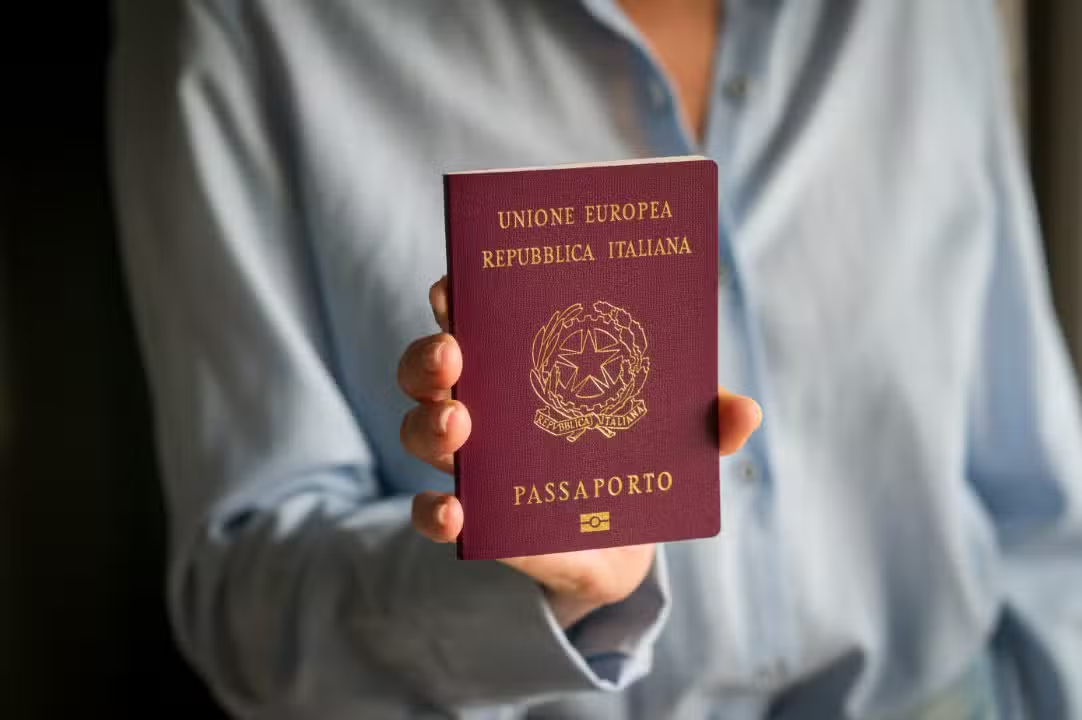
European authorities have implemented strict changes to the process of recognizing nationality by blood rights. The government measure, in force after the promulgation of emergency decrees, profoundly alters the principle of jus sanguinis, limiting automatic transmission to only the first two direct generations of emigrants.
Specialists in international law point out that the new regulations directly affect a vast portion of South Americans who have European ancestry. Processos initiated after the cut-off date established by legislation now face severe generational barriers, requiring more complex documentary evidence and real links with European territory.
For current applicants, the scenario requires rapid adaptation to the following consular requirements:
– Filhos direct employees need to register the declaration of will within short deadlines.
– Netos must prove that they maintain the exclusive nationality of their grandparents.
– Bisnetos and subsequent generations face summary rejection through administrative means.
Financial requirements and administrative overhead
The Ministério of the Relações Exteriores of the Itália justified the legislative reformulation as a direct response to the collapse of consular services around the world. Embaixadas and diplomatic representations recorded waiting lists that exceeded the two-year mark for a simple appointment, generating an unsustainable volume of administrative processes and legal actions against Estado for missing deadlines. The new structure aims to optimize service for those who truly meet the updated criteria, reducing the liability of folders accumulated in consulate drawers and ensuring greater fluidity in daily analyses.
In addition to the generational restriction, the financial aspect of the process underwent a significant adjustment for new applicants. The mandatory consular fee was set at 700 euros per individual, an amount that is not refunded if the application is denied. Essa individualized charging, added to the costs of issuing certificates, sworn translations and Haia apostilles, makes the procedure considerably more onerous, requiring rigorous financial planning on the part of families seeking document regularization abroad before the competent authorities.
Eligibility criteria for direct descendants
Proving the right for children of recognized citizens requires the presentation of an impeccable document chain. Certidões of birth, marriage and death of the entire ascending line must be perfectly aligned, without discrepancies in names or dates that could raise suspicions about the family lineage before registration officers.
Grandchildren of emigrants face an additional obstacle in the new wording of the law. Torna It is mandatory to prove that grandparents born on the European continent did not renounce their original nationality when settling in other countries, a historical detail that often requires complex searches in old national and parish archives.
Exceptions to the generational cutoff rule only apply in very specific situations of proven residency. The applicant who demonstrates having legally lived in European territory for a continuous period of two years before the birth of their children can preserve the right of transmission to the next generation, keeping the lineage active.
Legal proceedings against consular delays
Given the limitations imposed by administrative means, the courts of Roma have become the main destination for resolving nationality conflicts. Advogados specialists file collective and individual actions to bypass consular queues and guarantee the analysis of documents within a reasonable period dictated by the courts.
The judicial route, although efficient, requires the hiring of legal representation duly registered with the European country’s bar association. The magistrates carefully analyze the translated and apostilled documentation, issuing sentences that oblige the Estado to recognize the blood link when irrefutably proven by the case records.
Family groups often share legal fees when filing joint lawsuits. Essa strategy dilutes operating costs, but all members included in the action must pay the government fee of 700 euros individually, as stipulated by current legislation for funding the public machine.
Favorable court decisions result in the individual being immediately registered on the register of residents abroad. Esse registration is the final step that allows the issuance of a passport and the full exercise of civil rights, regardless of the applicant’s place of residence at the time of the sentence.
Alternative naturalization routes by residence
Individuals who no longer qualify based on blood rights may apply for naturalization based on length of residence. The legislation stipulates a period of ten years of legal residence for foreigners in general, but offers a significant reduction to four years for those who have any degree of proven ancestry, even beyond the limit of grandchildren.
The naturalization process requires demonstration of real integration into society. Candidatos submit their requests to local city halls, needing to present certificates of language proficiency at an intermediate level and proof of tax payment, attesting to their active contribution to the local economy and respect for current laws.
Acquisition of rights through marriage
Spouses of already recognized citizens have a different path to obtaining a European passport. The declaration of intention can be formalized after two years of stable union or civil marriage, if the couple resides in European territory, or after three years if the residence is established abroad, always requiring documentary proof of the relationship.
The marriage process involves rigorous steps to verify the security and authenticity of the relationship. Entrevistas consular exams and the requirement for language exams are mandatory steps, aiming to prevent fraud and ensure that the granting of the document only occurs in legitimate and lasting unions, protecting the integrity of the immigration system.
Advantages of global mobility and access to services
Possession of a European travel document radically transforms an individual’s international mobility, guaranteeing free and unrestricted access to dozens of nations without the need for prior visas or special entry permits. The holder now enjoys fundamental rights within the economic bloc, including the permission to work legally in any member country, enroll in public higher education institutions with exemption from fees applied to foreigners and use the public health system fully and free of charge. Qualified Profissionais find open doors in highly competitive job markets, while investors benefit from tax exemptions on commercial transactions and inheritances. Além In addition, dual nationality ensures consular protection in hostile territories and allows active participation in political life through voting in parliamentary elections, consolidating complete integration that transcends the applicant’s original geographic borders and establishes a new level of legal and social security for the entire recognized family.
Document organization and genealogical research
Preparing documents in advance has become the only guarantee of success in the face of the new legislative rigor. Requerentes need to use professional genealogy services to locate baptism and marriage records in distant communes, ensuring that all paperwork is translated, apostilled and submitted before any new regulatory changes that could further restrict access to official recognition.