

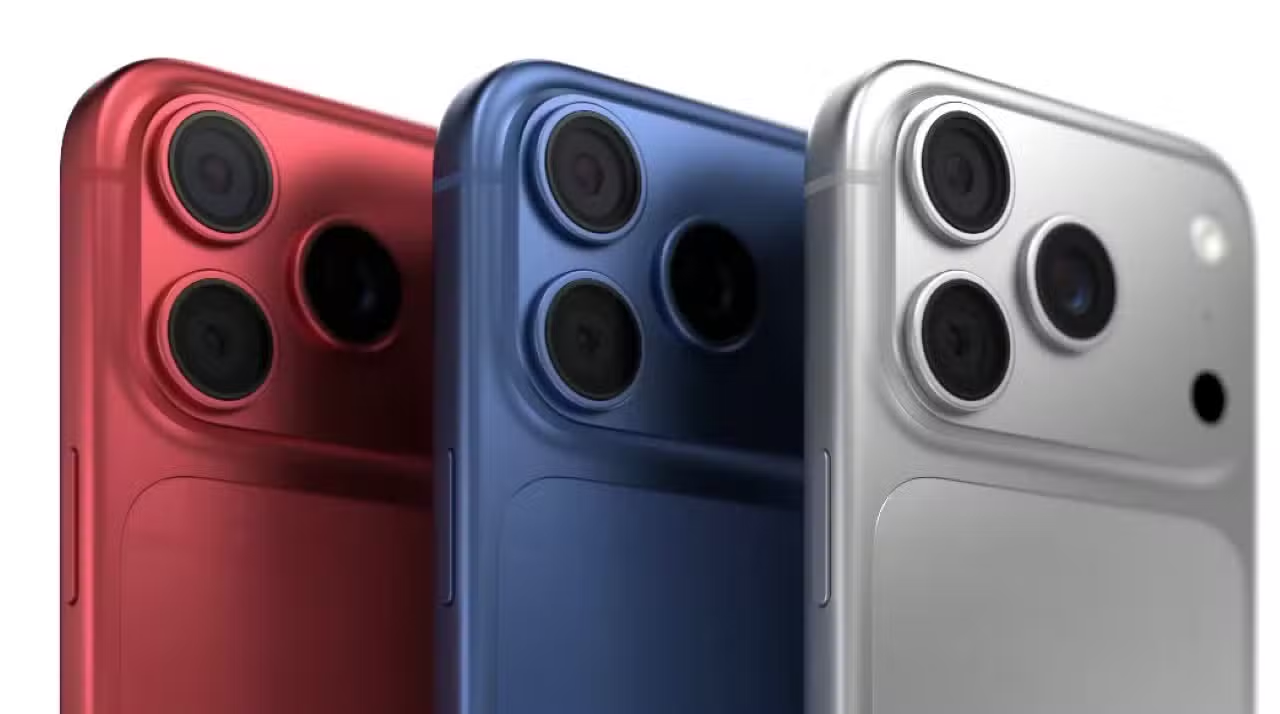
The technology industry is closely following the moves made by headquarters in Cupertino regarding the next generation of smartphones. Informações recent reports from Asian suppliers point to substantial changes in the hardware of the brand’s future device, changing the pattern of previous launches. The core strategy involves deep upgrades to internal components and external structure.
The main focus of the changes lies in the implementation of a new generation processor, designed to support complex tasks natively. Fontes linked to the supply chain indicate that the mass production of these chips already has a defined schedule with partner factories. The component architecture aims to drastically reduce energy consumption.

The most expensive versions of the portfolio will receive priority in the distribution of new screen and finishing technologies. The manufacturer plans to further differentiate premium devices from entry-level options, justifying its market positioning. Essa tactic seeks to attract consumers who demand maximum performance in daily and professional activities.
Visual overhaul and new screen proportions
The engineering department is working on a redesigned chassis to house the new display panels. Especulações of market analysts suggest a historic reduction in the edges around the display, expanding the usable area without increasing the physical dimensions of the equipment. The material used in the frame will also be reviewed to ensure greater resistance against falls.
The ergonomics of the device received special attention following usability surveys with frequent users. Structural modifications include:
* Cantos slightly more rounded to facilitate prolonged handling.
* Nova metallic alloy that reduces the total weight of the device.
* Vidro back with improved texture to prevent slipping.
* Botões sides with tactile response adjusted by software.
The displays will adopt more efficient light-emitting technology, capable of achieving higher peak brightness in direct sunlight. The screen refresh rate will maintain its characteristic fluidity, but with intelligent management that reduces the frequency to save battery when static images are displayed.
Advances in main processor architecture
The operating core of the smartphone will be controlled by silicon manufactured using a lithography process that is unprecedented in the sector. Essa extreme miniaturization allows a significantly larger number of transistors to be allocated in the same physical space. The direct result is superior computing power for demanding applications.
The division of tasks within the chip has been restructured to optimize data flow between memory and the processing unit. Jogos with complex three-dimensional graphics and high-resolution video editing software will run with improved thermal stability. The internal heat dissipation system received modifications to keep up with this power.
Preliminary tests leaked on technology forums show significant gains in single-core and multi-core operations. The speed of opening applications and switching between background tasks will occur instantly. Deep integration between the operating system and hardware ensures there are no performance bottlenecks.
The energy efficiency of this new component changes the device’s recharging dynamics. Mesmo with batteries of similar physical capacity to previous generations, the autonomy of continuous use should register a considerable increase. Power management disables inactive sectors on the chip in fractions of a second.
Evolution in the image capture system
The rear optical assembly will undergo a geometric reconfiguration to accommodate larger light-gathering sensors. Improved brightness input results in nighttime photography with less digital noise and greater color fidelity. The lenses will receive a special coating to minimize unwanted reflections when shooting against strong light sources.
Video recording will gain new compression formats and optical image stabilization improved by algorithms. Continuous autofocus will be able to track multiple fast-moving objects with millimeter precision. Profissionais of the audiovisual will have access to expanded color profiles directly in the native camera application.
Machine learning-based features
The neural processing unit integrated into the main chip has been expanded to run language models directly on the device. Isso means that the virtual assistant will respond to complex commands without the need to connect to external servers. Data privacy is maintained, as information does not travel over the internet during voice processing.
Image editing tools will use neural networks to fill spaces, remove unwanted objects and automatically adjust the lighting of faces. The operating system will learn the user’s routine to preload applications at peak usage times. File and message organization will also receive intelligent categorization based on semantics.
Technical distinction between portfolio variants
The manufacturer’s commercial strategy consolidates the clear separation between entry-level models and versions aimed at the professional public. The most expensive editions will monopolize hardware innovations at first, including the fastest data transfer rates via physical ports and next-generation wireless connectivity. Display panels with the thinnest bezels and widest variable refresh rates will be restricted to this top category. Essa technical division justifies the difference in prices on the shelves and guides the consumer when choosing, based on their specific daily use needs and available budget.
The line’s standard options will inherit components that were featured in the previous year’s premium versions, guaranteeing a leap in quality compared to their direct predecessors. The processor, although extremely capable, may feature one fewer graphics processing core compared to the top-of-the-line chip, a common practice in the industry to optimize the performance of semiconductor production lines. The external structure of these models will use aerospace aluminum alloys instead of heavier and more expensive materials, offering a more diverse color palette to attract a younger, value-focused audience.
Positioning in the mobile technology sector
The arrival of this new generation of smartphones comes at a time of intense movement in the telecommunications and consumer electronics sector. Concorrentes Direct has introduced foldable solutions and ultra-fast charging, requiring the Cupertino company to maintain its pace of innovation in areas where it has traditionally dominated, such as seamless integration between software and hardware. The prioritized launch of the most advanced versions serves as a demonstration of technological strength, establishing the market standard that other manufacturers will try to achieve in the following months. The global supply chain has been adjusted to ensure that the volume of devices available on launch day meets initial demand, avoiding the logistical bottlenecks seen in previous years. The consumer update cycle, which had been lengthening due to the maturity of current devices, could be shortened by new developments in artificial intelligence and energy efficiency, encouraging the exchange of older devices for this new unified platform.
Information security protocols
The storage of passwords, biometric data and financial information will be isolated in a redesigned secure enclave within the main processor. The operating system will implement additional barriers against third-party tracking in apps and web browsing. Protection against unauthorized physical access will receive updates to facial recognition sensors, operating faster and more accurately at different angles.