

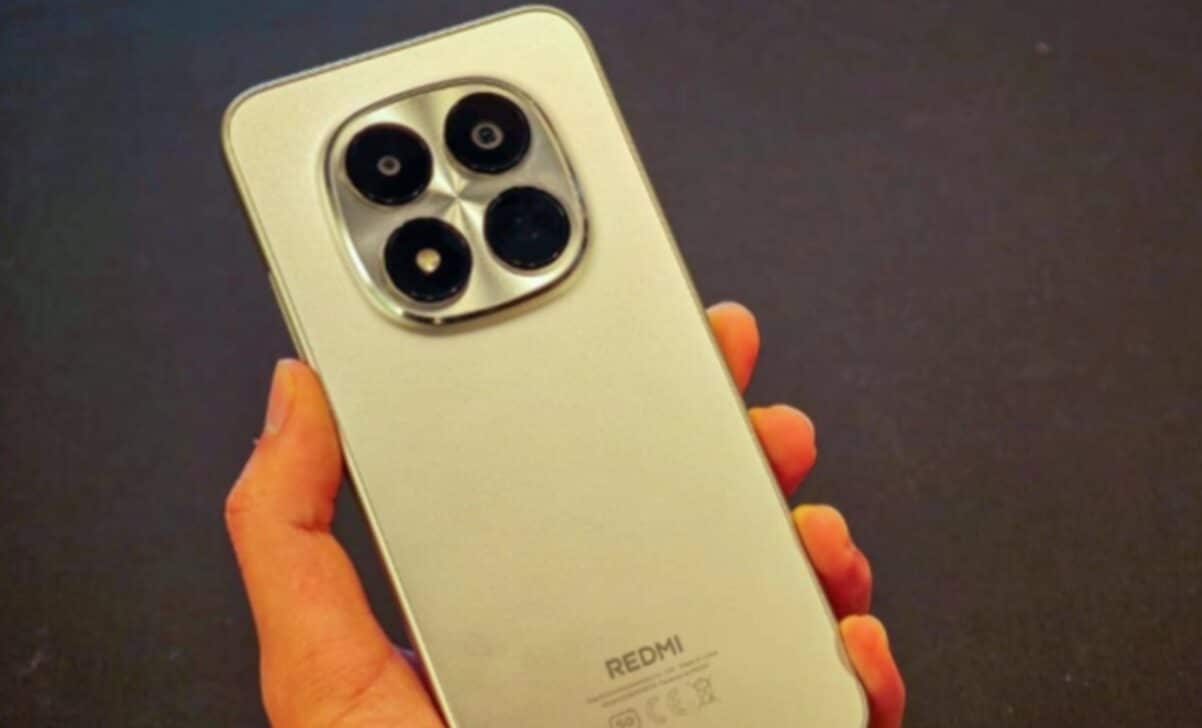
Recent behind-the-scenes information from the technology industry indicates that the Chinese manufacturer is working on a smartphone project that promises to change the standards of the intermediate segment. The device in the internal testing phase carries specifications that deviate from the current standard of the global mobile phone market, focusing on delivering a prolonged user experience.
The device appears in unofficial reports with an absolute focus on energy autonomy and capturing images in very high resolution. The company’s strategy seems aimed at consumers who need long periods away from sockets, without giving up robust photographic performance for everyday life.
The main technical highlights leaked about the prototype include the following points:
– Célula of energy with 10,000 mAh capacity
– Suporte for 100W ultra-fast charging
– Lente main photographic camera with 200 MP sensor
– Integração native with the HyperOS operating system
The informant known in Asian technology circles as Digital Chat Station was responsible for disclosing the first clues about this development. Segundo the data shared, the model represents a significant leap in the brand’s engineering, given that the current average battery in the category varies between 5,000 mAh and 6,000 mAh.
Energy capacity transforms dynamics of daily use
The implementation of a 10,000 mAh component establishes a new paradigm for the autonomy of mobile devices aimed at the general public. In practice, this technical specification allows the user to use the device for multiple consecutive days with a single charge, even performing tasks that require high processing.
The current smartphone market faces the constant challenge of balancing screen consumption with high refresh rates and powerful processors. The manufacturer’s choice to double the average battery capacity demonstrates a direct response to frequent complaints about the need for daily recharges.
To support this massive energy reserve, the product engineering included 100W recharge technology. Esse fast power system acts as a fundamental counterweight, ensuring that the time connected to the socket is not excessively long, replenishing the large cell in a time interval viable for the modern routine.
Engineering and temperature control challenges
Packing a battery of such large dimensions inside the chassis of a cell phone requires profound structural changes to the equipment’s design. Development teams must deal with the inevitable increase in the device’s total weight and thickness by seeking lighter materials for the outer casing to compensate for the mass of the internal component.
In addition to the physical issue, thermal management emerges as one of the main obstacles during the prototype testing phase. Heat dissipation needs to be highly efficient, especially when the device is subjected to 100W current during charging, requiring large vapor chambers and strict voltage control software to prevent overheating.
High-resolution lens expands photographic capabilities
The device’s camera set does not take a backseat, featuring a 200 MP main sensor that promises captures with a professional level of detail. Essa high resolution allows users to perform deep cropping in images without significant loss of quality, functioning as a virtual optical zoom.
Computational photography plays a crucial role in processing these massive files generated by the 200MP lens. The image signal processor needs to work in sync with artificial intelligence algorithms to optimize dynamic range, color accuracy and noise reduction in low-light environments.
Combining this photography capability with long-lasting battery life creates an ideal scenario for content creators and media professionals. Recording high-resolution videos, which traditionally drains devices’ energy quickly, can be carried out for hours on end without the need for external batteries or recharging breaks.
Specific details about auxiliary lenses, such as ultrawide or macro sensors, still remain confidential in the company’s laboratories. However, the brand’s tradition suggests that the main focus of investments in photographic hardware is concentrated on the primary camera.
Impact of memory costs on development
The decision to prioritize extreme autonomy appears to be intrinsically linked to economic fluctuations in the global semiconductor and electronic components market. Analistas from the sector point out that the recent increase in the production costs of NAND flash memories has forced manufacturers to rethink the distribution of financial resources when assembling new devices. Instead of making the final product more expensive by offering versions with 512 GB or 1 TB of internal storage, the strategy adopted redirects the budget to the battery, delivering a tangible and immediate benefit to the consumer without inflating the launch price in the intermediate category.
To overcome the possible limitation of physical space for files, the company relies heavily on the integration of cloud-based services through its proprietary interface. The operating system is designed to manage storage intelligently, automatically transferring old photos, videos and documents to remote servers, freeing up local space. Essa hybrid approach requires a stable internet connection, but solves the hardware cost issue, allowing the device to maintain a competitive value on international retail shelves.
Market positioning and competition in the sector
The emergence of this prototype sends a clear signal to competing companies vying for leadership in the upper-middle range smartphone segment. Historicamente, this price range is characterized by devices that try to balance all specifications homogeneously, often resulting in competent devices, but without major individual highlights. By betting on superlative numbers, such as 10,000 mAh and 200 MP, the manufacturer creates a specific niche and attracts the attention of an audience that values extreme characteristics. Esse move could force other brands to abandon the comfort zone of 5,000 mAh batteries, accelerating research and development of new lithium-ion and graphene technologies. Competitive pressure tends to benefit the end consumer, who now has access to innovations that were previously restricted to conceptual models or very specific niches, such as cell phones aimed exclusively at gamers or for industrial and military use.
Software optimization ensures operational fluidity
Robust hardware directly depends on refined software to deliver the promised experience. HyperOS works to manage background processes, freezing idle applications and directing power only to essential functions, which further maximizes the useful life of the gigantic load available on the system.
Expectations for the announcement schedule
To date, the Asian company has maintained absolute silence about the existence of the project, treating the leaked information as market speculation. Não existe uma data oficial confirmada para a apresentação do produto, tampouco garantias de que o protótipo chegará às linhas de montagem exatamente com as configurações descritas pelos informantes.
The Chinese market traditionally serves as the initial stage for brand launches, acting as a barometer of acceptance before global expansion. Caso the device passes commercial viability and energy security tests, it is likely that its debut will take place first on the Asian continent, reaching other countries in subsequent months.
Paradigm shift in mobile telephony
The constant evolution of personal communication devices demonstrates that user needs are constantly changing. The growing dependence on digital services, GPS navigation, contactless payments and media consumption requires equipment that does not fail in the middle of the workday.
The development of a cell phone with such aggressive specifications reflects the industry’s quest to solve the biggest pain for smartphone owners today. Breaking the barrier of daily autonomy represents a significant advance in the way people interact with portable technology.
The technology community awaits the manufacturer’s next steps to confirm whether the ambitious project will become an accessible commercial reality. The success of this endeavor could dictate design and engineering trends for the next generations of mid-range devices around the world.