

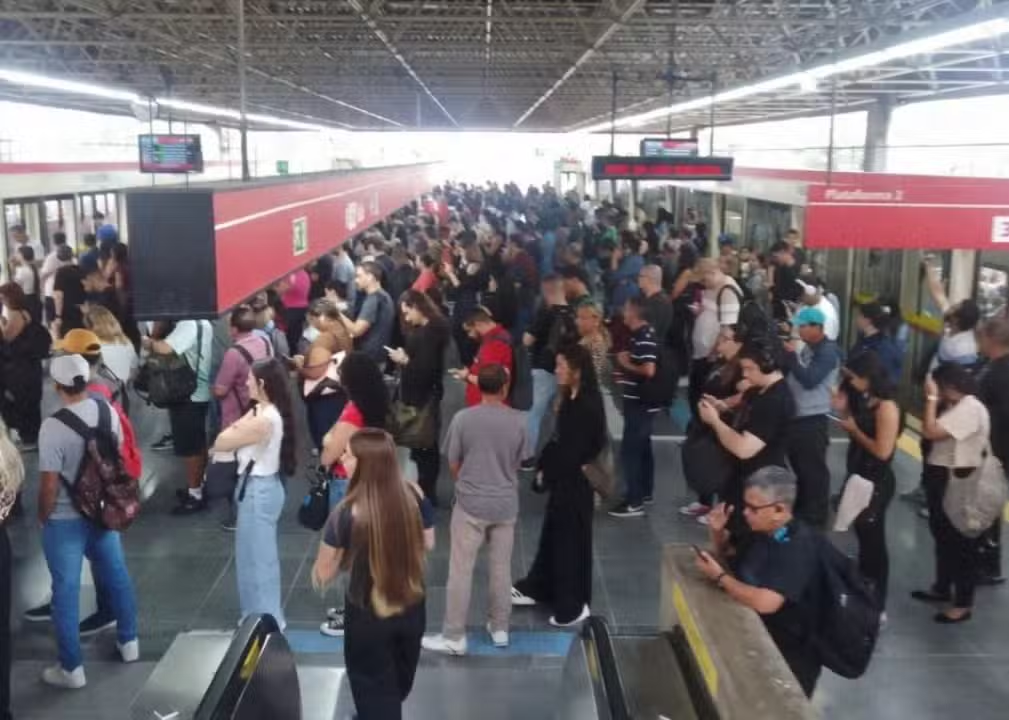
Line 3-Red from Metrô to São Paulo faced moments of slowness and excessively crowded platforms this Tuesday morning. Usuários of the public transport system were surprised by a problem that affected the circulation of trains, causing long waits and crowds.
The incident had its epicenter at station Marechal Deodoro, located in the central region of the capital of São Paulo. The failure compromised the flow of traffic on one of the busiest lines of the Metrô, which connects the east zone to the city center, impacting thousands of passengers on their daily commute.
The trains started to circulate at reduced speed and at longer intervals, according to reports from passengers and information released by Companhia of Metropolitano of São Paulo. The situation caused considerable inconvenience for those who depended on the service to get to work or other commitments.
Causes and chronology of the interruption
The problem that triggered the slowdown on line 3-Red began with the presence of a person on the railway line. The incident was recorded at around 7:49 am, requiring the momentary interruption of the train flow to ensure the safety of the operation and those involved.
Minutes earlier, between 7:37 am and 7:46 am, a failure in a train had already caused a reduction in the speed of vehicles. Essa previous occurrence contributed to a scenario of greater operational vulnerability, which was worsened by the subsequent detection of a person on the road.
Information about the causes and chronology of the events was published in an official bulletin by Metrô of São Paulo, through its communication channels. Transparency in communications aims to keep passengers informed about service conditions in real time.
Impact on users and crowded stations
The platforms of several stations on line 3-Red were completely taken over by passengers. Crowding was constant, with users expressing frustration and concern about the delays that the problem caused in their routines.
The intense flow of people, combined with the reduction in the number of trains in operation and the increase in intervals, created an environment of discomfort and stress. Muitas people reported difficulties in even accessing the platforms, given the already existing overcrowding.
Despite the “normalization process” information released by Metrô around 8:30 am, the perception of passengers at the stations was that the situation was still far from being resolved. Fotos and videos shared on social media showed the scale of the problem, with stations such as Tatuapé, Bresser-Mooca and República recording intense crowds. The delay in regularizing the service directly impacted the punctuality and routine of countless workers and students who use the subway daily as their main means of transport.
Transport alternatives and recommendations
Faced with the interruption and slowness, Metrô and public transport bodies recommended alternatives for passengers. Para who needed to travel from the center to the east zone of São Paulo, or in the opposite direction, a viable option was the CPTM line 11-Coral train (Company Paulista of
CPTM vehicles, departing from station Palmeiras-Barra Funda, offer a route that passes through strategic stations such as Tatuapé and Corinthians-Itaquera. Essa line goes to the city of Mogi from Cruzes, serving as an important alternative to relieve passenger traffic on line 3-Red.
- CPTM Line 11-Coral: A robust option for those looking for an alternative on the east-center route.
- Strategic connections: Possibilidade integration into Palmeiras-Barra Funda, Tatuapé and Corinthians-Itaquera.
- Information tracking: Importante check official Metrô and CPTM channels for traffic updates.
The challenge of urban mobility in large centers
Incidents like this highlight the constant challenges of urban mobility in large metropolises like São Paulo. The massive dependence on public transport requires the system to function with maximum efficiency and responsiveness to unforeseen events. Users’ ability to adapt is also put to the test, requiring flexibility and knowledge of the different travel options available.
The occurrence of operational failures, whether technical or caused by external factors such as the presence of people on the road, highlights the importance of continuous investments in infrastructure and technology. Preventive maintenance and modernization of the fleet and signaling systems are crucial to minimize the impact of unexpected events.
Responses and normalization efforts
The Metrô maintenance and operation team worked to normalize the situation as quickly as possible. Removing the person from the railway line and checking the train that initially failed were priorities to restore service.
Even with efforts, the complete normalization of passenger flow and train frequency usually takes a considerable amount of time. The very nature of the system, with the need to redistribute trains along the track and gradually empty platforms, prevents an immediate return to normality.
Crisis management involved not only the technical team, but also station and security agents, who guided passengers and tried to organize the flow on the platforms. Communication with the public, although sometimes insufficient given the magnitude of the problem, is a vital element in mitigating despair and guiding users.
Reflections on infrastructure and the future
Line 3-Red is one of the backbones of the São Paulo metro system, opened in 1979 and expanded over the decades to meet growing population demand. Sua strategic importance for the connection between the east zone, one of the most populous in the city, and the center is unquestionable.
This type of occurrence serves as a reminder of the need for resilience and constant improvement in mass transportation systems. The existing infrastructure, although robust, is subjected to intense daily stress, with millions of passengers using the service. The search for solutions that integrate different modes of transport and the expansion of the network continue to be crucial points to improve the user experience and guarantee the efficiency of urban mobility in São Paulo.