

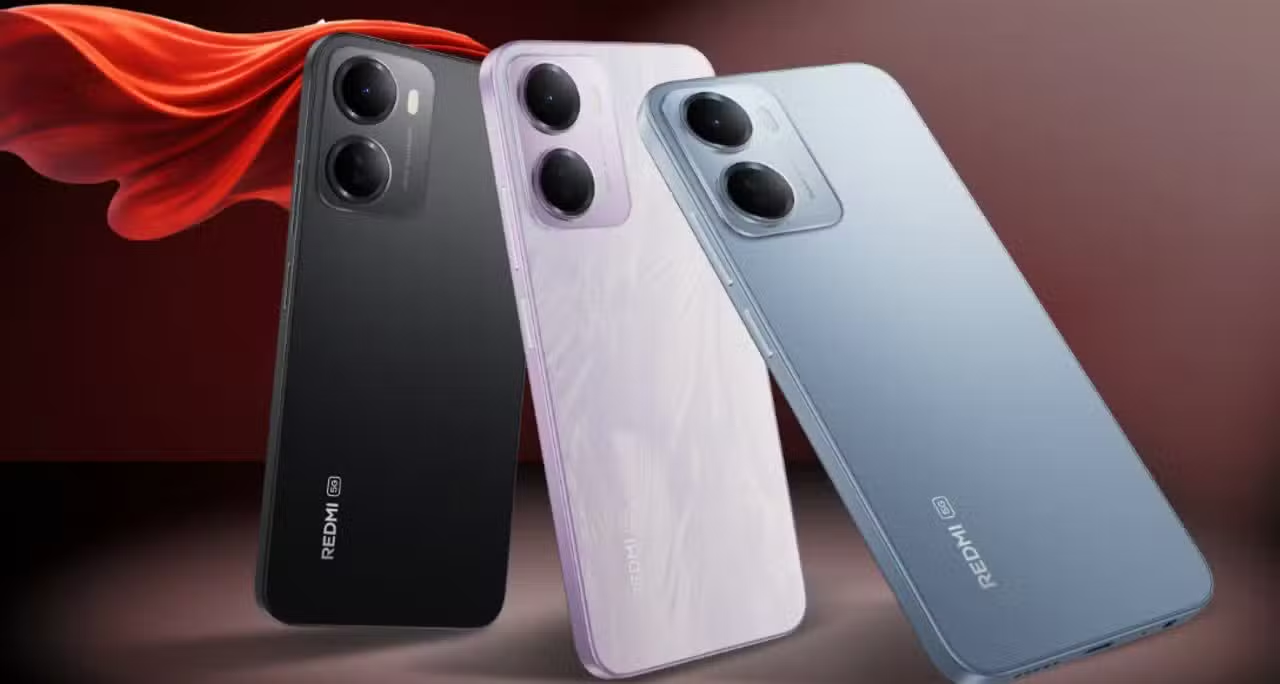
The mobile device industry in Índia records an intensification in the supply of devices compatible with fifth generation networks. Asian manufacturers Xiaomi and Tecno recently presented their new models aimed at the entry and intermediate segment. The launches aim to serve a significant portion of the population that seeks technological updates without the need for large financial investments.
The Redmi 15A 5G and Spark 50 5G models arrive on Indian retail shelves positioned in a strategic price range, established below 20 thousand rupees. Essa pricing puts the devices in direct competition with devices that previously only offered connectivity from previous generations. The companies’ strategy is based on delivering robust technical specifications combined with a reduced acquisition cost.

The companies’ moves occur at a time of expansion of telecommunications infrastructure in the Asian country. Local operators maintain schedules for expanding signal coverage, which generates a natural demand for compatible terminals. The availability of cheaper cell phones acts as a catalyst for user migration to new high-speed networks.
Pricing strategy in the Asian market
Setting values below the Rs 20,000 mark represents a calculated move to capture the price-sensitive consumer base that makes up the majority of the telephone market in Índia. Manufacturers optimize their supply chains and reduce profit margins per unit to gain in sales volume. Essa approach allows technologies previously restricted to premium devices, such as processors with latest generation modems and screens with high refresh rates, to be incorporated into more affordable lines. The result is an increase in the technical standard of the basic category, forcing the entire industry to review its portfolios to maintain competitiveness.
To make this financial equation viable, brands adopt strategic partnerships with component suppliers and local e-commerce platforms. Digital distribution reduces operational and logistical costs, passing the savings directly onto the final value of the product in virtual stores. Além In addition, local production of parts, encouraged by Indian government policies, reduces dependence on imports and protects companies from exchange rate fluctuations. Esse manufacturing and sales ecosystem creates a favorable environment for maintaining low prices in the long term, ensuring that the flow of new devices continuously reaches consumers in different regions of the country.
Technical specifications of the Xiaomi model
The Redmi 15A 5G device was developed with a focus on energy efficiency and connection stability. The manufacturer integrated a processor specifically designed to manage high-speed data traffic without compromising the device’s autonomy. The chip’s internal architecture prioritizes the execution of daily tasks and fluid navigation on social media platforms.
The device’s front panel offers adequate resolution for consuming videos and reading texts, with brightness levels adjusted for use in outdoor environments. The screen refresh rate provides smooth transitions in the MIUI operating system interface, a feature valued by users looking for a stutter-free user experience.
In the image capture department, the company opted for a versatile photographic set, capable of recording photos clearly in different lighting scenarios. Image processing via software works in conjunction with the lenses to automatically correct distortions and enhance colors. The front camera meets the needs of video calls, an essential feature for work and personal communication.
The internal storage capacity and random access memory are sized to support the product life cycle for years. The user has enough space to install essential applications and store media files. Sistemas security features, such as the fingerprint reader, ensure the protection of information stored on the terminal.
Tecno device configurations and design
The Spark 50 5G model relies on a bold visual identity to attract young audiences, combining textures on the back cover and a prominent camera module. The construction of the chassis prioritizes ergonomics, making it easy to handle the device with just one hand, even with the presence of a large screen. The choice of finishing materials aims to provide resistance against small impacts and scratches from everyday use.
The internal hardware of the Tecno device is managed by a chipset focused on multitasking performance and running games with moderate graphical demands. The proprietary HiOS interface adds layers of customization and memory optimization tools, killing background processes to free up resources. The high capacity battery ensures uninterrupted operation of the cell phone during long journeys away from sockets.
Expansion of telecommunications infrastructure
The mass adoption of devices such as the Redmi 15A 5G and the Spark 50 5G directly depends on the availability of the operators’ signal. Indian telecommunications companies continue to invest in installing antennas and laying optical fiber to interconnect radio base stations. The initial focus on large cities begins to expand to medium-sized cities and rural areas, expanding the potential consumer market.
The stability of the fifth generation network allows users to explore new digital services, such as streaming cloud games and consuming ultra-high resolution content. Reducing latency in data transmission improves the responsiveness of applications in real time, changing the dynamics of smartphone use. Robust infrastructure is the pillar that supports the commercial viability of new launches by Asian manufacturers.
Competition dynamics in Asian retail
The fight for consumer preference in Índia requires brands to maintain a constant presence in communication channels and points of sale. Campanhas advertisements highlight the advantages of new network technology, educating the public about the practical benefits of upgrading their old devices. Visibility on physical shelves and prominence on the home pages of e-commerce sites are aggressively fought for by marketing teams.
After-sales technical support emerges as a deciding factor in Indians’ purchasing decisions. Empresas that offer a wide network of technical assistance and guarantee regular security updates for the operating system gain the market’s trust. Building customer loyalty in an environment with so many options available reduces the costs of acquiring new users in the next generations of products.
Reviews from technology experts and comments from buyers in online forums have a strong influence on the sales volume of input devices. Manufacturers monitor feedback from virtual communities to identify software flaws and release quick fixes. The digital reputation of a newly launched model can determine the commercial success or failure of the entire production line.
Digital transformation and access to information
The popularization of terminals that support the fastest networks acts as a vector of digital inclusion for millions of citizens who have a smartphone as their only means of accessing the internet. The download and upload speed provided by the new technology facilitates participation in distance learning environments, allowing video classes to be followed without interruptions and academic work to be sent quickly. In the services sector, small entrepreneurs use stable connections to manage online businesses, process digital payments and maintain direct contact with suppliers and customers through messaging applications. The democratization of advanced hardware, driven by the offer of devices at affordable prices, reduces the technological disparity between different social classes and geographic regions. Easy access to government public service platforms, digital health systems and job search tools transforms cell phones into an essential instrument for exercising citizenship and integrating into the modern economy.
Future movements of electronics manufacturers
The establishment of a new level of demand in the basic segment forces technology companies to plan their next steps with a focus on continuous innovation. The market expectation is that features such as ultra-fast charging and screens with OLED technology will gradually begin to migrate to devices below 20 thousand rupees in the next launch cycles. Maintaining competitiveness will require constant investment in research and development to make the production of sophisticated components cheaper.