

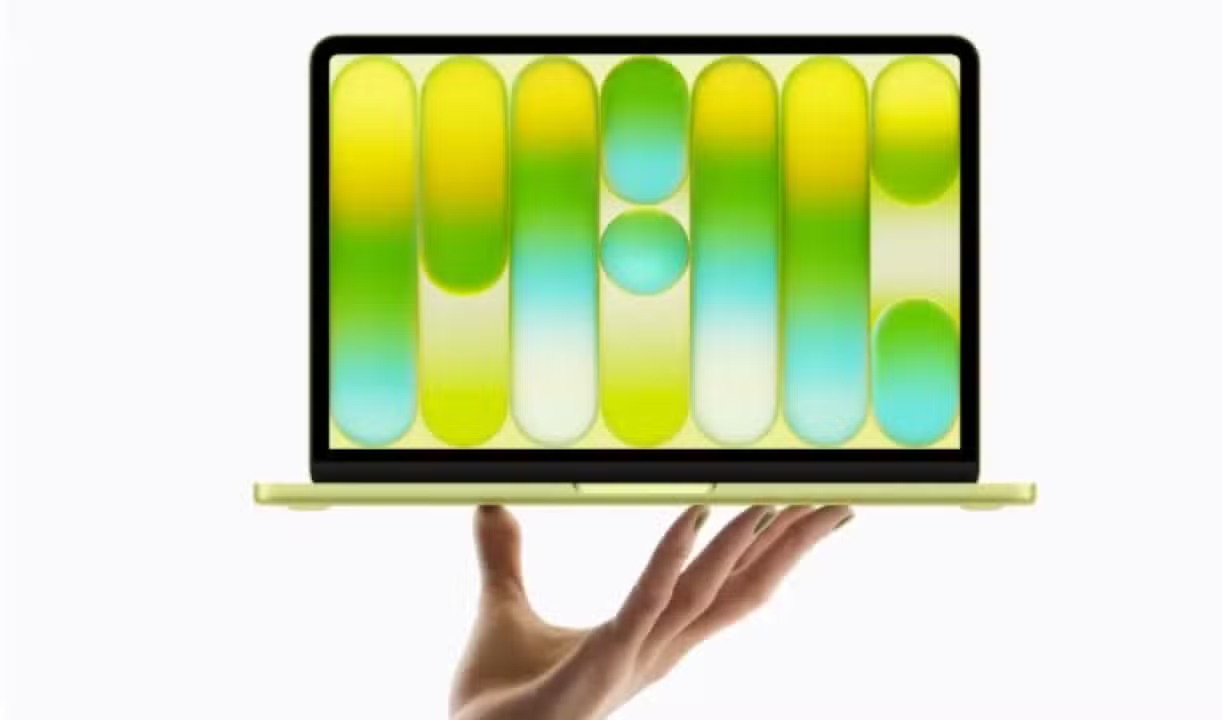
The North American manufacturer Apple has officially announced the arrival of its newest portable computer on the international market, establishing an unprecedented milestone in its hardware pricing policy. The device, commercially named MacBook The official announcement took place on March 4, 2026, with availability for consumers starting the following week, on March 11, strongly moving the global electronics sector.
The company’s strategy aims to capture a market share historically dominated by entry-level equipment from other brands that use competing operating systems. The new model is equipped with the A18 Pro processor, a 13-inch Liquid Retina screen and a structure made entirely of aluminum, moving away from the common plastic found in computers sold in the same retail value range. Além of the technical hardware specifications, the manufacturer guarantees battery life that can reach up to 16 hours of continuous use, varying according to the activities performed by the user.

The color palette offered by the brand also seeks to attract a diverse audience focused on the educational environment, making the equipment available in blush, indigo, silver and citrus tones. The company’s commercial movement creates immediate pressure on traditional manufacturers, forcing an urgent reassessment of sales and production strategies in the segment of low-cost computers aimed at daily use and office tasks.
Pricing strategy and impact on retail
The introduction of equipment with a metal chassis and high-resolution screen for less than $600 significantly changes consumer expectations regarding the cost-benefit of electronics. Tradicionalmente, computers sold in this price range tend to have severe limitations in terms of finishing, durability of physical components and quality of visual display, factors that are now being questioned by buyers in physical and virtual stores.
Complete control of the production chain allows the manufacturer of the MacBook Neo to maintain viable profit margins even at considerably reduced values compared to its standard portfolio. Essa verticalization ranges from the meticulous design of the processing chip to the coding and optimization of the operating system, resulting in superior performance in everyday tasks such as browsing the web with multiple tabs and running applications based on artificial intelligence.
Unified hardware technical specifications
The entry-level versions of the device have 8 GB of unified memory and 256 GB of internal solid-state storage. Essa base configuration is aimed at audiences who perform cloud-based operations and real-time document editing.
For users who demand more space and physical security, the 512 GB variant with Touch ID biometric reader is sold for approximately $689.99. Esta option offers a straightforward upgrade for anyone dealing with heavy media files.
The absence of the biometric sensor in the most basic version of the device requires consumers to rely exclusively on traditional alphanumeric password typing. Esse method is used both to unlock the operating system and to authorize online payments.
Choosing between different configurations requires the buyer to carefully evaluate their actual local storage needs. The growing use of file hosting services on remote servers has directly influenced the entry model purchase decision.
Production difficulties for partner manufacturers
Companies developing notebooks based on the Windows system face an extremely complex scenario to rival the new unified hardware offering. The manufacture of this equipment requires the coordination of efforts between multiple independent companies.
The assembly process involves the acquisition of processors from external suppliers, such as Intel, AMD or Qualcomm, in addition to the mandatory licensing of the Microsoft operating system. Cada step adds logistics and intellectual property costs to the final product.
The chassis, cooling and final assembly are carried out by partner brands such as Dell, Lenovo, ASUS or Acer. Essa division of responsibilities along the production chain makes it extremely difficult to achieve the ideal balance between low price and high quality construction.
Practical performance and energy efficiency
Initial performance tests demonstrate that the A18 Pro processor, based on the Arm architecture, outperforms several traditional x86 chips in everyday and productivity activities. Unified memory integration on silicon directly contributes to the energy efficiency of the entire operating system.
This advancement in component engineering allows the computer to operate completely silently, without the need for mechanical cooling fans. The average user finds in the device an agile and stable answer to the daily demands of work and multimedia entertainment.
Direct comparison with competing models
When analyzing the notebook market in the 500 to 600 dollar range, it is noted that the majority of models use constructions based on polycarbonate. A direct example of competition is the Lenovo IdeaPad Slim 3x, equipped with the Snapdragon X processor, 16 GB of RAM and 512 GB of SSD storage, found for values close to 562.99 dollars.
Despite offering superior numerical specifications in terms of memory and internal space, these models often face limitations in external finishing. The accuracy of the trackpad and the overall long-term usage experience are factors that weigh in the consumer’s final decision when comparing options on the shelves.
Mobility aimed at academic and corporate environments
The ultra-compact design and low weight of the equipment represent absolutely decisive factors for the adoption of the product by university students and professionals who require constant mobility in their daily routines. Pesando approximately 1.2 kg, the computer can be easily carried in common backpacks without causing physical discomfort while traveling on public transport or between business meetings. The simplification of connectivity ports follows the rigorous standard established by the brand’s product line, prioritizing the thin thickness of the metal chassis over multiple legacy peripheral inputs. Essa design approach requires some users to resort to external adapters to connect old monitors or USB sticks, but it reinforces the minimalist aesthetic that strongly appeals to the contemporary end consumer. Native and optimized support for new artificial intelligence features adds an extra layer of commercial attractiveness, offering automated writing tools, intelligent summarization of long texts and fast image editing directly integrated into the operating system, features that have become essential work tools for the modern academic environment.
Projections for the next generations of equipment
Behind-the-scenes information from the semiconductor industry indicates that the manufacturer has already started developing an updated version of the device, with a projected launch in 2027. Essa strategic move, which will possibly include the adoption of the future A19 processor